Online Dispute Resolution's role critical during Covid-19 pandemic, says Justice Chandrachud
New Delhi [India], April 11 (ANI): The strength of Online Dispute Resolution (ODR) is founded in the concepts of decentralization, diversification, democratization and disentanglement of the entire justice delivery mechanism, Supreme Court Justice DY Chandrachud said on Saturday.
ANI
Apr 11, 2021 07:06 IST

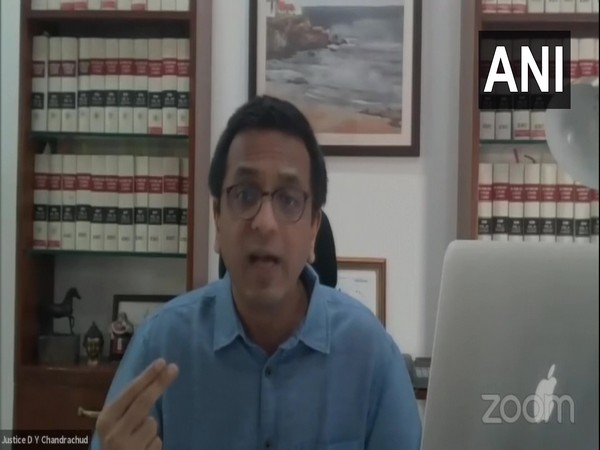
New Delhi [India], April 11 (ANI): The strength of Online Dispute Resolution (ODR) is founded in the concepts of decentralization, diversification, democratization and disentanglement of the entire justice delivery mechanism, Supreme Court Justice DY Chandrachud said on Saturday.
COVID-19 has transformed our lives in unimaginable ways, which inevitably also included the way courts operated--with physical hearings giving way to virtual ones. "The transition was difficult for everyone, including advocates, litigants and even court staff. However, while this process was initially slow, the concept of virtual hearings eventually came to find its place in the judicial ecosystem," top court judge, justice Chandrachud said.
He was addressing the release event of a handbook on ODR, developed by Agami and Omidyar India, in association with NITI Aayog and with the support of ICICI Bank, Ashoka Innovators for the Public, Trilegal, Dalberg, Dvara and National Institute of Public Finance and Policy (NIPFP).
Despite resistance and insistence on moving back to physical hearings post the pandemic, Justice Chandrachud emphasized that ODR is the need of the hour, given its many benefits.
He mentioned that the ODR handbook notes that traditional litigation in India can be time-consuming, expensive and onerous. Although the judiciary is working towards solving these issues, ODR can provide a helping hand in this situation--by limiting the kinds of disputes that often come to courts in the first place.
Justice Chandrachud said he firmly believes in the role ODR can play in today's digitally transformed world. "This is not just because of the process being conducted virtually, but also because of its firm willingness to adopt all forms of digital solutions available. In my opinion, one of the most important learnings from the past year of virtual hearings has been that the process can often be far more efficient because of very simple changes--the use of digital files by all parties, the ability to make digital notes, and having all documents in one place.
Further, conducting all disputes online also helps generate a lot more data, which can provide the necessary groundwork for the process of ODR to improve in the future. In fact, this data can also be meaningfully used to improve the virtual experience of courts. Finally, the effective use of affordable ODR services can bring about a major change in the perception of parties involved in the dispute--by making the process more accessible, affordable and participative. It will make all parties consider it more amicable and solution-oriented. This will ultimately lead to more efficient dispute resolution," he said.
Speaking about the handbook, Justice Chandrachud said it recognizes three crucial factors. First, an exponential increase in digital penetration amongst all classes of people in the country. Second, the vocal support of the higher judiciary, and third, the steps taken by the RBI and NPCI to incorporate ODR in areas such as digital payments, with a massive shift to virtual hearings in all courts due to the pandemic.
"Questions regarding the efficacy of such a system are no longer theoretical. While there are always things to improve, and issues to resolve, the system as it stands does work. The story with ODR is similar, although crucially, organizations have been pushing for it and using it for far longer than virtual courts. Understandably, however, this push for ODR cannot mean substituting every dispute resolution process with ODR. That remains a distant and unreal possibility, till we achieve digital penetration and literacy everywhere in India. However, I do not see this as a downside for ODR. On the other hand, I believe that its usefulness can in fact become a factor in pushing for stronger digital penetration and literacy," he said.
The ODR handbook recognizes why ODR can be beneficial for the expansion of the economy, for businesses looking for quick and efficient resolution, and even for individuals to whom traditional means of dispute resolution seem too onerous and inaccessible, Justice Chandrachud said.
NITI Aayog CEO Amitabh Kant added, "The ODR handbook is the outcome of collaborative work by several contributors. It intends to facilitate the process to adopt ODR in India and highlight actionable processes for businesses that wish to adopt ODR."
COVID-19 has instilled an urgent need for ODR, with the likelihood of a spurt in disputes before courts--most notably in lending, credit, property, commerce, and retail. For instance, Udaan, India's largest Business to Business (B2B) platform for businesses and shopowners, resolved over 1800 disputes in one month using an ODR service provider. Each dispute took an average of 126 minutes. In the coming months, ODR could be the mechanism that helps businesses with achieving expedient resolution. The ODR handbook enables businesses to do so. (ANI)
Tags:
Get the App