Notable judgements of the most progressive and influential jurist CJI Chandrachud
Widely regarded as the most progressive and influential jurist in the country, Dhananjaya Yeshwant Chandrachud, the 50th Chief Justice of India (CJI), to demit the office on November 10 with a legacy of upholding constitutional values, promoting human rights, and advancing justice in India.
ANI
Nov 09, 2024 22:21 IST

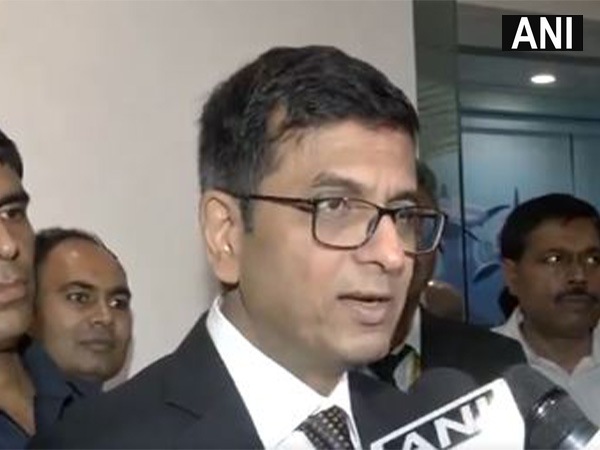
New Delhi [India], November 9 (ANI): Widely regarded as the most progressive and influential jurist in the country, Dhananjaya Yeshwant Chandrachud, the 50th Chief Justice of India (CJI), to demit the office on November 10 with a legacy of upholding constitutional values, promoting human rights, and advancing justice in India.
Appointed as the Chief Justice of India in November 9, 2022, Justice Chandrachud's tenure has been marked by landmark judgments on equality, and the protection of fundamental rights, gender equality, privacy rights, accessibility, and inclusivity.
Early life, education and career
Justice Chandrachud's father Justice YV Chandrachud was the 16th Chief Justice of India serving from 2 February 1978 to 11 July 1985. Justice Chandrachud, born on 11 November 1959, completed his schooling at Mumbai's St. Xavier's High School and went on to earn a Bachelor's degree in Economics from Delhi University's St. Stephen's College.
He later studied law at the Delhi University's Faculty of Law and then furthered his legal education at Harvard Law School, where he obtained an LLM in 1983, followed by a Doctorate in Comparative Constitutional Law from the same institution.
After completing his studies, Justice Chandrachud returned to India and enrolled as an advocate in 1982 practising in the Bombay High Court. He was designated as a senior advocate by the Bombay High Court in June 1998. He had also served as Additional Solicitor General of India from 1998 until he was appointed a judge in the Bombay High Court.
Justice Chandrachud was appointed judge of the Supreme Court on 13 May 2016. He was the Chief Justice of the Allahabad High Court from 31 October 2013, until his appointment to the Supreme Court. Justice Chandrachud was the judge of the Bombay High Court from 29 March 2000 until he was appointed Chief Justice of the Allahabad High Court.
During his tenure as a judge in the Supreme Court, he has been part of several significant verdicts.
Here's a look at some of his important verdicts:
Notable Judgments
-Right to Privacy
The Supreme Court's nine-judge bench in 2017 unanimously ruled the right to privacy is guaranteed by the Constitution as a basic right. Justice Chandrachud, who wrote the majority ruling, stressed the importance of privacy for people's autonomy and sense of dignity in a democracy.
-Decriminalisation of Homosexuality
In 2018, a five-judge bench also comprising Justice Chandrachud passed the historic judgement decriminalisation of Section 377 of the Indian Penal Code, a provision that criminalised consensual same-sex relations.
-Decriminalisation of Adultery
The Supreme Court of India in 2018 struck down Section 497 of the IPC, which criminalised adultery but solely punished males. Justice Chandrachud, also part of the bench ruled that Section 497 is based on viewing women as chattel, seeks to control the sexuality of women, and impedes the autonomy and dignity of women.
-Sabarimala Case
Justice Chandrachud was also a part of a five-judge Constitution Bench which by a 4:1 majority held that women, irrespective of their age, have the right to enter the Sabarimala temple in Kerala. The Supreme Court ruled that the ban on women entering the temple was unconstitutional, as it violated women's fundamental rights to equality and religious freedom.
-Banning of Triple Talaq
In a major step forward in the protection of Muslim women's rights, a bench in 2019 comprising Justice Chandrachud struck down the practice of instant triple talaq (talaq-e-biddat) and declared it unconstitutional.
-Ram Janmabhoomi-Babri Masjid land dispute
On 9 November 2019, a five-judge bench comprising Justice Chandrachud unanimously awarded the disputed Ayodhya land of 2.33 acres to the deity, Shri Ram Virajman for the construction of the Ram temple. It also ordered that a plot of 5 acres be allotted to the Sunni Waqf Board for the construction of a mosque.
-Delhi Government vs LG
In a power dispute between the Delhi government and the Lieutenant Governor, the Supreme Court on May 11, 2023, decided that the Delhi government is in charge of all administrative functions, except those about land and law enforcement.
-Abrogation of Article 370
A five-judge Constitution bench also comprising Justice Chandrachud had unanimously upheld the validity of the Union government's 2019 decision to abrogate Article 370 of the Constitution which conferred the special status of Jammu and Kashmir.
-Striking Down Electoral Bonds Scheme
A five-judge Constitution bench led by Justice Chandrachud unanimously struck down the Electoral Bonds scheme that allowed anonymous funding to political parties.
-Maharashtra political crisis
A five-judge Constitution bench of the Supreme Court had held that former Maharashtra Governor Bhagat Singh Koshyari was "not justified" to call for a floor test based on the request of the Eknath Shinde faction since he did not have enough objective material before him to conclude that the then Chief Minister Uddhav Thackeray had lost the confidence of the House. The Supreme Court had said it could not disqualify the Eknath Shinde-led Maharashtra government and reinstate Uddhav Thackeray as Chief Minster because the latter had chosen to resign instead of facing a test of strength in the Assembly.
-No Legislative Immunity for Lawmakers Facing Bribery Charges
In a landmark verdict, the Supreme Court's seven-judge bench led by Justice Chandrachud in March 2024 while deciding Sita Soren vs UoI held that members of parliament and legislative assemblies could not claim immunity under Articles 105(2) and 194(2) of the Constitution for receiving a bribe in contemplation of a vote or speech in the legislature.
-Sub-classification Within SC/ST Categories
A seven-judge led by Justice Chandrachud in August 2024 delivered a verdict by a majority of 8:1 that state governments had the power to create sub-classifications within the reserved Scheduled Caste and Schedule Tribe categories. (ANI)
Get the App