 हिंदी खबर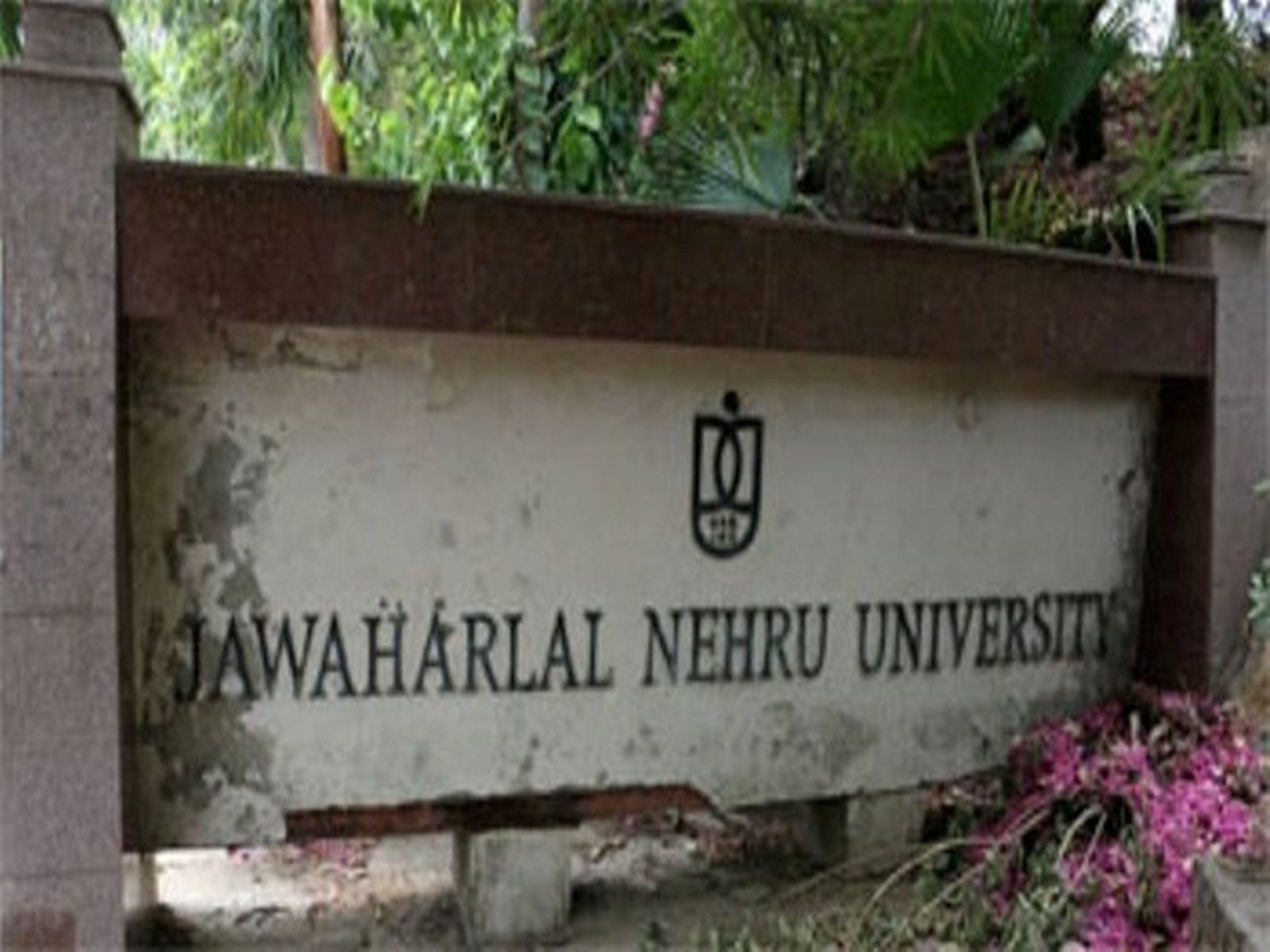

New Delhi [India], January 9 (ANI): Jawaharlal Nehru University (JNU) in collaboration with Mumbai School of Economics and Public Policy (MSEPP), University of Mumbai, Adhisthan Samajik Sanstha and Demography club of Mumbai, successfully organised the National Conference titled "The M - Silent Invasion; Illegal Immigration to Mumbai: An Analysis of Socio-economic and Political Consequences" on 8th of January 2026 at the Convention Centre, JNU, New Delhi.
The conference brought together academicians, researchers, policy stakeholders, practitioners from across the country to deliberate on contemporary migration dynamics and their implications for urban governance, labour markets, environmental sustainability, public service delivery, and rights-based frameworks in metropolitan contexts.
A major academic highlight of the program was the presentation and scholarly discussion of the empirical study titled Illegal Immigration to Mumbai: An Analysis of Socio-Economic and Political Consequences, based on a large-scale primary survey of 3,014 respondents conducted across migrant-dominated localities in Mumbai. The study was discussed as one of the most comprehensive field-based assessments of undocumented migration in the city, drawing on a mixed-method research design that included household surveys, case studies, focus group discussions, and key informant interviews.
The findings presented during the conference underscored that undocumented migration in Mumbai has evolved from an episodic phenomenon into a deeply entrenched and self-perpetuating structural challenge. Particular attention was drawn to sustained illegal immigration from Bangladesh and Myanmar, which has contributed to rapid population accumulation in informal and unregulated settlements. Participants noted that Mumbai's extreme population density and limited spatial capacity significantly magnify the impacts of such migration, placing sustained and escalating pressure on housing, sanitation, healthcare services, transport networks, and municipal infrastructure.
The study highlighted the concentration of undocumented populations in ecologically fragile and infrastructure-deficient urban zones, including Govandi, Shivaji Nagar (Govandi), Mankhurd, Kurla, Cheetah Camp (Trombay), Malvani-Malad West, Jogeshwari-Oshiwara, Dongri, Bhendi Bazaar, Colaba, Nagpada, Madanpura, and adjoining peripheral slum clusters and also in eco-sensitive mangrove zones of India. Once serving as the ecological lungs of Mumbai, these green patches have been steadily destroyed by unchecked encroachment and the expansion of illegal settlements associated with undocumented immigration.
Unregulated settlement expansion in these areas was discussed as accelerating environmental degradation, loss of natural buffers, flood vulnerability, groundwater contamination, and long-term ecological damage, thereby weakening Mumbai's climate resilience and disaster preparedness. Participants warned that continued encroachment into such zones converts environmental stress into a persistent urban safety and disaster-risk concern.
From an economic perspective, deliberations emphasised severe wage suppression, displacement pressures on local workers, and distortion of informal labour markets, alongside steady remittance outflows that weaken local economic resilience. Social consequences discussed included acute gender-based vulnerabilities, deterioration in child health and nutrition outcomes, linguistic and cultural isolation, and the consolidation of spatially concentrated residential enclaves, contributing to growing social fragmentation within the city.
Participants also deliberated on governance, security, and social cohesion concerns, noting that prolonged unregulated migration has become a cause of threat to urban stability when combined with weak oversight mechanisms. It was emphasised that security risks do not arise from migrants as individuals, but from the deliberate instrumentalisation of identity, including religious identity, by unregulated networks operating in the absence of effective governance. In certain localities, the consolidation of undocumented populations within closed settlements was observed to intersect with identity-based consolidation and political mobilisation, which, when exploited by informal power brokers, heightens communal sensitivities, weakens neighbourhood-level trust, and poses a tangible threat to urban peace, internal security, and institutional stability.
Governance challenges were further discussed in relation to verification processes, including the Special Intensive Revision (SIR) of electoral rolls, where frequent residential mobility, proxy documentation, settlement clustering, and limited administrative reach complicate accurate verification. Participants cautioned that persistent weaknesses in population documentation and enforcement capacity risk producing long-term institutional erosion and regulatory paralysis, constraining evidence-based policymaking and strategic urban planning, and undermining democratic values due to the participation of undocumented immigrants in electoral rolls.
73% of the illegal immigrants are found to have a voter card and they can influence the vote counts in 50 to 56 wards of Mumbai.
The conference concluded with a strong consensus that delayed, fragmented, or ad-hoc responses are inadequate to address the scale and complexity of the challenge. Participants emphasised the urgent need for coordinated, evidence-based, and institutionally robust interventions that strengthen border management, population documentation systems, urban governance capacity, ecological protection, and regulatory enforcement, while balancing humanitarian considerations and the rights of long-term residents. It was cautioned that failure to act decisively could allow current trends to irreversibly reshape Mumbai's demographic profile, environmental stability, and governance capacity, placing the city's long-term sustainability and social cohesion at serious risk. (ANI)
National Conference on illegal immigration to Mumbai held at JNU
ANI | Updated: Jan 09, 2026 00:37 IST


