Merit should be socially contextualized as an instrument that advances social goods: SC upholds OBC reservation in NEET-AIQ
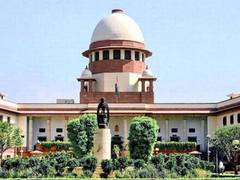
New Delhi [India], January 20 (ANI): The Supreme Court on Thursday said that merit should be socially contextualized and reconceptualized as an instrument that advances social goods that society values like equality.
ANI
Jan 20, 2022 22:22 IST

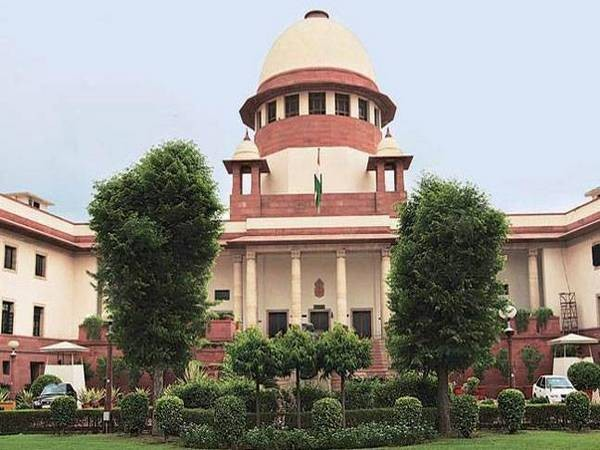
New Delhi [India], January 20 (ANI): The Supreme Court on Thursday said that merit should be socially contextualized and reconceptualized as an instrument that advances social goods that society values like equality.
In a detailed order issued on Thursday, a bench of Justices DY Chandrachud and A S Bopanna said, "High scores in examination are not a proxy for merit. Merit should be socially contextualized and reconceptualized as an instrument that advances social goods like equality that us as a society value. In such a context, reservation is not at odds with merit but furthers its distributive consequences."
The top court said "merit cannot be reduced to narrow definitions of performance in an open competitive examination which only provides formal equality of opportunity" while upholding the constitutional validity of reservations for the Other Backward Classes and the Economically Weaker Section in the All-India Quota in the National Eligibility cum Entrance Test examination.
"Competitive examinations assess basic current competency to allocate educational resources but are not reflective of excellence, capabilities and potential of an individual which are also shaped by lived experiences, subsequent training and individual character," the top court remarked.
"Crucially, open competitive examinations do not reflect the social, economic and cultural advantage that accrues to certain classes and contributes to their success in such examinations," the court said.
Rejecting the pleas challenging the constitutional validity of OBC reservation in AIQ seats, the court said that "the Union Government was not required to seek the permission of this Court before providing reservation in AIQ seats".
Therefore, providing reservation in the AIQ seats is a policy decision of the government, which will be subject to the contours of judicial review similar to every reservation policy, the court clarified.
"Articles 15(4) and 15 (5) are not an exception to Article 15 (1), which itself sets out the principle of substantive equality (including the recognition of existing inequalities). Thus, Articles 15 (4) and 15 (5) become a restatement of a particular facet of the rule of substantive equality that has been set out in Article 15 (1)," the court said.
"Articles 15 (4) and 15 (5) employ group identification as a method through which substantive equality can be achieved," the court said adding that this may lead to an incongruity where certain individual members of an identified group that is being given reservation may not be backward or individuals belonging to the non-identified group may share certain characteristics of backwardness with members of an identified group."
"The individual difference may be a result of privilege, fortune, or circumstances but it cannot be used to negate the role of reservation in remedying the structural disadvantage that certain groups suffer," the court said.
These observations are part of a detailed order passed by the Supreme Court on Thursday in the matter concerning pleas relating to providing 27 per cent reservation for Other Backward Class (OBC) and 10 per cent for Economically Weaker Section (EWS) category in the All-India Quota (AIQ) seats for the admission in the NEET for all medical seats.
On January 7, the Supreme Court allowed NEET-PG Counselling for 2021-2022 based on existing EWS/OBC reservation criteria.
The apex court had given a green signal to 27 per cent reservation for Other Backward Class (OBC) and 10 per cent for Economically Weaker Section (EWS) category in the All-India Quota (AIQ) seats for the admission process in the NEET as existing criteria this year.
However, in the case of the EWS category, the Supreme Court had said that the 10 percent criteria, which were notified earlier, shall continue to operate for this year so that the admissions process shall not be dislocated for the current academic year.
The Court had said that it will hear the matter relating to EWS later and listed it for the third week in March for further hearing.
The Court had noted that there is an urgent need to commence the process of counseling and therefore it issued some interim direction.
On December 31, the Centre filed an affidavit stating that it has decided to stick to the existing criteria of Rs 8 lakh annual income limit for determination of 10 per cent EWS reservation with respect to the ongoing admissions to the NEET postgraduate courses.
The Centre had informed the apex court that an Expert Committee constituted by the government to reassess the criteria, suggested that the existing criteria may be continued for ongoing admissions while the revised criteria suggested by the Committee may be adopted from the next admission cycle.
Changing the EWS criteria midway will lead to complications, the Committee had opined while recommending the introduction of revised EWS criteria from the next academic year. (ANI)
Tags:
Get the App