Make bold, sustainable investments to help free people of Neglected Tropical Diseases: WHO
NTDs are a diverse group of 20 conditions that are mainly prevalent in tropical areas. Globally, they affect more than 1 billion people, cost low- and middle-income countries billions of dollars every year, and perpetuate a cycle of poor educational outcomes and limited professional opportunities, mostly for impoverished communities, where they disproportionately affect women and children.
ANI
Jan 30, 2023 12:09 IST

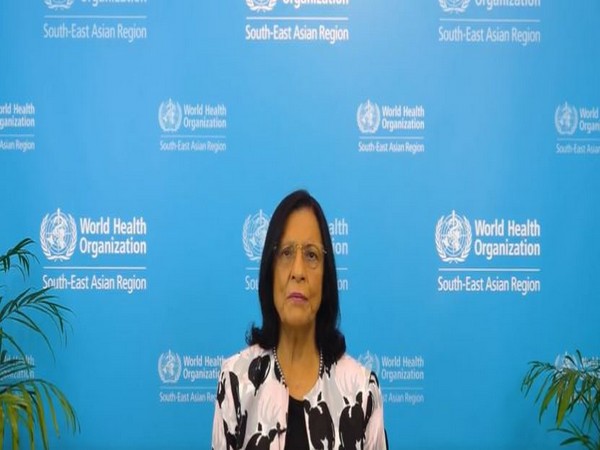
New Delhi [India], January 30 (ANI): The World Health Organisation on Monday called on countries in the South-East Asia Region and globally to confront the inequalities that drive Neglected Tropical Diseases (NTDs) and asked them to make bold, sustainable investments to help free people across the world of NTDs who are vulnerable to their devastating health, social and economic costs.
On 31 May 2021, the World Health Assembly (WHA) recognized 30 January as World Neglected Tropical Disease (NTD) Day. This decision formalized 30 January as a day to create better awareness of the devastating impact of NTDs on the poorest populations around the world. The day is also an opportunity to call on everyone to support the growing momentum for the control, elimination and eradication of these diseases.
NTDs are a diverse group of 20 conditions that are mainly prevalent in tropical areas. Globally, they affect more than 1 billion people, cost low- and middle-income countries billions of dollars every year, and perpetuate a cycle of poor educational outcomes and limited professional opportunities, mostly for impoverished communities, where they disproportionately affect women and children.
According to the WHO, the WHO South-East Asia Region accounts for the second highest NTD burden globally. At least one NTD is endemic to each of the Region's 11 Member States, and more than 938 million people in the Region require interventions against NTDs. In 2021, the Region accounted for 59% of the global population requiring interventions against lymphatic filariasis (LF), 66.5% of new cases of leprosy, and 56 per cent of children requiring regular deworming against soil-transmitted helminthiases.
"Since 2014, the WHO has supported countries of the Region to make rapid, equitable and sustained progress against NTDs, in line with the Region's Flagship Priority on eliminating NTDs and other diseases on the verge of elimination. In 2016 India was declared yaws-free. Maldives, Thailand and Sri Lanka have eliminated lymphatic filariasis (LF) as a public health problem. Bangladesh is currently being assessed for validation of elimination of LF as a public health problem, and Timor-Leste is now under post-treatment surveillance," the WHO Regional Director for South-East Asia Dr Poonam Khetrapal Singh said.
Dr Singh further said that Nepal and Myanmar have eliminated trachoma as a public health problem.
"All kala-azar-endemic implementation units in Bangladesh have now reached the elimination target, which India and Nepal are also close to achieving. India, Indonesia and Nepal continue to roll out triple drug therapy to accelerate action against LF, which Myanmar is also preparing to introduce. Between 2010 and 2020, the Region reduced the total number of people who require interventions against NTDs by a remarkable 20 per cent," she added.
Underling the new challenges and opportunities across the region, she said, "New challenges and opportunities have emerged. In 2021, WHO launched a global NTD road map that aims to 'End the neglect', setting a series of global targets and milestones to prevent, control, eliminate or eradicate NTDs, as well as cross-cutting targets that are aligned with the Sustainable Development Goals."
"In implementing the road map, the region aims to accelerate momentum on its flagship priority, with a focus on several priorities," Dr Singh also said, adding, "First, optimizing existing interventions and leveraging new innovations to overcome last-mile gaps and challenges. For LF, the expanded roll-out of triple-drug therapy with effective coverage promises to fast-track elimination in the Region's remaining three LF-endemic countries. For leprosy, increased access to post-exposure prophylaxis will accelerate progress at the sub-national level, increasing protection for at-risk communities. For kala-azar, intensified efforts to detect cases early and ensure complete case management will continue to contain transmission."
WHO Regional Director for South-East Asia also highlighted the organisation's second priority.
"Sustaining elimination status in the post-validation phase. When a country is validated for elimination as a public health problem, continued actions are required to maintain the targets, and even to advance interruption of transmission. For this, it is critical that vigilance is sustained, that donor fatigue is avoided, and that stakeholders continue to invest in post-validation interventions such as surveillance platform integration and accelerating R&D of new tools and strategies to make further progress," she said.
According to Dr Singh, the organisation is also looking for expanding the range of priority NTDs.
"On an array of NTDs - kala-azar, LF, trachoma and yaws - the Region has made tremendous, path-breaking progress. But where appropriate, countries should increasingly broaden their scope, for example by intensifying action to address snakebite envenoming - for which a new Regional action plan has now been launched - as well as dog-mediated rabies, dengue, schistosomiasis and other parasitic zoonoses such as taeniasis, echinococcosis and food-borne trematodiases," she said.
A statement from the WHO South Asia Region said that the countdown to 2030 has already begun. Since 2014, under the Region's Flagship Priority, countries have made bold investments, and achieved game-changing results - results that must continue to be built upon. On World NTD Day, WHO reiterates its commitment to accelerate the Region's decade-long momentum to end the neglect, eliminate NTDs, and achieve a healthier, more equitable and sustainable future for everyone, everywhere.
WHO's South-East Asia Region comprises the following 11 Member States: Bangladesh, Bhutan, Democratic People's Republic of Korea, India, Indonesia, Maldives, Myanmar, Nepal, Sri Lanka, Thailand and Timor-Leste. (ANI)
Get the App