 हिंदी खबर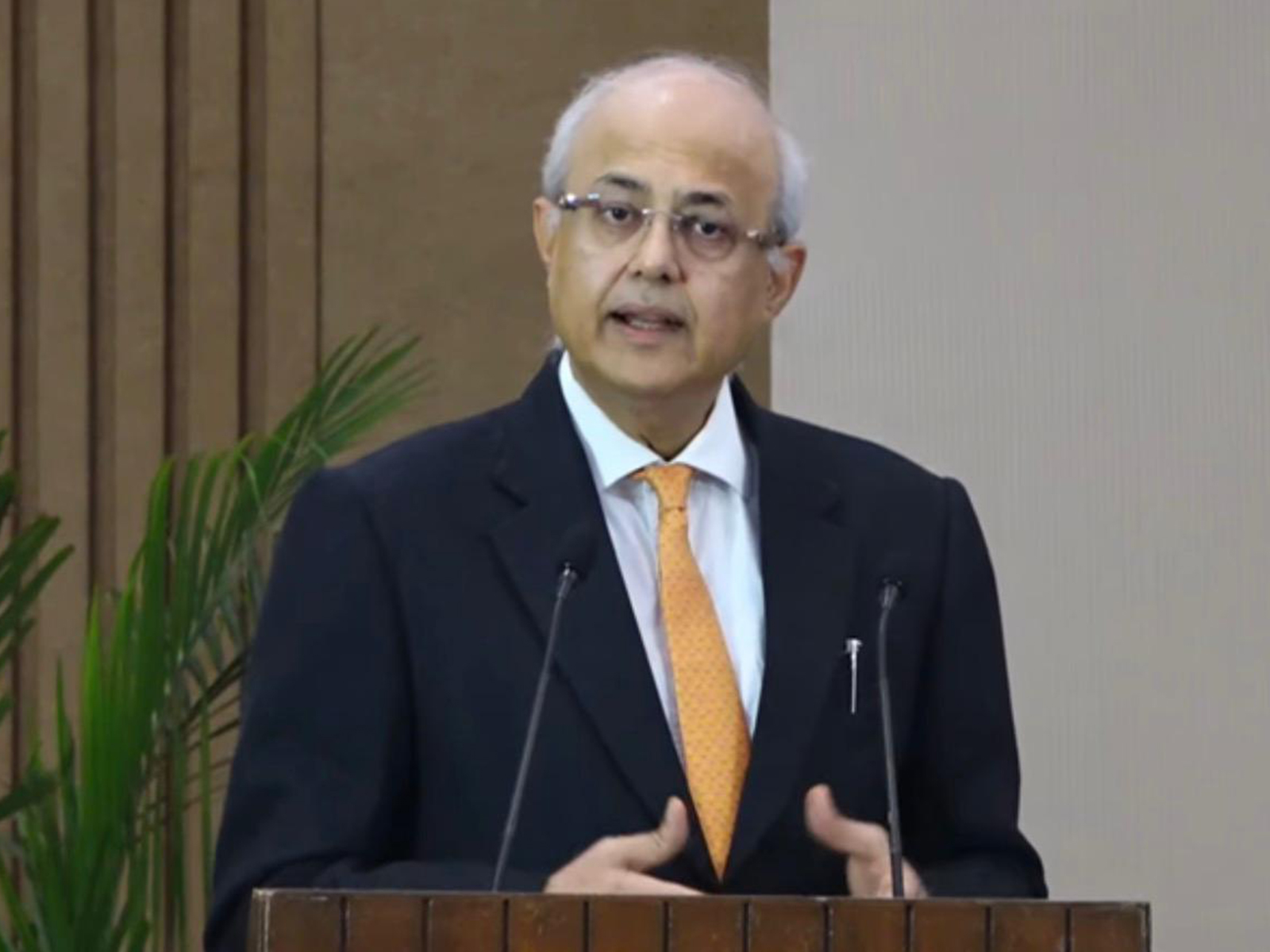

New Delhi [India], December 18 (ANI): The four new labour codes are an attempt to modernise India's labour framework while balancing ease of doing business with worker protection, Supreme Court Judge Justice Manmohan said while addressing the "Decoding the Codes" conference organised by the Confederation of Indian Industry (CII) and the Society of Indian Law Firms (SILF).
Recalling his early years at the Bar, Justice Manmohan noted that labour practice was once sharply divided between lawyers representing management and those appearing for workers.
That rigid divide, he said, has faded largely because many labour laws have become outdated, with key statutes dating back to the 1920s and 1930s.
Emphasising that law cannot remain static, he observed that rapid shifts towards a digital and platform-based economy had rendered several traditional definitions, such as "workman" and "factory", ill-suited to contemporary realities.
Justice Manmohan highlighted the need to address emerging forms of employment, including gig and platform work, pointing out that aggregators like ride-hailing platforms operate without owning traditional assets, yet engage a vast workforce.
With nearly 50 crore workers in India, most of them in the unorganised sector, he stressed that extending social security and legal protection to those outside the formal economy was long overdue.
Tracing the genesis of the labour codes to the Second National Commission on Labour's 2002 recommendations, Justice Manmohan said the consolidation of nearly 30 central labour laws into four codes was a necessary reform, even though it took more than two decades to implement.
He underlined that the objective of the codes is twofold: empowering workers while enabling enterprises to function efficiently.
The judge explained that the codes introduce flexibility for employers through simplified compliance and higher thresholds for prior government approval in cases of layoffs, retrenchment and closures, while simultaneously strengthening worker safeguards.
Fixed-term employees, he noted, are now entitled to the same benefits as permanent workers, including provident fund, social security and minimum wages. For the first time, gig workers, platform workers and those in the unorganised sector are brought within a statutory social security framework.
Justice Manmohan also referred to reforms aimed at reducing the so-called "inspector raj," with labour inspectors being reoriented as facilitators, and highlighted provisions promoting gender equality, including allowing women to work night shifts subject to safety and consent.
However, he cautioned that the real test of the labour codes lies in implementation. Since labour is a concurrent subject, State governments must frame rules, build digital systems and strengthen administrative capacity. Without coordinated action by the States, he warned, the codes risk remaining merely "on paper."
The conference also witnessed sharp criticism from senior advocate Colin Gonsalves, who argued that the labour codes dilute worker protections and entrench precarious employment, particularly in the gig economy. Drawing comparisons with jurisdictions like the UK and Germany, he questioned whether India was moving towards stronger labour rights or an increasingly informal workforce.
Responding to differing perspectives, Dr. Manoj Kumar, Additional Secretary in the Ministry of Law and Justice, said every country must design its labour framework in line with its own socio-economic realities. He emphasised that the labour codes were framed after stakeholder consultations and are intended to harmonise growth, social justice and constitutional values, with courts playing their role in shaping future jurisprudence.
Concluding his address, Justice Manmohan likened employers and employees to the two wheels of a chariot, stressing that economic progress is impossible if either is neglected. "The hundred-year-old laws have served their time," he said, adding that the new labour codes, if implemented with fairness and equity, could help ensure that as India moves towards its vision of Viksit Bharat 2047, the dignity of labour is firmly embedded in its legal framework. (ANI)
Labour Codes aim to balance growth and dignity of work: Justice Manmohan at CII-SILF conference
ANI | Updated: Dec 18, 2025 13:28 IST


