 हिंदी खबर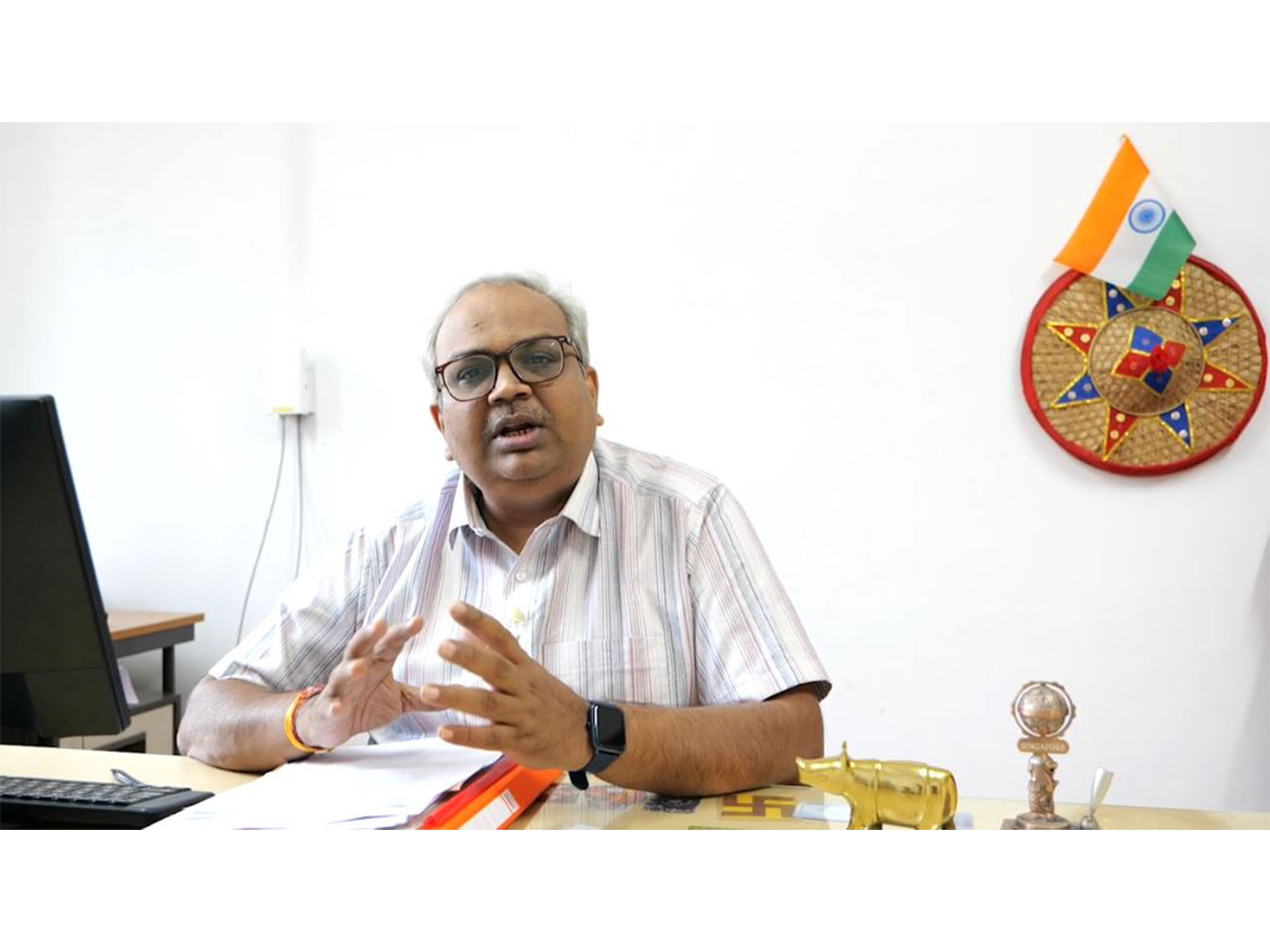

Guwahati (Assam) [India], February 4 (ANI): Researchers from the Indian Institute of Technology Guwahati, in collaboration with researchers from London South Bank University, University of Manchester, and the University of Leeds, have developed a Machine Learning (ML)-based method to design advanced metal alloys that do not contain Critical Raw Materials (CRMs).
This innovation offers a practical route to identifying high-performance, sustainable materials that are not dependent on fragile global supply chains.
Since the Bronze Age, humans have improved metals by alloying, i.e., mixing a main metal with small amounts of other elements. In recent years, a new class of materials, High-Entropy Alloys (HEAs), has attracted the attention of researchers and industry worldwide.
While traditional alloys contain small amounts of secondary metals in a primary metal (for example, bronze is 88% copper and 12% tin), HEAs contain several metals in nearly equal amounts.
These fall under the category of Multi-Principal Element Alloys (MPEAs).
HEAs are attractive because they offer many more combinations than traditional alloys and often exhibit excellent strength and stability at high temperatures.
Many high-performance HEAs used in areas such as aerospace engines, gas turbines, and nuclear power plants employ CRMs such as tantalum, niobium, tungsten, and hafnium. These elements are expensive, difficult to mine, and available in limited quantities.
Heavy reliance on such materials increases import dependence, strains supply chains, and adds environmental pressure due to mining.
Reducing their use is therefore essential for sustainability and long-term industrial security.
To address this challenge, the research team led by IIT Guwahati developed a machine learning-assisted alloy design framework that focuses on identifying MPEAs that avoid the most critical raw materials.
The researchers first grouped CRMs into three levels based on supply risk, economic importance, and global availability.
They created a database of 3,608 alloy compositions, focusing mainly on simple alloy systems built from elements that are not critically scarce.
Among the models tested, the Extra Trees Regressor gave the most accurate predictions of Vickers hardness. This model was then combined with different optimisation techniques inspired by natural processes to search for alloy compositions that deliver high hardness without using CRMs.
A CRM-free alloy, "Ti₀.₀₁₁₁NiFe₀.₄Cu₀.₄," was identified and predicted to have a Vickers hardness value that was even better than that of a well-known alloy containing critical materials, which has a hardness of about 480 HV.
The research team developed the newly proposed Ti-Ni-Fe-Cu alloy at a laboratory scale at IIT Kanpur and found its measured hardness to closely match the predicted value, confirming that the AI-based method works in practice.
This approach can be used to design alloys with multiple properties simultaneously, such as strength, ductility, heat resistance, and corrosion resistance.
Speaking about the research, Shrikrishna N Joshi, Professor, Department of Mechanical Engineering, IIT Guwahati, said, "The developed CRM-free alloy is particularly suited for applications where high hardness is a primary requirement, offering the added benefit of avoiding the use of Critical Raw Materials (CRMs). This makes the alloy attractive for both performance-driven and sustainability-focused applications."
Potential application areas include - Wear-resistant mechanical components, Tooling and surface-contact components, Automotive and industrial machinery parts.
Speaking about key distinguishing features of the developed framework, Prof Joshi said, "This is the first validated computational framework for designing critical raw material-free (CRM-free) multi-principal element alloys (MPEAs) using a unary- and binary-based compositional database, without relying on microstructural or processing parameters. The framework is built entirely on compositional data and machine learning (ML) models, making it highly transferable and generalizable to other material systems with limited experimental data. Moreover, it can be extended to predict other key mechanical and functional properties such as yield strength, ultimate tensile strength, ductility (elongation), fracture toughness, corrosion resistance, thermal conductivity, and wear resistance."
The findings of this research have been published in Scientific Reports, a journal of the prestigious Nature Publishing Group, in a paper co-authored by Prof Shrikrishna N Joshi, along with his research team members Dr. Swati Singh from IIT Guwahati, Prof Saurav Goel from London South Bank University, Mingwen Bai from the University of Leeds, and Prof. Allan Matthews from the University of Manchester.
As the next step, the research team plans to collaborate with industry partners and research laboratories to test these materials under real operating conditions and move closer to real-world deployment. (ANI)
IIT Guwahati, UK Universities develop Machine Learning based framework to design sustainable metal alloys without critical raw materials
ANI | Updated: Feb 04, 2026 14:32 IST




