Hills of Shimla city sinking each year, experts suggest controlling surface water to prevent oversaturation
The sinking areas of Shimla city are a growing concern among scientists and geological experts, who have observed an increasing number of landslides and ground subsidence in the region. According to experts, controlling and channelling surface water is crucial to prevent further saturation of the soil and to mitigate the risks associated with sinking areas in the city.
ANI
Aug 26, 2024 17:56 IST


Shimla (Himachal Pradesh) [India], August 26 (ANI): The sinking areas of Shimla city are increasingly concerning scientists and geological experts, who have observed a rising number of landslides and ground subsidence in the region. Experts stress that controlling and channelling surface water is crucial to prevent further soil saturation and mitigate the risks associated with these sinking areas.
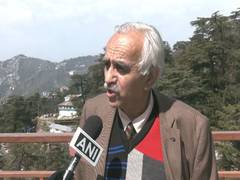
Dr. S.S. Randhawa, Principal Scientist at the Centre for Climate Change within the Department of Environment, Science, and Technology of the Government of Himachal Pradesh, is leading research on this issue. Heading a geological team that studied and reported on last year's floods in Shimla, Dr. Randhawa emphasized the need for a comprehensive plan to guide the city's future development.
He stated, "A geological survey will be conducted in Shimla city. The rock strata are weakening each year, and the homogeneous lithology, coupled with water seepage, is causing landslides due to the overburden on the hill surface."
Dr. Randhawa explained that the geological structure of the rocks, including their type and the extent of groundwater infiltration, plays a significant role in the subsidence of certain areas. "In areas where the rock strata are fractured, or there is homogeneity in lithology, weak zones begin to sink. For example, in the Comly Bank area of Shimla, the situation is severe. The area is under thrust pressure, and the rocks are shattered. You can see changes and increased pressure, which lead to sinking, especially in areas with water seepage," he elaborated.
He further mentioned that in places like the MLA Crossing area and Shiv Baori, overburden and the thickness of the weight on the rock surface have caused the strata to become oversaturated, leading to destabilization and debris slides. "On the other side of the Advanced Study area, the rocks are fractured, leading to settlement and cracks, which increase pressure and result in landslides," Dr. Randhawa noted.
To mitigate these risks, Dr. Randhawa highlighted the necessity of controlling surface water systematically to prevent subsurface moisture from remaining high throughout the year. "We must work on controlling surface water in an organised way and channelling it properly to ensure that subsurface areas do not stay moisturised continuously, especially during monsoons, which can turn these areas into potential zones for landslides," he added.
He also pointed out the geological challenges in specific areas of Shimla, such as the narrow hill slopes and wide downhill valleys in the Samej area, which have caused flooding due to high water velocity this year.
"These problems are exacerbated by the steep slopes, erratic rainfall patterns, and heavy precipitation, leading to increased slope failure. The fractured rocks allow water to seep into the joints during rainfall, a common phenomenon in mountainous regions. In the Samej area, the high velocity of water flow in the upper catchment area, combined with a narrow upstream and a wide downstream valley, created a confluence of two rivulets. The houses built near this confluence were washed away due to the heavy water flow," Dr. Randhawa explained.
He further detailed that the old pluvial terrace in Samej, with a gradient slope of 35 feet, was overwhelmed by the high-velocity water, resulting in the destruction of structures built on the flood plains. "The main reason for this is uncontrolled water flow. We need to manage surface water to prevent over-saturation," he asserted.
Reflecting on the geological survey conducted last year, Dr. Randhawa indicated that the Geological Survey of India is set to develop a comprehensive plan for Shimla, taking into account the findings from previous studies. "Plans can be formulated based on these findings to address the ongoing challenges posed by landslides and sinking areas in Shimla," he concluded.
The recurring landslides and sinking of Shimla highlight the urgent need for a strategic approach to water management and geological monitoring. Experts suggest that controlling surface water and understanding the geological structure of the city are vital steps in preventing further subsidence and ensuring the safety of its residents.
Environmentalists and the former Deputy Mayor of the HP Assembly, Tikender Panwar, expressed concern about the future of mountain towns like Shimla, emphasizing the need for distinct designs compared to those used in the plains. He highlighted that the Himalayan region, including Shimla, is highly vulnerable and requires a comprehensive understanding of the soil and sliding zones.
"The design for surface water drainage needs to be scientific," he stated.
Referring to past studies by E.M. Thomsan in the 1960s, Panwar noted that activities in sliding zones must be halted to prevent disasters, attributing past failures to institutional shortcomings. He called for prompt action and enhanced institutional training, urging a reassessment of infrastructure designs.
"There are over 20 places where roads are getting damaged; why should we wait for a disaster?" he questioned, pointing to a recent wall collapse at the Indian Institute of Advanced Study as an example of the need for proactive measures.
Speaking as part of Shimla Collectives, Panwar announced the development of an action plan for Shimla's vision by 2040, aligning with national targets for achieving zero emissions between 2050 and 2060. He highlighted the strain on the town, which was originally built for 30,000 people but now accommodates 300,000 residents and 5 million visitors annually, calling it a significant challenge that requires immediate attention. (ANI)
Tags:
Get the App