FIR cannot be registered for PCPNDT Act offences, rules Supreme Court
The Supreme Court has held that an FIR cannot be registered for offences under the Pre-Conception and Pre-Natal Diagnostic Techniques (Prohibition of Sex Selection) Act, 1994, merely because such offences have been classified as cognizable and non-bailable.
ANI
Aug 20, 2026 12:47 IST

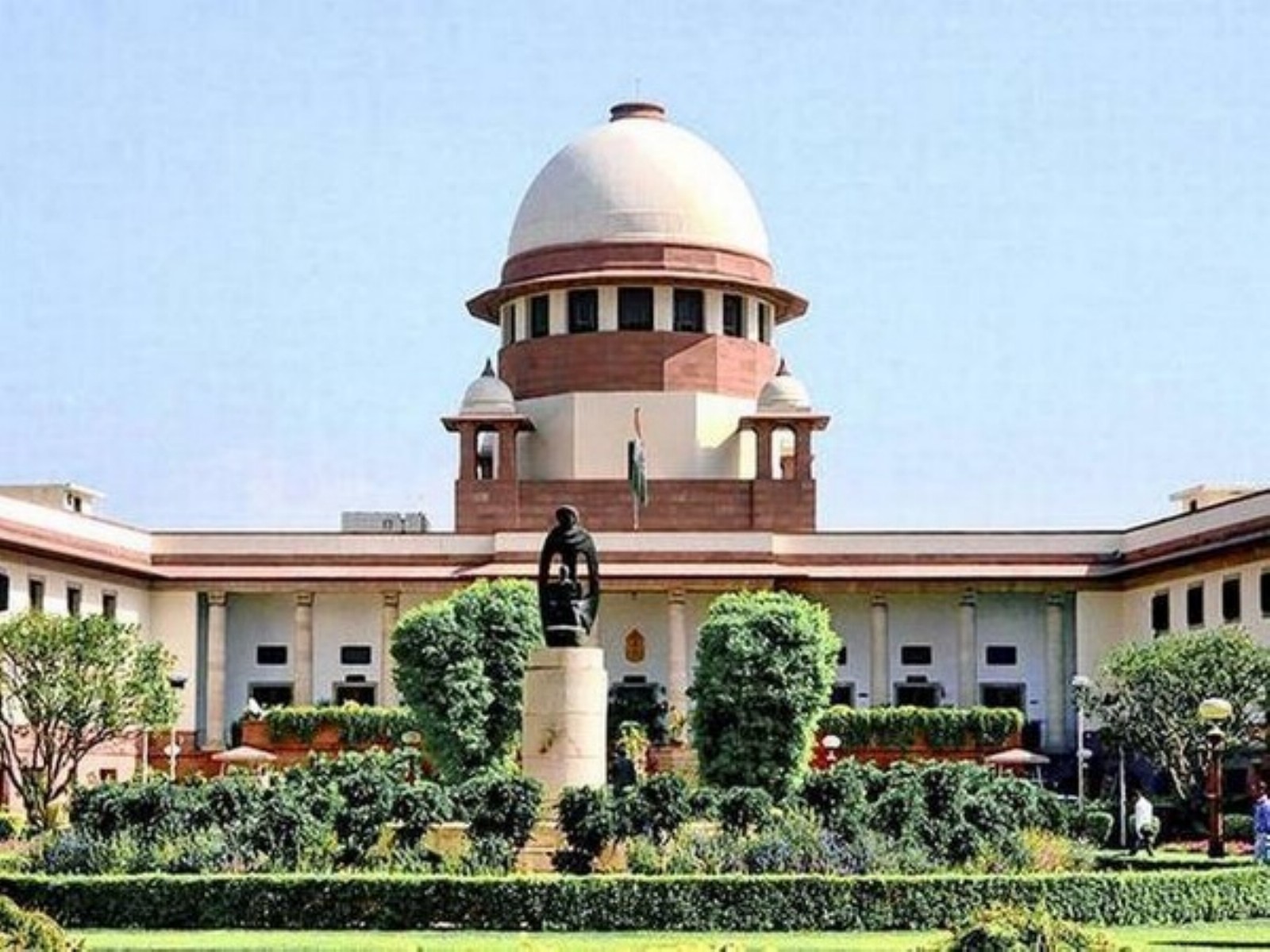
New Delhi [India], August 20 (ANI): The Supreme Court has held that an FIR cannot be registered for offences under the Pre-Conception and Pre-Natal Diagnostic Techniques (Prohibition of Sex Selection) Act, 1994, merely because such offences have been classified as cognizable and non-bailable.
A Bench comprising Justice Sanjay Karol and Justice Nongmeikapam Kotiswar Singh ruled that the special enforcement mechanism created under the PC & PNDT Act must prevail and cannot be displaced by the ordinary police investigation procedure.
The Court also held that investigation into offences under the Act lies with the Appropriate Authority and that a Magistrate cannot take cognisance based on a police charge-sheet. Cognisance can be taken only on a complaint filed in accordance with Section 28 of the Act.
The judgment came in an appeal arising from a September 30, 2024 judgment of the Allahabad High Court, with the State of Uttar Pradesh challenging the restrictions placed on police action under the special legislation.
The Supreme Court considered three key questions: whether police can register an FIR for an offence under the Act merely because it is cognizable and non-bailable; whether police can investigate such offences; and whether a Magistrate can take cognisance of an offence based on a police charge-sheet.
The Court answered all three questions in favour of the special statutory mechanism under the PC & PNDT Act.
On the issue of FIR registration, the Court held that the mere use of the expressions "cognizable" and "non-bailable" in Section 27 does not automatically confer unrestricted police powers when the Act itself prescribes a specific mechanism for investigation and prosecution.
The Court further held that the Appropriate Authority is responsible for investigating violations under the Act in accordance with the specialised procedure prescribed by Parliament.
While examining Rule 18A(3)(iv), the Court noted the statutory requirement that police involvement in investigation is to be avoided "as far as possible". However, the judgment recognises that police assistance may be sought in cases of genuine grave exigency where such assistance is necessary for the effective discharge of statutory functions.
The Court also drew a clear distinction between police assistance and police investigation. While police may assist in circumstances such as maintaining law and order, searches, seizures or preventing destruction of evidence, such limited assistance does not permit the police to take over the investigation contemplated under the PC & PNDT Act.
On the question of cognizance, the Supreme Court held that a police charge-sheet cannot substitute the complaint specifically required under Section 28. Therefore, a Magistrate cannot take cognizance of an offence under the PC & PNDT Act merely on the basis of a police report.
The judgment effectively reinforces the complaint-based mechanism prescribed by the special legislation and prevents the ordinary criminal process from being used to bypass the statutory role assigned to the Appropriate Authority.
During the proceedings, the Court had appointed former Delhi High Court judge and Senior Advocate Mukta Gupta as Amicus Curiae, with Advocate-on-Record Nitin Saluja assisting her. The Bench also sought assistance from Senior Advocates Pramod Kumar Dubey and Siddharth Agarwal and Advocate Vikalp Sharma.
The State of Uttar Pradesh had defended registration of the FIR, arguing that Section 27 expressly makes offences under the Act cognizable and non-bailable and that the general criminal procedure should consequently apply at the investigation stage.
The Union of India, represented by Additional Solicitor General Vikramjit Banerjee, also argued that the cognizable character of the offences could not be rendered meaningless and that ordinary criminal procedure would continue to have relevance unless expressly excluded by the special statute.
The opposing submissions emphasised that the PC & PNDT Act creates a complete and specialised enforcement framework centred on the Appropriate Authority. It was argued that allowing unrestricted police investigation would create a parallel enforcement mechanism and dilute the procedure specifically prescribed under the Act.
The Supreme Court ultimately accepted the latter approach and held that the special statutory scheme must govern investigation and prosecution of offences under the PC & PNDT Act.
The Court thereafter remanded the main matter to the Allahabad High Court for consideration in light of the law declared by the Supreme Court.
For Uttar Pradesh, advocates appearing included Vishwa Pal Singh, AOR, Divyesh Pratap Singh, Srikant Singh, Akash, Srajan Shankar Kulshreshtha, Amit Kumar, Manoj Sharma and Danish Alvi.
For the Union of India, the team was led by Additional Solicitor General Vikramjit Banerjee, assisted by Madhulika Upadhyay, AOR, and other counsel.
Mukta Gupta, Senior Advocate, appeared as Amicus Curiae, assisted by Nitin Saluja, AOR, Nitya Gupta, Vittal Bala Subrahamanyam, Ishita Soni, Pranya Madan and Karan Singh.
Senior Advocate Pramod Kumar Dubey was assisted by Vikalp Sharma and other counsel, while Vikalp Sharma and Palash Soni also appeared in the matter. (ANI)
Tags:
Get the App