COVID-19: From ascertaining variants to surveillance strategy, all you need to know about Indian SARS-CoV-2 Genomics Consortium
New Delhi [India], July 7 (ANI): The Indian SARS-CoV-2 Genomics Consortium (INSACOG) is a national multi-agency consortium of Genome Sequencing Laboratories laboratories established by the Government of India on December 30, 2020.
ANI
Jul 07, 2021 17:45 IST

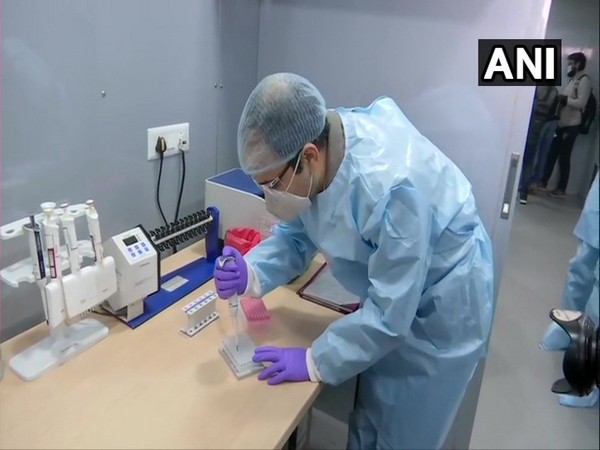
New Delhi [India], July 7 (ANI): The Indian SARS-CoV-2 Genomics Consortium (INSACOG) is a national multi-agency consortium of Genome Sequencing Laboratories laboratories established by the Government of India on December 30, 2020.
According to the Ministry of Health and Family Welfare, initially, this consortium had 10 laboratories. Subsequently, the scope of laboratories under INSACOG was expanded and at present, there are 28 laboratories under this Consortium that monitor the genomic variations in SARS-CoV-2.
The SARS-CoV-2 virus, commonly known as the COVID-19 virus posed unprecedented public health challenges globally. In order to fully understand the spread and evolution of the SARS CoV-2 virus, its mutations, and resulting Variants, the need for in-depth sequencing and analysis of the genomic data was felt.
Against this backdrop, INSACOG was established to expand whole-genome sequencing of the SARS-CoV-2 virus across the nation, aiding our understanding of how the virus spreads and evolves. Any changes to the genetic code, or mutations in the virus, can be observed based on the analysis and sequencing of samples done in the laboratories under INSACOG.
The specific objectives of INSACOG include ascertaining the status of Variants of Interest (VoI) and Variants of Concern (VoC) in the country, establishing sentinel surveillance and surge surveillance mechanisms for early detection of genomic variants and assist in formulating effective public health response, and determining the presence of genomic variants in samples collected during super-spreader events and in areas reporting an increasing trend of cases/deaths, etc.
India started sequencing SARS-CoV-2 viral genomes in 2020. Initially, NIV and ICMR sequenced samples of international passengers who arrived in India from UK, Brazil or South Africa or transited through these countries, as these countries reported a sudden surge in cases.
RTPCR positive samples from States reporting sudden surges in cases were sequenced on priority. This was further expanded through efforts of the Council of Scientific and Industrial Research (CSIR), Department of Biotechnology (DBT), and National Centre for Disease Control (NCDC), as well as individual Institutions.
The initial focus of India was on restricting the spread of global variants of concern in the country - Alpha (B.1.1.7), Beta (B.1.351), and Gamma (P.1), which had high transmissibility. The entry of these variants was carefully tracked by INSACOG. Subsequently, the Delta and Delta Plus variants were also identified based on Whole Genome Sequencing analysis conducted in the INSACOG laboratories.
Talking about the strategy for SARS CoV-2 surveillance in India, the Union Health Ministry stated that initially, genomic surveillance was focused on the variants carried by international travelers and their contacts in the community through sequencing 3-5% of the total RTPCR positive samples.
Subsequently, the sentinel surveillance strategy was also communicated to the States/UTs in April 2021. Under this strategy, multiple sentinel sites are identified to adequately represent the geographic spread of a region, and RTPCR positive samples are sent from each sentinel site for Whole Genome Sequencing.
Detailed SOPs for sending samples from the identified sentinel sites regularly to the designated Regional Genome Sequencing Laboratories (RGSLs) were shared with States/UTs. The list of INSACOG RGSLs tagged to States was also communicated to the States. A dedicated Nodal Officer was also designated by all States/UTs for coordinating the activity of Whole Genome Sequencing.
Sentinel Surveillance (for all States/UTs/) is an ongoing surveillance activity across India. Each State/UT has identified sentinel sites (including RT-PCR labs and tertiary health care facilities) from where RT-PCR positive samples are sent for Whole Genome Sequencing.
In Surge Surveillance (for districts with COVID19 clusters or those reporting a surge in cases), a representative number of samples (as per the sampling strategy finalized by the State Surveillance Officer/Central Surveillance Unit) are collected from the districts which show a surge in the number of cases and are sent to RGSLs.
The Standard operating procedure for sending samples to INSACOG laboratories and subsequent action based on genome sequencing analysis includes the Integrated Disease Surveillance Programme (IDSP) machinery that coordinates sample collection and transportation from the districts/sentinel sites to Regional Genome Sequencing Laboratories (RGSLs).
The RGSLs are responsible for Genome sequencing and identification of Variants of Concern/Variants of Interest, potential Variants of Interest, and other mutations. Information on Variants of Concern (VOC)/Variants of Interest (VOI) is submitted to Central Surveillance Unit, IDSP for establishing a clinico-epidemiological correlation in coordination with State Surveillance Officers.
Based on discussions in the Scientific and Clinical Advisory Group (SCAG) established to support the INSACOG, it was decided that upon identification of a genomic mutation that could be of public health relevance, RGSL will submit the same to SCAG. SCAG discusses the Potential Variants of Interest and other mutations and, if felt appropriate, recommends to Central Surveillance Unit for further investigation.
The genome sequencing analysis and clinico-epidemiological correlation established by IDSP is shared with MOHFW, ICMR, DBT, CSIR, and states/UTs for formulating and implementing requisite public health measures.
The new mutations/variants of concern are cultured, and genomic studies are undertaken to see the impact on vaccine efficacy and immune escape properties.
Variants of Concern have been found in 174 districts in 35 states in India. The highest numbers of VOCs have been reported from districts in Maharashtra, Delhi, Punjab, Telangana, West Bengal and Gujarat.
Variants of Concern of public health importance detected in community samples in India are Alpha, Beta, Gamma, and Delta. The B.1.617 lineage, first observed in Maharashtra, was associated with the unusual rise observed in several districts of the State. It is now found in many States in India.
B.1.617.2.1 (AY.1) or commonly known as Delta Plus variant signifies Delta variant with an additional mutation. (ANI)
Tags:
Get the App