CJI Ramana leaves behind lasting legacy of judicial reforms
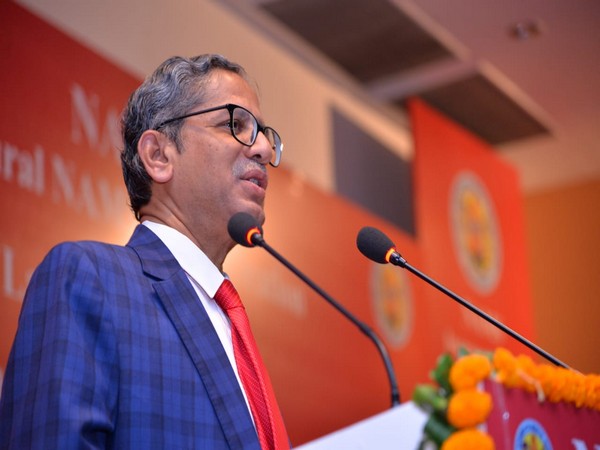
New Delhi [India], August 26 (ANI): Chief Justice of India (CJI) NV Ramana, who is retiring on August 26 after a tenure of one year and four months, stressed on the filling up of judicial vacancies, as well as improving the judicial infrastructure to tackle India's perennial problem of high cases pendency at courts.
ANI
Aug 26, 2022 10:41 IST

By Garima Tyagi
New Delhi [India], August 26 (ANI): Chief Justice of India (CJI) NV Ramana, who is retiring on August 26 after a tenure of one year and four months, stressed on the filling up of judicial vacancies, as well as improving the judicial infrastructure to tackle India's perennial problem of high cases pendency at courts.
As an advocate for increasing the sanctioned strength of judges, both at the district courts and the High Courts, Chief Justice Ramana has often highlighted the necessity to reduce the caseload per judge and to improve the judge-to-population ratio.
To this end, Chief Justice Ramana recommended the appointment of 255 judicial officers and advocates as High Court judges during his 16 months tenure as head of the Supreme Court Collegium.
Under his term as head of the Collegium, CJI Ramana appointed 11 Supreme Court judges, including Justice BV Nagarathna who is slated to create history as the first woman CJI in 2027. Also, 15 Chief Justices were appointed to various High Courts during his tenure.
Speaking at public platforms CJI Ramana has never minced words while defending the rights of the people under the Constitution.
In a recent convocation ceremony in Chhattisgarh, CJI Ramana urged people to build a democracy filled with "vibrancy and idealism", where differences of identities and opinions are respected. He said every individual must be made aware of their rights and duties and a constitutional republic shall only thrive when its citizens are aware of what their Constitution envisages.
CJI Ramana also reminded that for the functioning of a healthy democracy, it is imperative that the people feel that their rights and dignity are protected and recognised and "expeditious adjudication of disputes is the hallmark of a healthy democracy".
While in court, CJI Ramana questioned the relevancy of obsolete laws which have been carried over from the pre-independence era.
In a landmark case, a bench headed by CJI Ramana, on July 15 last year, put on hold the colonial-era sedition law and asked the Central government and States not to register any cases for the under Section 124A of Indian Penal Code which criminalises the offence of sedition.
CJI Ramana questioned the government on the need for sedition law after 75 years of independence. He pointed out that sedition law was used against freedom fighters like Mahatma Gandhi and Bal Gangadhar Tilak.
"Our concern is misuse of the law and the lack of accountability. Why it continues in the statute book after 75 years of our Independence," CJI had said, adding that sedition law was meant to suppress the freedom movement and asked its need in today's time.
CJI Ramana had said that the apex court will look into the plea challenging the Constitutional validity of section 124A while observing that it is a "serious threat to the functioning of individuals and parties".
In another case while hearing pleas challenging the constitutionality of certain provisions of the Unlawful Activities Prevention Act (UAPA), CJI Ramana told the government that "the way in which you are going, it looks like you have a problem with a person for even reading a newspaper".
The CJI's observation came while dismissing a plea filed by the National Investigation Agency (NIA) against the bail granted to an accused in a UAPA case.
Last year, when the Pegasus snooping issue reached the apex court, CJI Ramana then constituted a committee to look into the allegations of the government allegedly using Israeli software Pegasus for snooping.
He had criticised the Central government which had refused to file a detailed affidavit on the issue citing national security.
The mere invocation of national security by the State does not render the Court a mute spectator, CJI had said while setting up the committee. Members of a civilized democratic society have a reasonable expectation of privacy, CJI Ramana had said.
He had also said, "Every citizen of India ought to be protected against violations of privacy. It is this expectation which enables us to exercise our choices, liberties, and freedom".
The committee has recently submitted its report and concluded that the spyware was not found in the 29 mobile phones examined by it, but malware was found in five mobile phones however there is no conclusive proof of Pegasus spyware.
CJI Ramana had also constituted a five-member committee while hearing a plea on the security lapse on Prime Minister Narendra Modi's Punjab visit on January 5.
The CJI recently referred to a five-judge Constitution bench the issues involved in the petition filed by rival groups of Shiv Sena in relation to the Maharashtra political crisis.
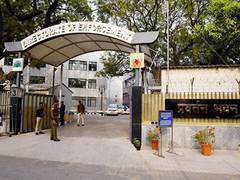
CJI Ramana-led bench also admitted a review petition against the top court's July 27 judgment which upheld the power of arrest, attachment and search and seizure conferred by the Enforcement Directorate under the Prevention of Money Laundering Act, 2002.
However, there are many pending cases which have not come up for hearing despite repeated requests from the parties involved. These cases include -- Karnataka High Court judgment banning wearing of hijab in pre-university colleges in the state, petitions challenging Citizenship (Amendment) Act, petitions challenging the abrogation of Article 370 which provided a special status to the erstwhile state of Jammu and Kashmir, and the case relating to whether convicted MPs and MLAs should be barred from running in future elections.
It is also to be noted that during the tenure of CJI Ramana not a single Constitution bench matter was taken up for hearing.
Justice Ramana, born in an agrarian family on August 27, 1957, in Andhra Pradesh had enrolled as an advocate on February 10, 1983. He became a permanent judge of the Andhra Pradesh High Court on June 27, 2000. He later served as the acting Chief Justice of the Andhra Pradesh High Court. In 2013 he was elevated as the Chief Justice of the Delhi High Court and in 2014 he became a judge in the Supreme Court. (ANI)
Tags:
Get the App