Centre, States are conferred equal power to legislate on GST, says SC
New Delhi [India], May 19 (ANI): The Supreme Court on Thursday said that the Centre and States are conferred equal power to legislate on Goods and Services Tax (GST) matters.
ANI
May 19, 2022 19:58 IST

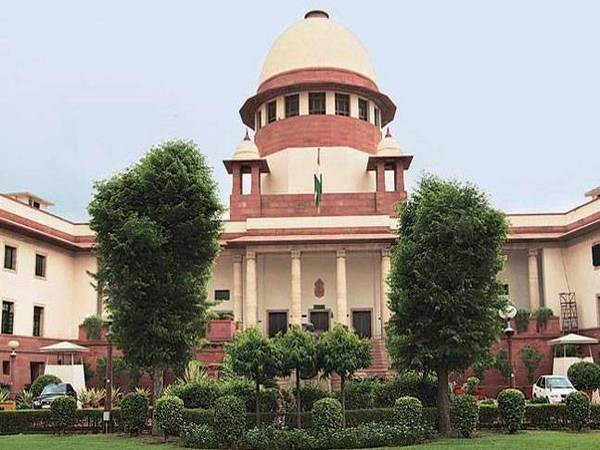
New Delhi [India], May 19 (ANI): The Supreme Court on Thursday said that the Centre and States are conferred equal power to legislate on Goods and Services Tax (GST) matters.
"The 'recommendations' of the GST Council are the product of a collaborative dialogue involving the Union and States. They are recommendatory in nature," the top court said.
"To regard them as binding edicts would disrupt fiscal federalism, where both the Union and the States are conferred equal power to legislate on GST. It is not imperative that one of the federal units must always possess a higher share in the power for the federal units to make decisions, " the top court said.
It further said that Indian federalism is a dialogue between cooperative and uncooperative federalism where the federal units are at liberty to use different means of persuasion ranging from collaboration to contestation.
A bench of Justices Dhananjaya Y Chandrachud, Surya Kant and Vikram Nath said that they are in agreement with the Gujarat High Court to the extent that a tax on the supply of a service, which has already been included by the legislation as a tax on the composite supply of goods, cannot be allowed.
The court was hearing the Union of India appeal against a judgment of a division bench of the
Gujarat High Court dated January 23, 2020.
The High Court had allowed a petition instituted by the respondents under Article 226 for challenging the constitutionality of two notifications of the Central Government. The bone of contention is whether an Indian importer can be subject to the levy of Integrated Goods and Services Tax on the component of ocean freight paid by the foreign seller to a foreign shipping line, on a reverse charge basis.
The top court said that it has reached various conclusions, which include the recommendations of the GST Council are not binding on the Union and States for the reason that "The deletion of Article 279B and the inclusion of Article 279(1) by the Constitution Amendment Act 2016 indicates that the Parliament intended for the recommendations of the GST Council to only have a persuasive value, particularly when interpreted along with the objective of the GST regime to foster cooperative federalism and harmony between the constituent units."
"Neither does Article 279A begin with a non-obstante clause nor does Article 246A state that it is subject to the provisions of Article 279A. The Parliament and the State legislatures possess simultaneous power to legislate on GST. Article 246A does not envisage a repugnancy provision
to resolve the inconsistencies between the Central and the State laws on GST, " the top court said.
It also said that the government while exercising its rule-making power under the provisions of the CGST Act and IGST Act is bound by the recommendations of the GST Council. However, that does not mean that all the recommendations of the GST Council made by virtue of the power of Article 279A (4) are binding on the legislature's power to enact primary legislation.
Section 5(4) of the IGST Act enables the Central Government to specify a class of registered persons as the recipients, thereby conferring the power of creating a deeming fiction on the delegated legislation, the top court said.
"The impugned levy imposed on the 'service' aspect of the transaction is in violation of the principle of 'composite supply' enshrined under Section 2(30) read with Section 8 of the CGST Act. Since the Indian importer is liable to pay IGST on the 'composite supply', comprising of supply of goods and supply of services of transportation, insurance, etc. in a CIF contract, a separate levy on the Indian importer for the 'supply of services' by the shipping line would
be in violation of Section 8 of the CGST Act," the top court said.
Reacting to the judgement, SR Patnaik, Partner and Head - Taxation, Cyril Amarchand Mangaldas, said that this is a welcome decision since it clarifies the relative powers and authority of the Parliament and the state legislative assemblies vis-a-vis the GST Council.
He said that it clarifies that GST Council is an informal body whose inputs should be taken into account, but it does not have legislative power and laws have to be legislated by the bodies who are empowered to do so i.e. the Parliament and the state legislative assemblies.
Patnaik said that the apex court has reminded the government that GST law concerns both State and Centre. It would defeat the principles of "cooperative federalism" if all the decisions are made by the Centre.
"The decision of GST council are recommendatory and would not become law unless passed by both Parliament and the State legislatures. The delegated authority, that is, GST Council, must act precisely within the confines of the authority given to it under the Act, and the notion of implied intent or the idea of incidental and ancillary power will not be appropriate in the exercise of fiscal power as it affects several taxpayers," Patnaik added. (ANI)
Get the App