 हिंदी खबर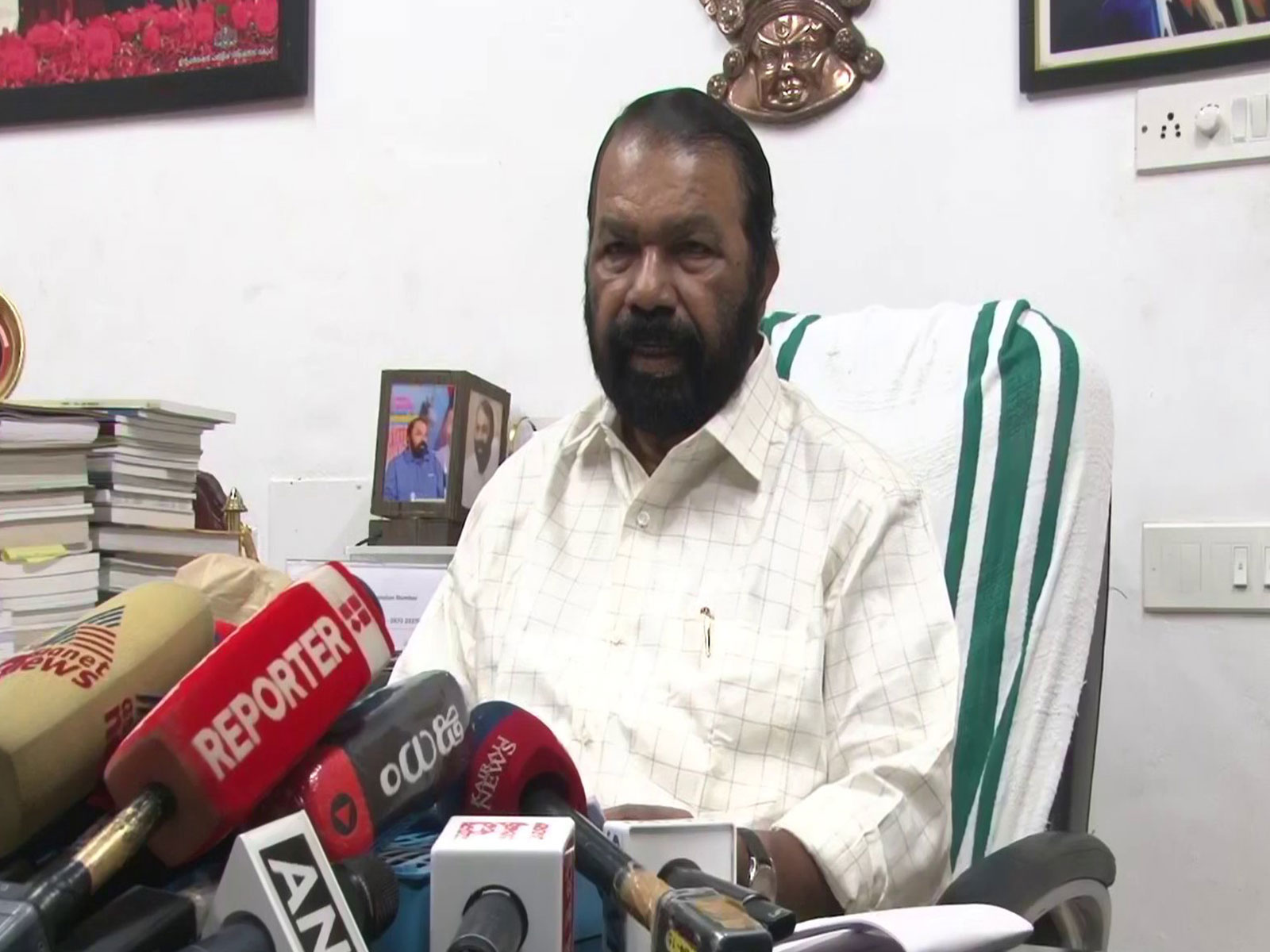

Thiruvananthapuram (Kerala) [India], November 26 (ANI): Kerala Education and Labour Minister V Sivankutty has announced that the state government will not implement the four Labour Codes, which came into effect last week. The Minister added that Kerala had notified the draft rules and sought feedback, but had decided not to implement them unilaterally.
Sivankutty stated, "The Central Government has announced that the four Labour Codes -- the Wage Code, Industrial Relations Code, Social Security Code and Occupational Safety, Health & Working Conditions Code formed by consolidating 29 labour laws, will come into effect from November 21, 2025. Since the reforms began in 2019, the Centre has been exerting tremendous pressure on states to frame rules. In response to this pressure, Kerala had notified the draft rules and sought feedback at that time. However, Kerala was not willing to implement them unilaterally."
Sivankutty stated that despite pressure from the Centre, Kerala has not taken any steps to implement the codes.
"On July 2, 2022, a major workshop was held in Thiruvananthapuram with trade union representatives, management representatives and legal experts. Trade unions strongly criticised the anti-worker provisions in the Labour Codes. Respecting those concerns, I, as Labour Minister, had directed that the State should not proceed further. For the last three years, Kerala has not taken a single follow-up step on this matter. That itself proves our firm stand," he added.
The Centre's sudden notification to implement the codes has led the Kerala government to convene an emergency meeting with trade union representatives.
Sivankutty said, "I personally represented Kerala in the meeting of State Labour Ministers held on November 11 and 12 in Delhi. At the meeting, we pointed out the anti-worker provisions in the Labour Codes and communicated Kerala's strong objection to the Union Labour Minister. The Union Minister responded and said a meeting would be convened the next day with trade union representatives to resolve their concerns. Instead of doing that, the Centre suddenly issued a notification. In the wake of this notification, an emergency meeting of Central Trade Union representatives in Kerala has been convened tomorrow. The government will move forward only after hearing the views of the trade unions."
The Kerala government has also decided to organise a National Labour Conclave in Thiruvananthapuram to draw national attention to the issue. The conclave will be attended by prominent trade union leaders, legal experts, and Labour Ministers from non-BJP-ruled states.
Sivankutty reiterated that the Kerala government will take any decision only while safeguarding workers' rights.
"In addition, to draw national attention to this issue, we have decided to organise a National Labour Conclave in Thiruvananthapuram. Prominent trade union leaders and legal experts from across India will participate. Labour Ministers from non-BJP-ruled states will also be invited. Let me reiterate: the Kerala Government will take any decision only while safeguarding the rights of workers. I also remind that except Kerala, most states in India have already framed rules on the Labour Codes and submitted them to the Centre," he said.
In a historic decision, the government of India, last Friday, announced that the four Labour Codes - the Code on Wages, 2019, the Industrial Relations Code, 2020, the Code on Social Security, 2020 and the Occupational Safety, Health and Working Conditions Code, 2020 are being made effective with immediate effect.
The four Codes rationalise 29 existing labour laws.
While drafting the four Codes, the government argued that many of India's labour laws were framed in the pre-Independence and early post-Independence era (1930s-1950s), when the economy and the world of work were fundamentally different.
While most major economies have updated and consolidated their labour regulations in recent decades, India continued to operate under fragmented, complex and in several parts outdated provisions spread across 29 Central labour laws.
The Codes also allow women to work at all hours if they consent and the employer provides safety, security, and transport; mandatory creche facilities at establishments with more than 50 workers; all state and national labour-related boards must have at least 33 per cent women members; and a work-from-home option after maternity leave. (ANI)
Centre exerting tremendous pressure: Kerala' Sivankutty on Labour codes
ANI | Updated: Nov 26, 2025 23:38 IST




