CAG, 16th Finance Commission hold consultation on public finance, lays emphasis on financial management of local bodies
The deliberations mainly focused on three key areas: Union and State Finances, Local Bodies, and Public Sector Enterprises (PSEs), among others. The Union, states, local bodies and the PSEs are under the audit of the CAG. In addition, the CAG also maintains the accounts of the states.
ANI
Mar 05, 2025 18:18 IST

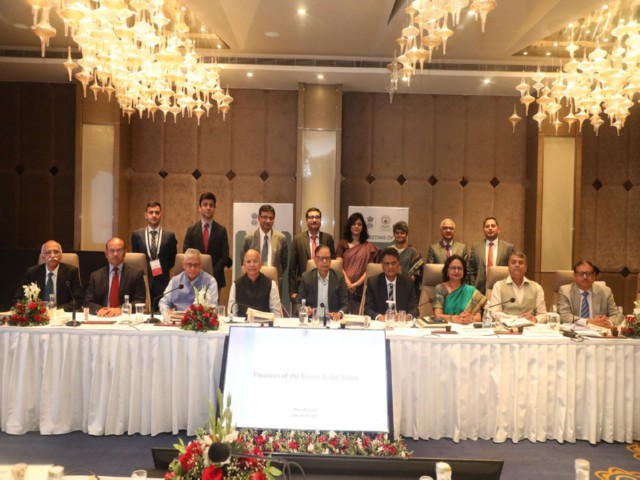
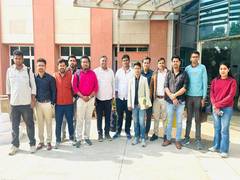
New Delhi [India], March 5 (ANI): The Comptroller and Auditor General of India, K Sanjay Murthy, held consultations with the 16th Finance Commission, chaired by Chairperson Arvind Panagariya, in Bhopal, Madhya Pradesh, on Wednesday.
The high-level consultation formed a critical part of the Commission's ongoing assessment of the financial landscape of the centre and states.
The deliberations mainly focused on three key areas: Union and State Finances, Local Bodies, and Public Sector Enterprises (PSEs), among others. The Union, states, local bodies and the PSEs are under the audit of the CAG. In addition, the CAG also maintains the accounts of the states.
The CAG shared various audit findings for Union and states in various sectors, the fiscal challenges and stress points, including the gap between expenditure and non-debt receipts for the Union and States combined.
The key areas of concern include a decline in the State Own Tax Revenue (SOTR) buoyancy of the States and varying levels of SOTR and Non-Tax Revenue of the States, which underscore the need for more robust revenue collection mechanisms.
The CAG drew attention to the need for regular reporting of the off-Budget Borrowings, meeting the FRBM targets, and taking into account post-audit liabilities computed by the CAG in his reports. This could be a crucial source of information for the Finance Commission while examining the extent of fiscal consolidation for the Union and the States.
The CAG’s presentation also drew attention to untapped revenue sources. Notably, areas such as stamp duty, registration fees, and state excise collections have been identified as having substantial potential for enhanced fiscal performance.
Recommendations in this regard include regular updates to market value guidelines, improved classification of property types, and the adoption of modern technology—such as sensor-based systems and QR codes—to minimize revenue leakages and improve data accuracy.
In the realm of Goods and Services Tax (GST) administration, the CAG has proposed several reforms aimed at widening the tax base and enhancing transparency.
Suggested measures include the integration of unregistered goods and service providers into the GST framework via automated data collection and real-time information systems, along with improvised taxpayer verification processes. These initiatives are expected to not only streamline the tax collection process but also to ensure more accurate apportionment of inter-state tax flows.
The CAG gave a strong emphasis on the need to standardize accounting practices at all tiers of the Government for transparent and ready availability of comparable fiscal information. The presentation called for the harmonisation of object heads of expenditure and adoption of a uniform 6-tier classification system by State Governments without deviations.
It was also highlighted that, as an immediate measure, harmonisation of local bodies accounts with central and state accounts may be attempted in the top 100 cities. Such steps would facilitate the seamless consolidation of fiscal data and strengthen transparency in public financial management, thereby empowering policymakers with clearer insights into both revenue and expenditure.
An important highlight of the discussion was the endorsement of good practices, like involving the establishment of a Budget Stabilization Fund by jurisdictions with surplus revenues. This fund, designed to cushion against unexpected budgetary shortfalls or cyclical disruptions using proceeds derived from specific revenue streams such as mineral resources, is presented as a replicable model for other regions with similar fiscal profiles. The adoption of this measure could significantly enhance financial resilience and contribute to more stable fiscal management across jurisdictions.
A key component of the meeting is centred on the financial management of local bodies. The CAG shared insights from performance audits across numerous urban local bodies and Panchayati Raj Institutions, pointing out issues such as incomplete devolution of functions, heavy dependence on Central and State grants, and low levels of own-source revenue.
In this regard, recommendations included integrating local body use of an Integrated Financial Management System (IFMS) for onboarding the payment/fund transfer made by the States to the ULBs and the RLBs and streamlining accounting practices to ensure consistent and transparent financial reporting at the grassroots level. The need for the development of a specifically suited system for the processing of the transactions of the ULBs/RLBs and their accounts was suggested, which can be incentivised by the FC.
Additionally, the presentation addressed the lack of oversight of State Public Sector Enterprises in the submission of their Annual Accounts, urging corrective measures to address persistent losses and inefficiencies, and recommending a close monitoring of disinvestment strategies.
Overall, the CAG’s interaction with the 16th Finance Commission provided a detailed roadmap for strengthening fiscal transparency, enhancing revenue performance, and ensuring robust financial management across all levels of government. The recommended measures are envisioned to promote accountability, drive efficient resource allocation, and support the long-term fiscal consolidation of the Union and the States.
The FC chairperson, Arvind Panagariya, in his concluding remarks, appreciated the efforts taken by the CAG in providing these insights to the commission, which would be of great value while formulating their recommendations. (ANI)
Get the App