Brinda Karat draws attention to negative impact of policy decisions regarding MGNREGA
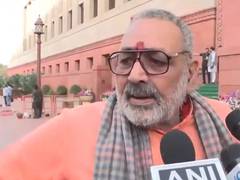
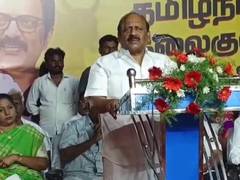
Communist Party of India (Marxist) Senior Leader and Politburo member Brinda Karat on Wednesday wrote a letter to Union Minister for Rural Development Giriraj Singh and draw attention to the negative impact of several policy decisions taken by the govt regarding MGNREGA.
ANI
Aug 30, 2023 19:56 IST

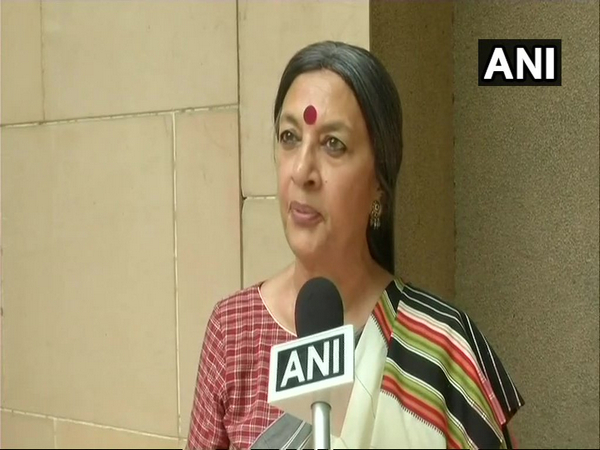
New Delhi [India], August 30 (ANI): Communist Party of India (Marxist) senior leader and Politburo member Brinda Karat on Wednesday wrote a letter to Union Minister for Rural Development Giriraj Singh and draw attention to the negative impact of several policy decisions taken by the govt regarding MGNREGA.
Brinda Karat in a letter to Giriraj Singh said, "I write this letter to you to draw your attention to the negative impact of several policy decisions taken by the government regarding MGNREGA. As one who was actively involved in the finalisation of the Act and the clauses regarding the rights of workers, it is a matter of deep concern that workers’ rights for demand-based work are being compromised."
The fund allocation is woefully inadequate, Brinda Karat wrote.
"According to the data on the Ministry’s website 91 per cent of funds allocated have been already spent. At present average workdays are at a low of just 35.4 days. In such a situation MGNREGA workers will face acute problems. Moreover, mandatory stipulations such as online registration of attendance at worksites as well as Aadhaar-based payments are converting unconditional rights embedded in the law into restricted access for job card holders," she added.
Karat further stated in a letter that the Introduction of Aadhaar-linked payments of wages has not resulted in much change in the timely payment of wages. In June, the government had assured that the Ministry was not insisting on an Aadhaar-enabled system of payment but on an Aadhaar-based payment system (ABPS) which would be more flexible.
However, a most revealing survey conducted by an organisation reported in the media on August 30, 2023, shows that out of the "total 26 crore job holders, 41.1 per cent are still not eligible for this mode of payment. From five states with the largest number of active job holders, 1.2 crore workers will not be eligible for payments as they do not have ABPS accounts”.
The survey also shows on the basis of an analysis of data recorded in the central database of the government that there is statistically very little difference between ABPS and normal account transactions as far as the amount of time taken for payments is concerned or as far as percentage of rejections are concerned, Karat said.
"In other words, while so far there is no significant benefit, there is certainly evidence of significant losses for workers," she added
Former Rajya Sabha MP Brinda Karat said that in the last six months, she had visited MGNREGA sites and interacted with workers across states.
"A common complaint has been the introduction of the attendance system through online registrations at the worksite at specific times during the day. Given that the connectivity is very poor in vast areas of rural India, particularly in remote tribal areas, mandatory online registration is leading to great difficulties for the workers. Women workers who comprise the majority of MGNREGA workers in many States, have been particularly affected," Karat said.
Stating that women workers were charged in patriarchal cultures with the main responsibility of domestic work and the care of families, Karat said, "Before and after their MGNREGA workday women put in many more hours of work. However, they complain that because of the lack of connectivity, sometimes they have to spend one hour extra getting their attendance registered."
There are also examples of attendance not getting registered leading to denial of wages, she further said.
"In my interaction with women workers, I found that the SORs and the piece rates decided are extremely difficult to complete. In the current situation as far as women’s work norms are concerned MNREGA sites are illustrations of the extraction of female labour at low rates to create public assets. There have been no Ministry-initiated recent time-use surveys on MNREGA sites. Earlier in many states, work norms for women were decided after such surveys. This is an urgent requirement," she added.
Brinda Karat said, "Hope that the government will consider the issues I have raised and take appropriate action." (ANI)
Get the App