Ayodhya case was not decided on basis of 'faith': Former CJI Chandrachud; clarifies "Babri Masjid desecration" remark amid row
Former Chief Justice of India DY Chandrachud has said that the Ayodhya case was decided not on the basis of faith but on evidence and legal principles.
ANI
Sep 26, 2025 11:16 IST

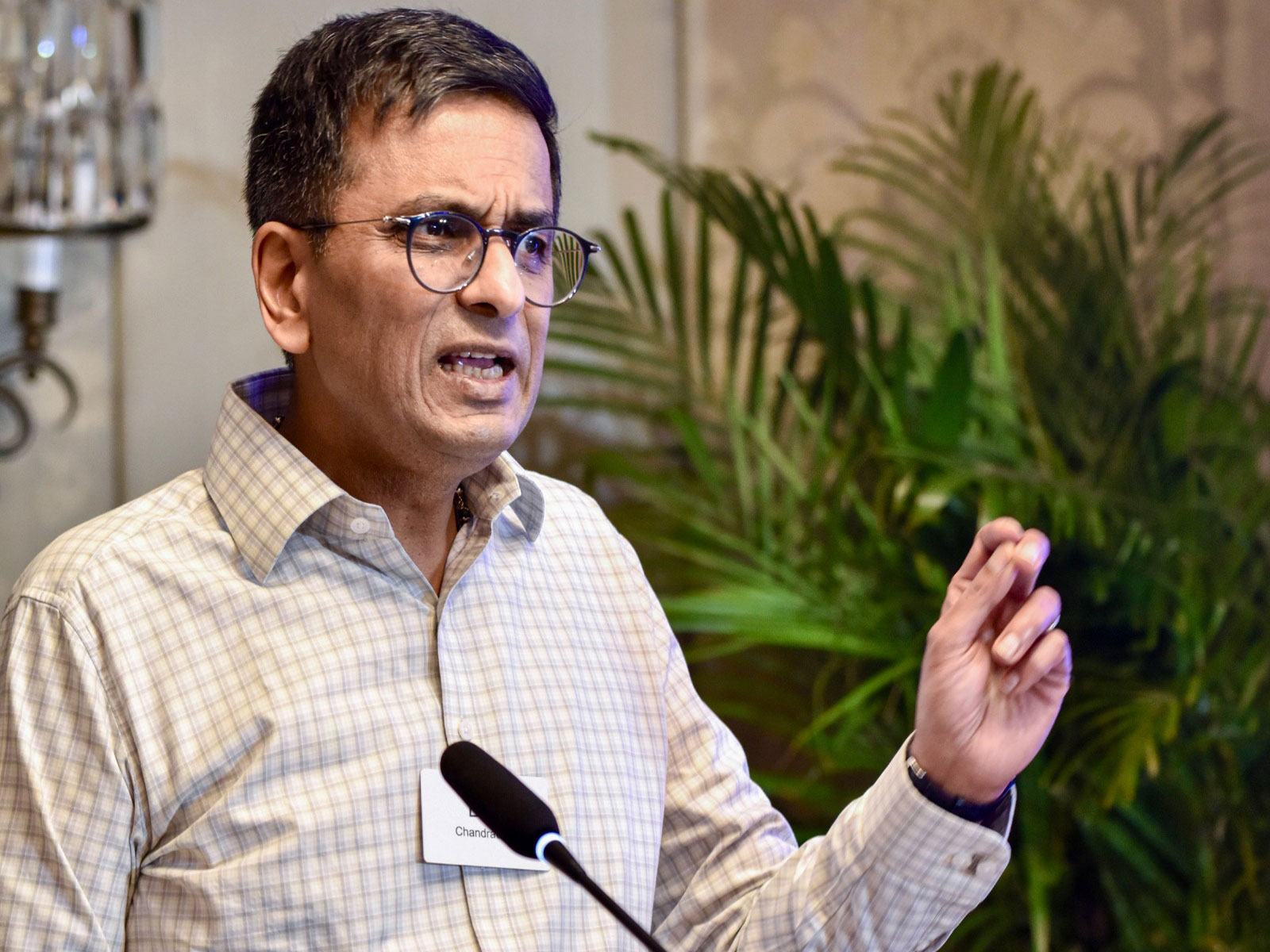
Mumbai (Maharashtra) [India], September 26 (ANI): The Ayodhya case was decided not on the basis of faith but on evidence and legal principles, according to former Chief Justice of India DY Chandrachud.
Chandrachud also clarified that his remarks that "erection of the Babri Masjid was a fundamental act of desecration," given to a media portal have been taken out of context and that led to a misinterpretation of his views on the Ayodhya dispute
"What is happening on social media is that people lift one part of the answer and combine it with another part, completely removing the context," Chandrachud said at the India Today Conclave in Mumbai on Thursday while responding to the criticism.
Shedding light on the Supreme Court judgment on the Ram Janmabhoomi-Babri Masjid case, Chandrachud said that most people have not read the judgment and express opinions on social media platforms without reading the verdict document.
"The judgment was 1,045 pages long because the case record was over 30,000 pages. Most people who criticise it have not read the judgment. It is easy to post opinions on social media without reading the full document," he said at the conclave.
"We must not forget what happened in history. These facts were part of the evidence we considered in the case," he added.
Justice Chandrachud was part of the five-judge bench that cleared the way for the construction of a Ram Temple in Ayodhya.
The former CJI also pointed out that on social media platforms, views on judicial independence has taken a binary route, and that's how people these days are labelling judges.
"Unless a judge decides every case according to a netizen's ideological view, they are not considered independent. Independence is also seen as only deciding cases against the government. But if you decide even one case in favour of the government, you are called pro-government," he said.
Chandrachud also listed examples of cases where the verdict was given against the government, including the electoral bonds case, the Aligarh Muslim University minority status case, and the Aadhaar verdict.
When asked whether publicly admitting to prayer before such a significant ruling violated the constitutional principle of judicial neutrality, Chandrachud said, "Every day, judges enter a zone of conflict. I pray or meditate each morning to bring peace and equilibrium to my work."
Chandrachud shared that he recited the Navkar Mantra each day while serving as Chief Justice and had visited various religious places, including a dargah during his time at the Allahabad High Court and a church during visits to Goa.
"My belief allows space for others to believe differently. There is nothing wrong in quiet reflection or prayer that helps a judge do justice with an even hand." He clarified that such personal practices are protected under the Constitution, which guarantees every individual, including judges, the right to belief," he said. (ANI)
Get the App