

ADD ANI AS A TRUSTED SOURCE
googleads
ANI Logo
Menu
Relationships

Study reveals new insight on how brain maps our interpersonal ties

Washington D.C. [USA], June 16 (ANI): The closer you feel to people emotionally, the more similarly you represent them in your brain. In contrast, people who feel social disconnection appear to have a lonelier, neural self-representation, according to a new study.

ANI Jun 17, 2020 00:11 IST googleads

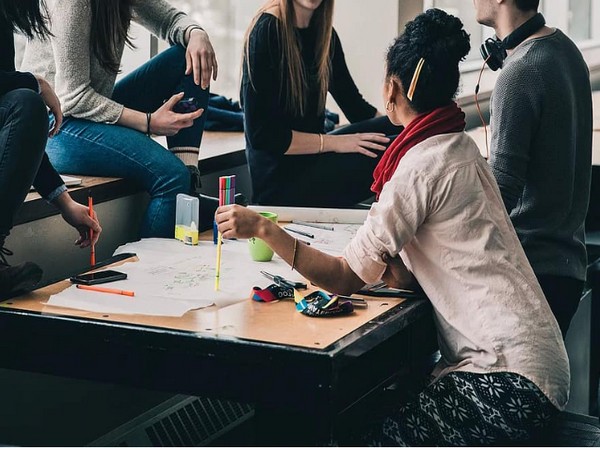
Representative Image

Washington D.C. [USA], June 16 (ANI): The closer you feel to people emotionally, the more similarly you represent them in your brain. In contrast, people who feel social disconnection appear to have a lonelier, neural self-representation, according to a new study.
The findings of the Dartmouth study are published in the Journal of Neuroscience.
"If we had a stamp of neural activity that reflected your self-representation and one that reflected that of people whom you are close to, for most of us, our stamps of neural activity would look pretty similar. Yet, for lonelier people, the neural activity was really differentiated from that of other people," explained senior author Meghan L. Meyer, an assistant professor of psychological and brain sciences, and director of the Dartmouth Social Neuroscience Lab.
The study was comprised of 50 college students and community members ranging from age 18 to 47. Before going to an fMRI scanner, participants were asked to name and rank five people whom they are closest to and five acquaintances.
During the scan, participants were asked to make trait judgments about themselves, the people they are closest to and the acquaintances that they had just named, and five celebrities. Participants were asked to rate how much a trait described as a person (such as if the person is friendly) on a scale from 1 to 4 (from not at all to very much).
The results showed how the brain seemed to cluster representations of people into three different cliques: oneself, one's own social network, and well-known people, like celebrities.
The closer participants felt to someone, the more similar their brain represented them throughout the social brain, including in the medial prefrontal cortex (MPFC), the region associated with the concept of self.
Lonelier people showed less neural similarity between themselves and others in the MPFC, and the demarcations between the three cliques were blurrier in their neural activity. In other words, the lonelier people are, the less similar their brain looks when they think about themselves and others.
Meyer added, "It's almost as if you have a specific constellation of neural activity that is activated when you think about yourself. And when you think about your friends, much of the same constellation is recruited. If you are lonely though, you activate a fairly, different constellation when you think about others than when you think about yourself. It's as though your brain's representation of yourself is more disconnected from other people, which is consistent with how lonely people say they feel."
The findings illustrate how loneliness seems to be associated with distortions in the neural mapping of social connections with others. (ANI)


Get the App

What to Read Next

Relationships

Moral reasoning displays characteristic patterns in brain: Study

Moral reasoning displays characteristic patterns in brain: Study

Philosophers, psychologists and neuroscientists have passionately argued whether moral judgments share something distinctive that separates them from non-moral matters. Moral monists claim that morality is unified by a common characteristic and that all moral issues involve concerns about harm.

Read More
Quirky

Exciting the brain might be key to boosting maths learning: Study

Exciting the brain might be key to boosting maths learning: Study

According to a new study from the Universities of Surrey and Oxford, Loughborough University, and Radboud University in the Netherlands, activating a brain region with electrical noise stimulation may improve mathematical learning in those who struggle with the subject.

Read More
Quirky

Youth with poor learning skills most vulnerable to email scams

Youth with poor learning skills most vulnerable to email scams

According to an international study published in the peer-reviewed British Journal of Educational Studies, disadvantaged youth are more vulnerable to email scams and require more protection.

Read More
Parenting

Overuse of social media, gadgets becomes top parents concern

Overuse of social media, gadgets becomes top parents concern

As children return to school, two issues are rising to the top of their parents' concerns: the impact of social media and the internet on children's lives.

Read More
Others

Obesity linked to changed connection patterns with brain regions

Obesity linked to changed connection patterns with brain regions

According to a recent study, people who are obese exhibit hypo-connectivity with the left inferior frontal gyrus (related with cognitive control) and hyper-connectivity with a portion of the ventral occipitotemporal cortex

Read More
Culture

Study reveals social media marketing most effective when it motivates consumers to start posting: St

Study reveals social media marketing most effective when it motivates consumers to start posting: St

When companies launch new items, social media is an important marketing tool for raising awareness. The platforms can assist in informing consumers about the product's features and benefits in comparison to competitors' offerings.

Read More
Food

MIND diet associated with better focus in school-aged children

MIND diet associated with better focus in school-aged children

A recent study suggested that a diet created to assist prevent cognitive decline in adults may also help increase attention in preadolescents. Future nutritional programmes aiming at enhancing children's cognition may benefit from the findings.

Read More
Education

Positive contact with diverse groups reduce conspiracy theories

Positive contact with diverse groups reduce conspiracy theories

New UEA research suggests that positive interactions with members of other groups can reduce the amount of baseless conspiracy theories about those organisations.

Read More
Others

Positive contact with diverse groups lowers conspiracy theories

Positive contact with diverse groups lowers conspiracy theories

According to new UEA research, positive contacts with people from diverse groups can lessen the amount of negative conspiracy beliefs about those groups.

Read More
Others

Study reveals creative people enjoy idle time more than others

Study reveals creative people enjoy idle time more than others

According to a new study by University of Arizona researchers, creative people are more prone to spend their downtime during the day exploring their minds.

Read More
Home About Us Our Products Advertise Contact Us Terms & Condition Privacy Policy

Copyright © aninews.in | All Rights Reserved.


