

ADD ANI AS A TRUSTED SOURCE
googleads
ANI Logo
Menu
Relationships

Children confront peers but varies across cultures: Study

Plymouth [UK], December 29 (ANI): A new study has found that children globally will challenge peers if they break the 'rules', but how they challenge them varies between cultures.

ANI Dec 29, 2021 14:02 IST googleads

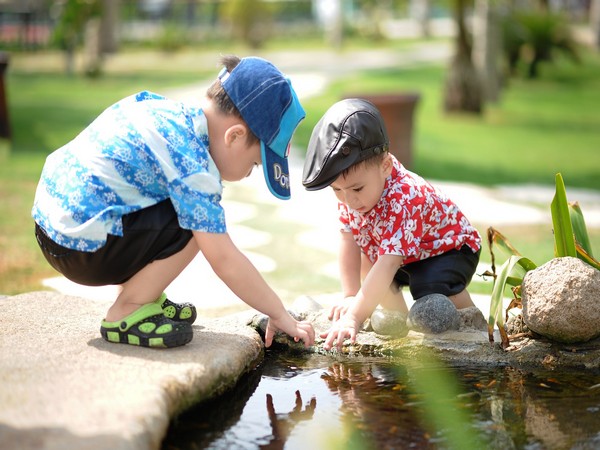
Representative image

Plymouth [UK], December 29 (ANI): A new study has found that children globally will challenge peers if they break the 'rules', but how they challenge them varies between cultures.
The study has been published in the 'Proceedings of the National Academy of Sciences Journal'.
Led by the University of Plymouth, UK and Freie Universitat Berlin, Germany, the study analysed the behaviour of 376 children aged five to eight from eight societies in Africa, Asia, Europe, and South America.
The children were each taught to play a block sorting game - with half taught to sort the blocks by colour, and half taught to sort them by shape. They were then put into pairs, with one playing the game and the other observing.
The research showed that observers intervened more often when the other child appeared to play by the wrong set of rules. The more a child intervened, the more likely their partner was to change their behaviour. The study also showed that the type of intervention varied - with children from rural areas using imperative verbal protest more than children from urban areas.
The study was the first to analyse children's behaviour in challenging norm violations across cultures worldwide, and added to our understanding of how norms allowed people to achieve coordination and cooperation.
Lead author Dr Patricia Kanngiesser from the University of Plymouth said, "What is new about this study is that we observed children's behaviours and travelled worldwide to do so - we didn't ask children what they intended to do, but measured what they actually did in real-life social interactions."
"It was also really interesting to see that how the children corrected each other varied by location. To our surprise, children from rural small-scale communities protested as much or even more than children from urban settings. We assumed that, because everyone knows everyone else in small scale communities, direct interventions would be less common, as people could rely on more indirect ways such as reputation to ensure compliance with rules. But we actually found the opposite to be true," she added.
"The next step is to explore further what motivates children to intervene and how they learn to intervene. For example, do they learn from adults or older children around them how to react to rule breaking?" she concluded. (ANI)


Get the App

What to Read Next

Food

Study finds how diet has major impact on risk of Alzheimer's

Study finds how diet has major impact on risk of Alzheimer's

In a detailed study, researchers identify which diets are effective in lowering the risk of developing Alzheimer's disease.

Read More
Relationships

Moral reasoning displays characteristic patterns in brain: Study

Moral reasoning displays characteristic patterns in brain: Study

Philosophers, psychologists and neuroscientists have passionately argued whether moral judgments share something distinctive that separates them from non-moral matters. Moral monists claim that morality is unified by a common characteristic and that all moral issues involve concerns about harm.

Read More
Quirky

Air pollution makes it difficult for bees to find flowers: Study

Air pollution makes it difficult for bees to find flowers: Study

According to a new study, air pollution prevents bees from finding flowers because it degrades the scent.

Read More
Quirky

Sense of order distinguishes humans from other animals: Study

Sense of order distinguishes humans from other animals: Study

Already earlier research at Stockholm University has suggested that only humans have the ability to recognize and remember so-called sequential information and that this ability is a fundamental building block underlying unique human cultural abilities.

Read More
Quirky

Exciting the brain might be key to boosting maths learning: Study

Exciting the brain might be key to boosting maths learning: Study

According to a new study from the Universities of Surrey and Oxford, Loughborough University, and Radboud University in the Netherlands, activating a brain region with electrical noise stimulation may improve mathematical learning in those who struggle with the subject.

Read More
Quirky

Youth with poor learning skills most vulnerable to email scams

Youth with poor learning skills most vulnerable to email scams

According to an international study published in the peer-reviewed British Journal of Educational Studies, disadvantaged youth are more vulnerable to email scams and require more protection.

Read More
Food

Sanitized ready-to-eat salad may contain disease-causing bacteria

Sanitized ready-to-eat salad may contain disease-causing bacteria

A review paper published in the journal Foods describes a study that provides an overview of studies on minimally processed vegetables (MPVs), with a particular focus on the Brazilian market.

Read More
Quirky

Extreme weather events linked to higher child marriage: Study

Extreme weather events linked to higher child marriage: Study

One of the negative consequences of catastrophic weather incidents around the world that most people might overlook is an increase in underage marriages.

Read More
Parenting

Study reveals more sleep reduce impulsive behavior in children

Study reveals more sleep reduce impulsive behavior in children

Sleep is a vital aspect of a child's general health, but it can also influence their behaviour.

Read More
Parenting

Overuse of social media, gadgets becomes top parents concern

Overuse of social media, gadgets becomes top parents concern

As children return to school, two issues are rising to the top of their parents' concerns: the impact of social media and the internet on children's lives.

Read More
Home About Us Our Products Advertise Contact Us Terms & Condition Privacy Policy

Copyright © aninews.in | All Rights Reserved.
