Study reveals parental instruction instrumental for children to learn how to safely cross busy roads
Washington [US], Aug 30 (ANI): While crossing a busy road may sound complicated to some, a new study from the University of Iowa reports that parents who use road crossings as teachable moments help their youngsters learn road-crossing skills faster and become better at crossing streets.
ANI
Aug 30, 2020 23:21 IST

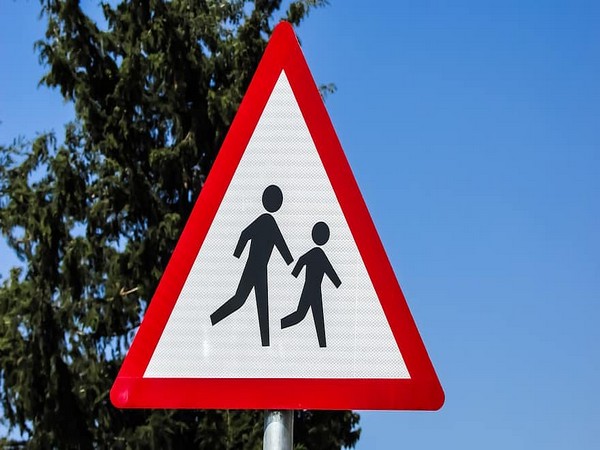
Washington [US], Aug 30 (ANI): While crossing a busy road may sound complicated to some, a new study from the University of Iowa reports that parents who use road crossings as teachable moments help their youngsters learn road-crossing skills faster and become better at crossing streets.
The study highlights that learning to cross a busy street is anything but easy for a child, especially in places where the traffic doesn't stop.
Children must first identify a safe gap in traffic, use refined motor skills to precisely step off a curb the moment a car passes, and safely reach the other side of the street before the next vehicle arrives. Research says parents can help their children in the same.
The researchers learned this by watching sets of parent-child duos--with the children varying in age from 6 to 12 years old--cross a virtual road with continuous traffic.
A finding says that children who received constructive advice from their parents--especially the pointing out of safe gaps in traffic ahead of time--learned best-practices in crossing more readily and crossed more safely.
"This is something children need to learn how to do. It's an important, common, real-world skill," said Elizabeth O'Neal, a postdoctoral researcher in the Department of Psychological and Brain Sciences at Iowa and the first author on the study.
"Children learning ahead of time how to choose a sizable gap between vehicles leads to safer crossing outcomes. We found there's a lot that parents can do to help their children learn those skills and to keep their kids safe," added O'Neal.
By far, the safest way for a child to cross a road is at an intersection with a walk sign, a stoplight, or with marked crosswalks. But vehicles may not stop, even at crosswalks, and there are many roads where no crossing markings exist.
This puts children at risk. In 2018 alone, 175,000 youngsters between the ages of 1 and 14 were injured as pedestrians, according to the National Center for Injury Prevention and Control, a branch of the federal Centers for Disease Control and Prevention.
The Iowa researchers wanted to understand whether parents could help their children cross roads more safely, as well as study how the parents offered help. In multiple rounds, 64 parents with a child aged 6, 8, 10, or 12 crossed a virtual, single-lane road with a line of oncoming vehicles travelling at 25 miles per hour. The participating pairs were instructed to watch the traffic and then decide together when to cross.
The main results show that across all ages, parents proactively pointed out safe traffic gaps in just 30% of the crossing exercises. In other instances, parents simply instructed their children to cross or began crossing without saying anything.
When parents gave helpful instruction, their children showed a 10 percent improvement in how quickly they entered the road after the first car passed and a 7 percent gain in the margin of time between when they reached the other side of the road before the next car arrived. The researchers say those seemingly small gains in motor timing substantively increase the chances of a successful crossing.
"When you're crossing roads with your child, don't just say, 'Let's go!' when you want to go. Help the child look at the oncoming traffic and pick out ahead of time which gap you're going to choose. It helps the child learn how to pick the gap ahead of time and to correctly time when to cross," said Jodie Plumert, a professor in the UI Department of Psychological and Brain Sciences and a co-author of the study.
The findings add to previous results by researchers in the UI's Hank Virtual Environments Lab (led by Plumert and Joseph Kearney, a professor in the Department of Computer Science at Iowa) showing that most children don't fully grasp how to identify gaps in traffic and correctly time their road crossings until age 14.
That study appeared in April 2017 in the Journal of Experimental Psychology: Human Perception and Performance, published by the American Psychological Association.
A few previous studies have looked at how children crossroads and then interviewed their parents afterwards. According to the Iowa researchers, it was clear from those studies that on the whole, parents weren't actively helping their children learn how to safely negotiate road crossings.
Plumert says the most recent study is the first to examine how parents can help children learn to prospectively control their movements and to understand what is needed mentally and physically to cross safely.
"If this was something that parents were doing most of the time, then that would be great," Plumert said.
"But our study shows that parents aren't using effective strategies to help their child learn about safe road crossings all that often. But the times the parents do have useful instructions, it's really helpful to the child. They just show much better performance crossing roads," added Plumert. (ANI)
Get the App