 हिंदी खबर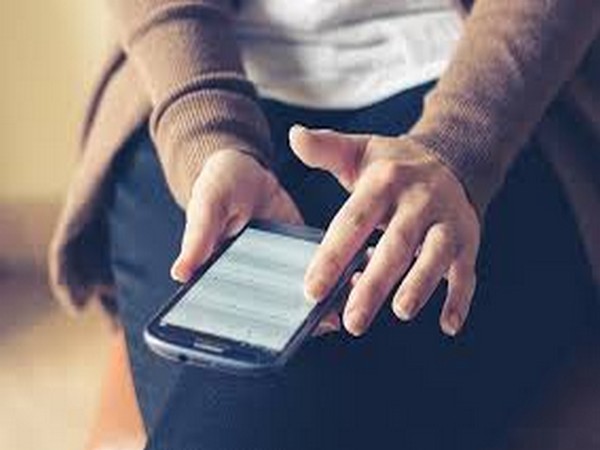

Washington D.C. [USA], May 4 (ANI): The device people use to communicate can affect the extent to which they are willing to disclose intimate or personal information about themselves, suggests a recent research.
The study in the Journal of Marketing is titled "Full Disclosure: How Smartphones Enhance Consumer Self-disclosure" and is authored by Shiri Melumad and Robert Meyer.
Do smartphones alter what people are willing to disclose about themselves to others? A new study in the Journal of Marketing suggests that they might. The research indicates that people are more willing to reveal personal information about themselves online using their smartphones compared to desktop computers.
For example, Tweets and reviews composed on smartphones are more likely to be written from the perspective of the first person, to disclose negative emotions, and to discuss the writer's private family and personal friends.
Likewise, when consumers receive an online ad that requests personal information (such as phone number and income), they are more likely to provide it when the request is received on their smartphone compared to their desktop or laptop computer.
Why do smartphones have this effect on behaviour? Melumad explains that "Writing on one's smartphone often lowers the barriers to revealing certain types of sensitive information for two reasons; one stemming from the unique form characteristics of phones and the second from the emotional associations that consumers tend to hold with their device."
First, one of the most distinguishing features of phones is a small size; something that makes viewing and creating content generally more difficult compared with desktop computers. Because of this difficulty, when writing or responding on a smartphone, a person tends to narrowly focus on completing the task and become less cognizant of external factors that would normally inhibit self-disclosure, such as concerns about what others would do with the information. Smartphone users know this effect well--when using their phones in public places, they often fixate so intently on its content that they become oblivious to what is going on around them.
The second reason people tend to be more self-disclosing on their phones lies in the feelings of comfort and familiarity people associate with their phones. Melumad adds, "Because our smartphones are with us all of the time and perform so many vital functions in our lives, they often serve as 'adult pacifiers' that bring feelings of comfort to their owners." The downstream effect of those feelings shows itself when people are more willing to disclose feelings to a close friend compared to a stranger or open up to a therapist in a comfortable rather than uncomfortable setting. As Meyer says, "Similarly when writing on our phones, we tend to feel that we are in a comfortable 'safe zone.' As a consequence, we are more willing to open up about ourselves."
The data to support these ideas is far-ranging and includes analyses of thousands of social media posts and online reviews, responses to web ads, and controlled laboratory studies.
For example, initial evidence comes from analyses of the depth of self-disclosure revealed in 369,161 Tweets and 10,185 restaurant reviews posted on TripAdvisor.com, with some posted on PCs and some on smartphones. Using both automated natural-language processing tools and human judgements of self-disclosure, the researchers find robust evidence that smartphone-generated content is indeed more self-disclosing. Perhaps even more compelling is evidence from an analysis of 19,962 "call to action" web ads, where consumers are asked to provide private information.
Consistent with the tendency for smartphones to facilitate greater self-disclosure, compliance was systematically higher for ads targeted at smartphones versus PCs.
The findings have clear and significant implications for firms and consumers. One is that if a firm wishes to gain a deeper understanding of the real preferences and needs of consumers, it may obtain better insights by tracking what they say and do on their smartphones than on their desktops.
Likewise, because more self-disclosing content is often perceived to be more honest, firms might encourage consumers to post reviews from their personal devices. But therein lies a potential caution for consumers--these findings suggest that the device people use to communicate can affect what they communicate. This should be kept in mind when thinking about the device one is using when interacting with firms and others. (ANI)


