 हिंदी खबर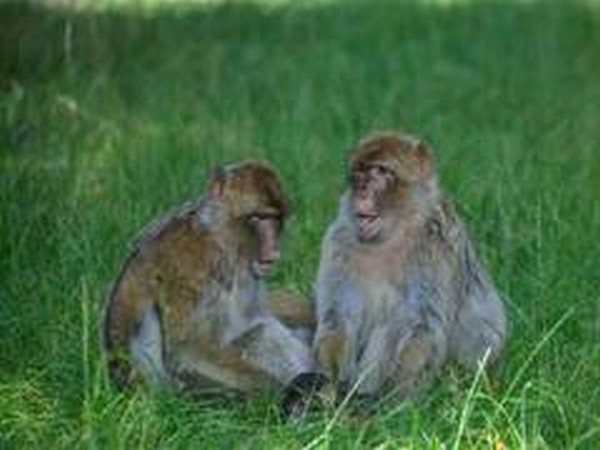

Washington D.C. [USA], Mar 29 (ANI): Winning a free lunch at your favourite restaurant might not seem as great if another person won a million dollars, which shows how much we value an item is often related to what other people have. Considering the following fact, researchers have discovered a region of the brain that controls these kinds of behaviours in monkeys.
In their study published in Proceedings of the National Academy of Sciences, USA, a team of researchers from the National Institutes of Natural Sciences in Okazaki, Japan shows that when monkeys think other monkeys will be rewarded, their own rewards become less appealing. This was evident in the amount that monkeys licked their lips while waiting for their reward. The team found that licking increased the more monkeys anticipated receiving a reward and decreased as they anticipated the other monkey would receive it instead.
This behaviour was reflected in the brain. As the first author, explains, "We found a clear link between brain activity in the lateral hypothalamus and the licking behaviour that represented the subjective value of the reward." The team recorded activity from neurons as monkeys saw pictures that indicated the chance that they or another monkey would receive a reward. The scientists found that for some cells, firing rates increased with the probability of receiving the reward and decreased with the probability that the other monkey would get the reward.
A second experiment showed that the same brain region was necessary for social observations to affect how much the monkeys valued the reward. When the scientists temporarily shut down the lateral hypothalamus using an inhibitory drug, the monkeys' licking behaviour was unchanged when they anticipated receiving the reward themselves--it still increased with the chance of reward. However, the amount of licking was now unrelated to the chance of reward when they were cued that the other monkey was likely to get it.
This behaviour was similar to what happened when the other monkey was prevented from getting the reward or when it was absent altogether.
"Without a functioning lateral hypothalamus, it was as if the monkeys no longer processed what they were seeing as a social situation," says team leader Masaki Isoda. "Thus, we believe that the lateral hypothalamus is necessary for shaping socially motivated behavior, perhaps in coordination with other brain areas such as the medial prefrontal cortex." (ANI)


