

ADD ANI AS A TRUSTED SOURCE
googleads
ANI Logo
Menu
Quirky

Study finds self-perception becomes blurrier overtime

Washington [US], December 19 (ANI): According to a recent study, it's easy to tell two objects apart when they are close to you but not when they are far from you as they become "compressed", a basic principle of perception. The concept of self works similarly.

ANI Dec 19, 2021 11:38 IST googleads

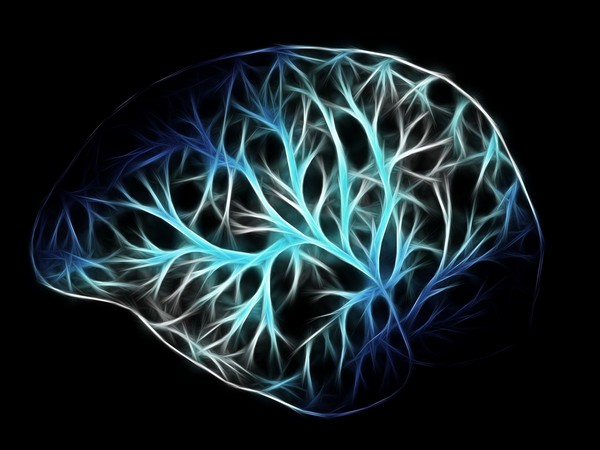
Representative image

Washington [US], December 19 (ANI): According to a recent study, it's easy to tell two objects apart when they are close to you but not when they are far from you as they become "compressed", a basic principle of perception. The concept of self works similarly.
The findings were published in the journal Proceedings of the National Academy of Sciences.
If someone asks you, for example, if you think you'll be calmer tomorrow than today, it's easy to compare the two. But if you're asked if you think you'll be calmer in 10 versus 11 days, it becomes much more difficult to discriminate between the two days.
"Our self-concept becomes increasingly blurrier over time, the farther you get from the present," said senior-author Meghan Meyer, an assistant professor of psychological and brain sciences. "As you think about yourself farther out in time, either in the past or in the future, you're accessing a less distinguishable version of yourself," added Meyer.
The research was comprised of four studies. In three of the studies, participants either rated their own personality traits or reported on their perception of self at different time points in the past and future.
The study found that relative to their present self, participants compressed their past and future selves. In the fourth study, participants were prompted with a pair of personality traits and had to select which one described them better at a given period of time while undergoing an fMRI scan.
Brain imaging allowed the researchers to determine how the brain organizes representations of the self across time. Each time a participant thought about themselves in the present, past, or future, the researchers could get a stamp of what their brain looked like. Those stamps became less distinguishable from one another as participants thought about themselves farther out in time.
"Even at the level of brain activity, we see evidence that our past and future selves become less distinctive as we consider ourselves farther out in time," said Meyer.
The fMRI data was consistent with the results from the participants' personality ratings, providing evidence of what the team calls the "temporal self-compression" effect. "Our research provides a new way to think about how we organize our identity over time," said first-author Sasha Brietzke, Guarini '22.
In psychology, it is widely known that there can be problematic behaviours for some people when they think about their past or future, such as someone who doesn't save enough for retirement because they can't think that far ahead.
"Future research on the temporal self-compression effect might help explain this type of behaviour. People may have difficulty making good decisions for their future self or accurately recalling their past because they can't see their distant self in clear view," Meyer said. (ANI)


Get the App

What to Read Next

Relationships

Moral reasoning displays characteristic patterns in brain: Study

Moral reasoning displays characteristic patterns in brain: Study

Philosophers, psychologists and neuroscientists have passionately argued whether moral judgments share something distinctive that separates them from non-moral matters. Moral monists claim that morality is unified by a common characteristic and that all moral issues involve concerns about harm.

Read More
Quirky

Exciting the brain might be key to boosting maths learning: Study

Exciting the brain might be key to boosting maths learning: Study

According to a new study from the Universities of Surrey and Oxford, Loughborough University, and Radboud University in the Netherlands, activating a brain region with electrical noise stimulation may improve mathematical learning in those who struggle with the subject.

Read More
Others

Obesity linked to changed connection patterns with brain regions

Obesity linked to changed connection patterns with brain regions

According to a recent study, people who are obese exhibit hypo-connectivity with the left inferior frontal gyrus (related with cognitive control) and hyper-connectivity with a portion of the ventral occipitotemporal cortex

Read More
Food

MIND diet associated with better focus in school-aged children

MIND diet associated with better focus in school-aged children

A recent study suggested that a diet created to assist prevent cognitive decline in adults may also help increase attention in preadolescents. Future nutritional programmes aiming at enhancing children's cognition may benefit from the findings.

Read More
Parenting

Strict discipline linked to kids developing mental health issues

Strict discipline linked to kids developing mental health issues

According to new research, young children who frequently experience harsh discipline from their parents are much more likely to experience long-lasting mental health issues.

Read More
Parenting

Helping teens to feel competent can improve their grades

Helping teens to feel competent can improve their grades

According to recent research, encouraging adolescents to feel capable and purposeful - rather than just happy - could boost their academic results as well as their mental health.

Read More
Others

Social media 'trust'/'distrust' buttons may reduce misinformation

Social media 'trust'/'distrust' buttons may reduce misinformation

According to a new experimental study led by UCL researchers, the addition of 'trust' and 'distrust' buttons on social media, alongside the standard 'like' buttons, could help to reduce the spread of misinformation.

Read More
Fitness

Walking improves brain connectivity, memory in older people

Walking improves brain connectivity, memory in older people

The study, which was published this month in the Journal of Alzheimer's Disease Reports, looked at the brains and story recollection abilities of older adults with normal brain function and those with mild cognitive impairment, which is a slight decline in mental abilities such as memory, reasoning, and judgement and a risk factor for Alzheimer's.

Read More
Fitness

Exercise helps to protect against major brain hemorrhage

Exercise helps to protect against major brain hemorrhage

Regular physical activity and exercise may lower bleeding in people with intracerebral haemorrhage, according to research from the University of Gothenburg. The researchers stress the relevance of physical activity in brain protection.

Read More
Others

Positive news pieces can help to soften mental toll

Positive news pieces can help to soften mental toll

People who saw the news about kindness among people after consuming news about a terrorist attack or other immoral acts felt less negative emotions and retained more belief in the goodness of humanity.

Read More
Home About Us Our Products Advertise Contact Us Terms & Condition Privacy Policy

Copyright © aninews.in | All Rights Reserved.


