 हिंदी खबर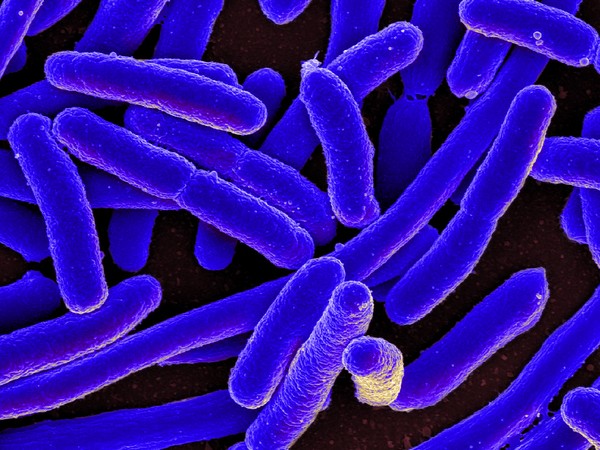

Washington D.C. [USA], Nov 30 (ANI): Researchers have developed bacteria called Escherichia coli, which consume carbon-di-oxide for energy instead of organic compounds.
This creation in synthetic biology highlights the incredible plasticity of bacterial metabolism and could provide the framework for future carbon-neutral bioproduction. The work appeared in the journal -- Cell.
"Our main aim was to create a convenient scientific platform that could enhance CO2 fixation, which can help address challenges related to the sustainable production of food and fuels and global warming caused by CO2 emissions," said senior author Ron Milo, at systems biologist at the Weizmann Institute of Science.
"Converting the carbon source of E. coli, the workhorse of biotechnology, from organic carbon into CO2 is a major step towards establishing such a platform," added Milo.
A grand challenge in synthetic biology has been to generate synthetic autotrophy within a model heterotrophic organism.
Despite widespread interest in renewable energy storage and more sustainable food production, past efforts to engineer industrially relevant heterotrophic model organisms to use CO2 as the sole carbon source has failed.
Previous attempts to establish autocatalytic CO2 fixation cycles in model heterotrophs always required the addition of multi-carbon organic compounds to achieve stable growth.
"From a basic scientific perspective, we wanted to see if such a major transformation in the diet of bacteria -- from dependence on sugar to the synthesis of all their biomass from CO2 -- is possible," said first author Shmuel Gleizer (@GleizerShmuel), a Weizmann Institute of Science postdoctoral fellow.
"Beyond testing the feasibility of such a transformation in the lab, we wanted to know how extreme an adaptation is needed in terms of the changes to the bacterial DNA blueprint," added Gleizer.
The researchers used metabolic rewiring and lab evolution to convert E. coli into autotrophs. The engineered strain harvests energy from formate, which can be produced electrochemically from renewable sources.
Because formate is an organic one-carbon compound that does not serve as a carbon source for E. coli growth, it does not support heterotrophic pathways.
They inactivated central enzymes involved in heterotrophic growth, rendering the bacteria more dependent on autotrophic pathways for growth.
They also grew the cells in chemostats with a limited supply of the sugar xylose -- a source of organic carbon -- to inhibit heterotrophic pathways.
The initial supply of xylose for approximately 300 days was necessary to support enough cell proliferation to kick start evolution. The chemostat also contained plenty of formates and a 10% CO2 atmosphere.
By sequencing the genome and plasmids of the evolved autotrophic cells, the researchers discovered that as few as 11 mutations were acquired through the evolutionary process in the chemostat.
One set of mutations affected genes encoding enzymes linked to the carbon fixation cycle.
The authors said that one major study limitation is that the consumption of formate by bacteria releases more CO2 than is consumed through carbon fixation.
In addition, more research is needed before it's possible to discuss the scalability of the approach for industrial use.
In future work, the researchers will aim to supply energy through renewable electricity to address the problem of CO2 release, determine whether ambient atmospheric conditions could support autotrophy, and try to narrow down the most relevant mutations for autotrophic growth.
"This feat is a powerful proof of concept that opens up a new exciting prospect of using engineered bacteria to transform products we regard as waste into fuel, food or other compounds of interest," Milo said.
"It can also serve as a platform to better understand and improve the molecular machines that are the basis of food production for humanity and thus help in the future to increase yields in agriculture," added Milo. (ANI)
Study creates bacteria that consume carbon dioxide for growth
ANI | Updated: Nov 30, 2019 13:30 IST




