

ADD ANI AS A TRUSTED SOURCE
googleads
ANI Logo
Menu
Quirky

Researchers analyse whether consciousness is continuous or discrete

Geneva [Switzerland], Sep 3 (ANI): A team of researchers has now done a detailed analysis of two major theories: Is consciousness continuous, where we are conscious at every single point in time, or is it discrete, where we are conscious only at certain moments of time?

ANI Sep 03, 2020 22:49 IST googleads

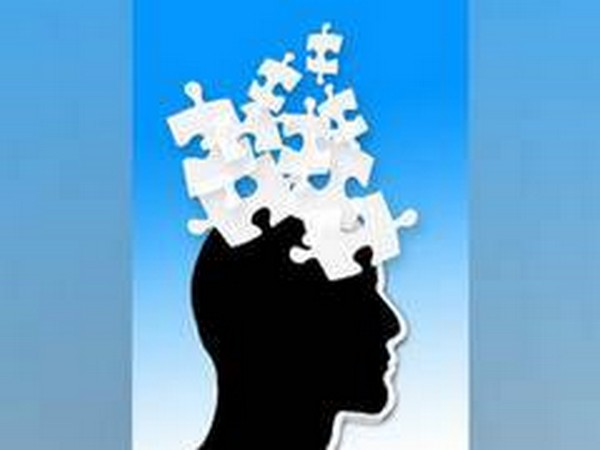
Representative Image

Geneva [Switzerland], Sep 3 (ANI): A team of researchers has now done a detailed analysis of two major theories: Is consciousness continuous, where we are conscious at every single point in time, or is it discrete, where we are conscious only at certain moments of time?
In an opinion piece published in the journal Trends in Cognitive Sciences, psychophysicists answer this centuries-old question with a new model, one that combines both continuous moments and discrete points of time.
"Consciousness is basically like a movie. We think we see the world as it is, there are no gaps, there is nothing in between, but that cannot really be true. Change cannot be perceived immediately. It can only be perceived after it has happened," said first author Michael Herzog, a professor at the Ecole Polytechnique Federale de Lausanne (EPFL) in Switzerland.
Because of its abstract nature, scientists have struggled to define conscious and unconscious perception. What we do know is that a person moves from unconsciousness to consciousness when they wake up in the morning or awake from anesthesia. Herzog says that most philosophers subscribe to the idea of continuous conscious perception--because it follows basic human intuition--"we have the feeling that we're conscious at each moment of time."
On the other hand, the less-popular idea of discrete perception, which pushes the concept that humans are only conscious at certain moments in time, falls short in that there is no universal duration for how long these points in time last.
Herzog and co-authors Leila Drissi-Daoudi and Adrien Doerig take the benefits of both theories to create a new, two-stage model in which a discrete conscious percept is preceded by a long-lasting, unconscious processing period. "You need to process information continuously, but you cannot perceive it continuously."
Imagine riding a bike. If you fell and waited every half-second to respond, there would be no way to catch yourself before hitting the ground. However, if you pair short conscious moments with longer periods of unconscious processing where the information is integrated, your mind tells you what you have perceived, and you catch yourself.
"It's the zombie within us that drives your bike--an unconscious zombie that has excellent spatial/temporal resolution. At each moment, you will not be saying to yourself, move the bike another 5 feet," Herzog said.
The thoughts and surroundings are unconsciously updated, and your conscious self uses the updates to see if they make sense. If not, then you change your route.
"Conscious processing is overestimated. You should give more weight to the dark, unconscious processing period. You just believe that you are conscious at each moment of time," he said.
The authors write that their two-stage model not only solves the 1,500-year-old philosophical problem but gives new freedom to scientists in different disciplines.
"I think it helps people to completely fuel information processing for different prospects because they don't need to translate it from when an object is presented directly to consciousness," Herzog said.
"Because we get this extra dimension of time to solve problems, if people take it seriously and if it is true, that could change models in neuroscience, psychology, and potentially also in computer vision," Herzog added.
Though this two-stage model could add to the consciousness debate, it does leave unanswered questions such as: How are conscious moments integrated? What starts unconscious processing? And how do these periods depend on personality, stress, or disease, such as schizophrenia?
"The question for what consciousness is needed and what can be done without consciousness? We have no idea," said Herzog. (ANI)


Get the App

What to Read Next

Education

Positive contact with diverse groups reduce conspiracy theories

Positive contact with diverse groups reduce conspiracy theories

New UEA research suggests that positive interactions with members of other groups can reduce the amount of baseless conspiracy theories about those organisations.

Read More
Parenting

Parents’ psychiatric diagnosis increases risk of preterm birth

Parents’ psychiatric diagnosis increases risk of preterm birth

A new study has found that babies are more likely to be born prematurely when either their father or mother has had a psychiatric diagnosis.

Read More
Others

Positive contact with diverse groups lowers conspiracy theories

Positive contact with diverse groups lowers conspiracy theories

According to new UEA research, positive contacts with people from diverse groups can lessen the amount of negative conspiracy beliefs about those groups.

Read More
Fitness

Study finds people's behavior who loses weight clinically

Study finds people's behavior who loses weight clinically

A recent study that looked at information on more than 20,000 American adults found that eating better and exercising more leads to weight loss that lowers the risk of heart disease, but that skipping meals and taking diet pills leads to only little weight loss, weight stabilization, or weight gain.

Read More
Others

Individual bad decisions cannot explain economic inequalities

Individual bad decisions cannot explain economic inequalities

Study discovers that economic inequality on a social level cannot be explained by poor people making bad decisions or rich people making good decisions. Poor decisions were made across all income levels, including those who had risen out of poverty.

Read More
Relationships

Conflict in marriage less harmful when dad keeps it constructive

Conflict in marriage less harmful when dad keeps it constructive

In marriages, conflict is unavoidable. When it explodes in families with children, worried or furious parents may project their anger or withdraw emotionally or physically from their children. In the worst-case situation, children's socioemotional development may suffer. According to a recent study by researchers at the University of Illinois Urbana-Champaign, how parents, particularly men, deal with marital problems can have an impact on their children.

Read More
Others

Motor skill practice supports preschoolers' learning: Study

Motor skill practice supports preschoolers' learning: Study

A doctoral thesis demonstrated that motor skills and physical activity practice can support preschoolers' cognitive and early academic skills, especially when the activities include motor skills practice or when motor skills or physical activity practice is combined with the subject to be learned.

Read More
Relationships

Office romance may harm workplace culture: Research

Office romance may harm workplace culture: Research

The sense of being ostracised, disregarded, or rejected at work is referred to as workplace ostracism. Jun Qiu of the School of Nanchang, Institute of Technology, Nanchang, Jiangxi, China, and colleagues presented a study in PLOS ONE that reveals romantic ties between employees are linked with perceived ostracism and knowledge sabotage by other colleagues.

Read More
Others

Facility dogs in children's hospitals benefit patients, staff

Facility dogs in children's hospitals benefit patients, staff

The most profound impacts of HFDs were observed in terminal care and patient cooperation, with 73% of respondents reporting that HFDs were "very often" or "always" beneficial in providing palliative care during the terminal phase.

Read More
Food

Study finds how natto consumption could reduce anxiety

Study finds how natto consumption could reduce anxiety

Researchers at Osaka Metropolitan University found that familiar and affordable foods can help create a society where people are healthier and less stressed. Japanese natto, which is made from softened soybeans that have been boiled or steam-fermented with a bacteria known as Bacillus subtilis var. natto, might be one example of such a food. The study was published in the journal, 'Journal of Applied Microbiology'.

Read More
Home About Us Our Products Advertise Contact Us Terms & Condition Privacy Policy

Copyright © aninews.in | All Rights Reserved.


