

ADD ANI AS A TRUSTED SOURCE
googleads
ANI Logo
Menu
Quirky

More economic worries mean less caution about COVID-19: Study

Washington [US], November 9 (ANI): Workers experiencing job and financial insecurity are less likely to follow the Centers for Disease Control and Prevention's (CDC) guidelines for COVID-19, such as physical distancing, limiting trips from home and washing hands, according to a Washington State University study.

ANI Nov 09, 2020 12:44 IST googleads

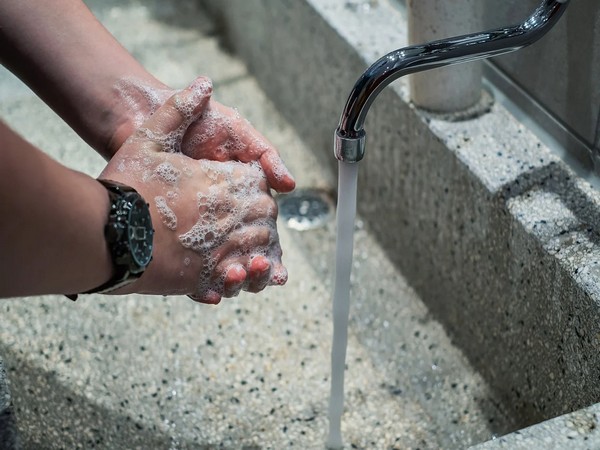
Representative image

Washington [US], November 9 (ANI): Workers experiencing job and financial insecurity are less likely to follow the Centers for Disease Control and Prevention's (CDC) guidelines for COVID-19, such as physical distancing, limiting trips from home and washing hands, according to a Washington State University study.
The researchers, who surveyed 745 workers in 43 states, also found that state unemployment benefits and COVID-19 policies affected the connection between economic concerns and compliance with COVID-19 precautions.
The study shows that a scarcity mindset can play a role in how well people are able to focus on responding to the pandemic, said Tahira Probst, a WSU psychology professor and lead author in the study published recently online in the Journal of Applied Psychology.
"We all have a finite set of resources at our disposal, whether it's money, time or social support, and individuals who have fewer of those resources appear less able to enact the CDC-recommended guidelines," said Probst. "The extent to which economic stressors will impact that behaviour is in part a function of where we live. Having a fallback, a strong safety net to catch you, seemed to help mitigate the risk factors of job insecurity that was otherwise associated with less adherence to the guidelines."
In states with lower unemployment benefits, job insecurity was associated with a 7 per cent decline in compliance with COVID-19 prevention behaviours.
State-imposed COVID-19 mandates also had a positive effect on compliance but seemed to primarily benefit financially secure workers more. In states that had fewer restrictions on behaviour that could spread the disease, workers were less likely to follow the CDC's recommendations, whether the respondents were financially secure or insecure.
However, in states with a stronger response, including measures such as stay-at-home orders and shutting down non-essential businesses, financially secure employees had 13 per cent higher enactment of the prevention behaviours compared to workers who felt more financially insecure.
These differences could have significant public health ramifications, the authors argue, since research suggests that even modest reductions in social contacts among adults can reduce infection and eventual death rates.
"It's important to acknowledge as a society that there are certain segments of the population, namely the economically secure, that are better equipped to follow the CDC recommendations to prevent the spread of COVID-19," said Probst. "This is a red flag since precarious work and financial strain can also co-occur with other COVID-19 risk factors and pre-existing health disparities."
The researchers recruited survey participants using Amazon's Mechanical Turk, an online crowdsourcing platform. The authors acknowledge that the demographics of that sample skewed more male, 62 per cent, and more college-educated, 68 per cent, than the general US population, which is about 50 per cent male and 35 per cent college-educated. However, using the platform did allow the researchers to survey groups of workers representing most states in the US. The respondents' median household income of $50,000-$59,000 was also close to that of the United States' median of $60,293.
The data for this study were collected in April, the month after the World Health Organization officially declared the pandemic on March 11. Probst and her colleagues are continuing to follow up with this survey group every 1-2 months to collect a total of seven waves of survey data. The researchers are looking to see if the disparities related to economic stress and protective behaviors translate into greater COVID-19 infection rates. (ANI)


Get the App

What to Read Next

Food

Study finds how diet has major impact on risk of Alzheimer's

Study finds how diet has major impact on risk of Alzheimer's

In a detailed study, researchers identify which diets are effective in lowering the risk of developing Alzheimer's disease.

Read More
Parenting

Kindergarten misbehaviour may cost society in the long run: Study

Kindergarten misbehaviour may cost society in the long run: Study

For the first time, a new economic analysis has linked kindergarten pupils' misbehaviour to significant societal costs in terms of criminality, associated medical expenses, and lost productivity as they grow up.

Read More
Quirky

Air pollution makes it difficult for bees to find flowers: Study

Air pollution makes it difficult for bees to find flowers: Study

According to a new study, air pollution prevents bees from finding flowers because it degrades the scent.

Read More
Quirky

Sense of order distinguishes humans from other animals: Study

Sense of order distinguishes humans from other animals: Study

Already earlier research at Stockholm University has suggested that only humans have the ability to recognize and remember so-called sequential information and that this ability is a fundamental building block underlying unique human cultural abilities.

Read More
Quirky

Exciting the brain might be key to boosting maths learning: Study

Exciting the brain might be key to boosting maths learning: Study

According to a new study from the Universities of Surrey and Oxford, Loughborough University, and Radboud University in the Netherlands, activating a brain region with electrical noise stimulation may improve mathematical learning in those who struggle with the subject.

Read More
Quirky

Youth with poor learning skills most vulnerable to email scams

Youth with poor learning skills most vulnerable to email scams

According to an international study published in the peer-reviewed British Journal of Educational Studies, disadvantaged youth are more vulnerable to email scams and require more protection.

Read More
Food

Replacing saturated fat, salt...is tasty, healthy: Study

Replacing saturated fat, salt...is tasty, healthy: Study

A team of Penn State researchers has figured the how to reduce some saturated fat, sugar, and salt from popular American dishes while keeping them tasty.

Read More
Food

Sanitized ready-to-eat salad may contain disease-causing bacteria

Sanitized ready-to-eat salad may contain disease-causing bacteria

A review paper published in the journal Foods describes a study that provides an overview of studies on minimally processed vegetables (MPVs), with a particular focus on the Brazilian market.

Read More
Quirky

Extreme weather events linked to higher child marriage: Study

Extreme weather events linked to higher child marriage: Study

One of the negative consequences of catastrophic weather incidents around the world that most people might overlook is an increase in underage marriages.

Read More
Parenting

Study reveals more sleep reduce impulsive behavior in children

Study reveals more sleep reduce impulsive behavior in children

Sleep is a vital aspect of a child's general health, but it can also influence their behaviour.

Read More
Home About Us Our Products Advertise Contact Us Terms & Condition Privacy Policy

Copyright © aninews.in | All Rights Reserved.
