

ADD ANI AS A TRUSTED SOURCE
googleads
ANI Logo
Menu
Quirky

Mask-wearing might increase social anxiety struggles: Study

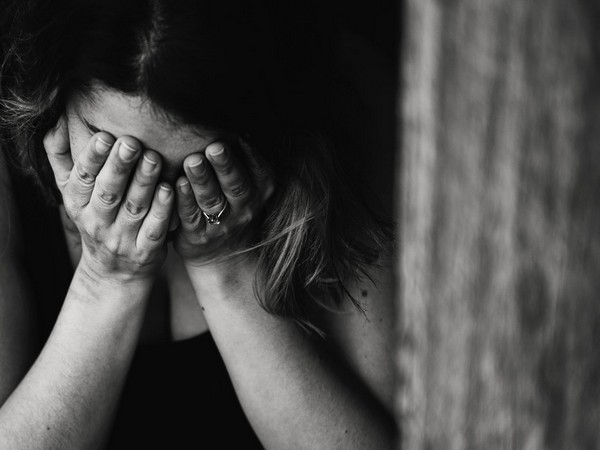
Ontario [Canada], June 21 (ANI): The findings of a recent study suggest that people who have social anxiety might experience increased distress due to mask-wearing during and even after the coronavirus pandemic.

ANI Jun 21, 2021 16:01 IST googleads

Representative image

Ontario [Canada], June 21 (ANI): The findings of a recent study suggest that people who have social anxiety might experience increased distress due to mask-wearing during and even after the coronavirus pandemic.
The paper authored by researchers from the University of Waterloo's Department of Psychology and Centre for Mental Health Research and Treatment also has implications for those who haven't necessarily suffered from social anxiety in the past. The study was published in the journal Anxiety, Stress and Coping.
"The adverse effects of the COVID-19 pandemic on mental health outcomes, including anxiety and depression, have been well-documented," said David Moscovitch, professor of clinical psychology and co-author of the paper. "However, little is known about effects of increased mask-wearing on social interactions, social anxiety, or overall mental health."
Moscovitch added, "It is also possible that many people who didn't struggle with social anxiety before the pandemic may find themselves feeling more anxious than usual as we emerge out of the pandemic and into a more uncertain future -- especially within social situations where our social skills are rusty and the new rules for social engagement are yet to be written."
Social anxiety is characterized by negative self-perception and fear that one's appearance or behaviour will fail to conform with social expectations and norms. Social anxiety disorder is an extreme manifestation that affects up to 13 per cent of the population.
The researchers reviewed existing literature addressing three factors that they hypothesized might contribute to social anxiety associated with mask-wearing: hypersensitivity to social norms, bias in the detection of social and emotional facial cues, and propensity for self-concealment as a form of safety behaviour.
"We found that mask-wearing by people with social anxiety is likely to be influenced by their perception of social norms and expectations, which may or may not be consistent with public-health guidelines and can vary widely by region and context," said Sidney Saint, an undergraduate psychology student at Waterloo and lead author of the paper.
The paper also highlights that people with social anxiety have difficulty detecting ambiguous social cues and are likely to interpret them negatively. These individuals also tend to worry about sounding incomprehensible or awkward. "We believe that both issues are likely to be magnified during interactions with masks," Saint said.
Another highlighted impact is that masks can function as a type of self-concealment strategy that enables people with social anxiety to hide their self-perceived flaws. Therefore, the desire for self-concealment may motivate their use of masks over and above their desire to protect themselves from contagion. "Due to their self-concealing function, masks may be difficult for some people to discard even when mask-wearing is no longer required by public health mandates," Saint said.
In addition to contributing insights to guide clinicians toward effective assessment and treatment, the paper shows that people with social anxiety may be particularly vulnerable to periods of norm transitions where expectations for mask-wearing are in flux or become a matter of personal choice. (ANI)


Get the App

What to Read Next

Relationships

Moral reasoning displays characteristic patterns in brain: Study

Moral reasoning displays characteristic patterns in brain: Study

Philosophers, psychologists and neuroscientists have passionately argued whether moral judgments share something distinctive that separates them from non-moral matters. Moral monists claim that morality is unified by a common characteristic and that all moral issues involve concerns about harm.

Read More
Parenting

Kindergarten misbehaviour may cost society in the long run: Study

Kindergarten misbehaviour may cost society in the long run: Study

For the first time, a new economic analysis has linked kindergarten pupils' misbehaviour to significant societal costs in terms of criminality, associated medical expenses, and lost productivity as they grow up.

Read More
Quirky

Exciting the brain might be key to boosting maths learning: Study

Exciting the brain might be key to boosting maths learning: Study

According to a new study from the Universities of Surrey and Oxford, Loughborough University, and Radboud University in the Netherlands, activating a brain region with electrical noise stimulation may improve mathematical learning in those who struggle with the subject.

Read More
Quirky

Youth with poor learning skills most vulnerable to email scams

Youth with poor learning skills most vulnerable to email scams

According to an international study published in the peer-reviewed British Journal of Educational Studies, disadvantaged youth are more vulnerable to email scams and require more protection.

Read More
Parenting

Overuse of social media, gadgets becomes top parents concern

Overuse of social media, gadgets becomes top parents concern

As children return to school, two issues are rising to the top of their parents' concerns: the impact of social media and the internet on children's lives.

Read More
Culture

Study reveals social media marketing most effective when it motivates consumers to start posting: St

Study reveals social media marketing most effective when it motivates consumers to start posting: St

When companies launch new items, social media is an important marketing tool for raising awareness. The platforms can assist in informing consumers about the product's features and benefits in comparison to competitors' offerings.

Read More
Education

Positive contact with diverse groups reduce conspiracy theories

Positive contact with diverse groups reduce conspiracy theories

New UEA research suggests that positive interactions with members of other groups can reduce the amount of baseless conspiracy theories about those organisations.

Read More
Others

Positive contact with diverse groups lowers conspiracy theories

Positive contact with diverse groups lowers conspiracy theories

According to new UEA research, positive contacts with people from diverse groups can lessen the amount of negative conspiracy beliefs about those groups.

Read More
Others

Study reveals creative people enjoy idle time more than others

Study reveals creative people enjoy idle time more than others

According to a new study by University of Arizona researchers, creative people are more prone to spend their downtime during the day exploring their minds.

Read More
Others

Individual bad decisions cannot explain economic inequalities

Individual bad decisions cannot explain economic inequalities

Study discovers that economic inequality on a social level cannot be explained by poor people making bad decisions or rich people making good decisions. Poor decisions were made across all income levels, including those who had risen out of poverty.

Read More
Home About Us Our Products Advertise Contact Us Terms & Condition Privacy Policy

Copyright © aninews.in | All Rights Reserved.
