

ADD ANI AS A TRUSTED SOURCE
googleads
ANI Logo
Menu
Quirky

Children can learn more effectively through stories than activities

Washington [US], December 12 (ANI): When making children learn about evolution, the oldest form of teaching -- storytelling -- is the most effective way of teaching primary school, suggest the findings of new research.

ANI Dec 12, 2020 13:01 IST googleads

Representative image

Washington [US], December 12 (ANI): When making children learn about evolution, the oldest form of teaching -- storytelling -- is the most effective way of teaching primary school, suggest the findings of new research.
The study was led by researchers at the Milner Centre for Evolution at the University of Bath.
Whilst all the methods improved the pupils' understanding of evolution, the study, published in the journal Science of Learning, found that the story-based approach combined with the abstract examples of evolution was the most effective lessons.
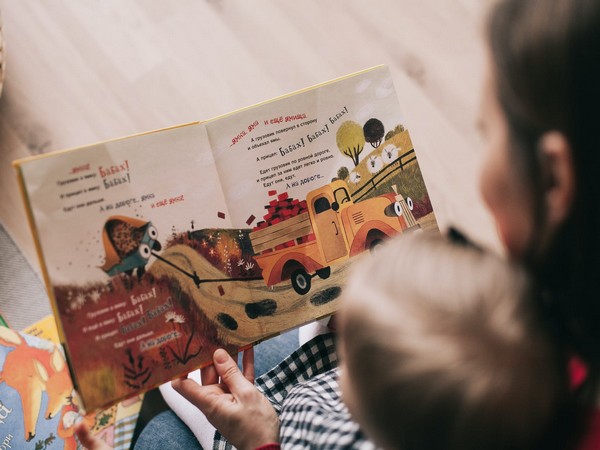
A randomised controlled trial found that children learn about evolution more effectively when engaged through stories read by the teacher, than through doing tasks to demonstrate the same concept.
The scientists investigated several different methods of teaching evolution in primary schools, to test whether a pupil-centred approach (where pupils took part in an activity) or a teacher-centred approach (where pupils were read a story by the teacher), led to a greater improvement in understanding of the topic.
They also looked at whether using human-based examples of evolution (comparing arm bones in humans with those in animals) or more abstract examples that were harder to emotionally engage with (comparing the patterns of trilobites), produced better results in terms of the children's understanding of evolution.
This goes against educational orthodoxy that states that a pupil-centred approach to learning, using human-based examples with which children can easily identify, should yield the best results.
The study recruited 2,500 primary school students who were tested for the understanding of evolutionary concepts before and after the lessons.
Professor Laurence Hurst, Director of the Milner Centre for Evolution at the University of Bath, led the study.
He said: "We were really surprised by the results - we expected that pupils would be more engaged with an activity rather than listening to a story and that children would identify more strongly with the human-based examples of evolution than the somewhat abstract example of trilobites, but in fact the opposite was true.
"This is the first large randomised controlled trial that is evaluating the effectiveness of different methods of teaching, using similar scientific methods to those used in drug interaction trials to test whether a new treatment works.
"Our results show that we should be careful about our preconceptions about what works best. We only tested the teaching of evolution in this way - it would be interesting to see if these findings also applied to other subjects of the curriculum."
Professor Momna Hejmadi, Associate Dean of the University's Faculty of Science, helped to design the study and co-authored the paper. She said: "Evolution was introduced to the national curriculum for primary schools in 2014.
"It's a really important subject as it forms the foundation for many parts of biology. However, many primary school teachers, if they don't have a science background, are less confident about teaching it.
"At the Milner Centre for Evolution, we've developed a range of free lesson plans using really cheap teaching materials, as well as a free online course for teachers to help them engage their pupils with this important subject.
"We'd like to thank the schools who took part in the study, especially the teachers who delivered the lessons. We hope they can continue to successfully use these resources in future years." (ANI)


Get the App

What to Read Next

Food

Study finds how diet has major impact on risk of Alzheimer's

Study finds how diet has major impact on risk of Alzheimer's

In a detailed study, researchers identify which diets are effective in lowering the risk of developing Alzheimer's disease.

Read More
Parenting

Kindergarten misbehaviour may cost society in the long run: Study

Kindergarten misbehaviour may cost society in the long run: Study

For the first time, a new economic analysis has linked kindergarten pupils' misbehaviour to significant societal costs in terms of criminality, associated medical expenses, and lost productivity as they grow up.

Read More
Quirky

Air pollution makes it difficult for bees to find flowers: Study

Air pollution makes it difficult for bees to find flowers: Study

According to a new study, air pollution prevents bees from finding flowers because it degrades the scent.

Read More
Quirky

Sense of order distinguishes humans from other animals: Study

Sense of order distinguishes humans from other animals: Study

Already earlier research at Stockholm University has suggested that only humans have the ability to recognize and remember so-called sequential information and that this ability is a fundamental building block underlying unique human cultural abilities.

Read More
Quirky

Exciting the brain might be key to boosting maths learning: Study

Exciting the brain might be key to boosting maths learning: Study

According to a new study from the Universities of Surrey and Oxford, Loughborough University, and Radboud University in the Netherlands, activating a brain region with electrical noise stimulation may improve mathematical learning in those who struggle with the subject.

Read More
Quirky

Youth with poor learning skills most vulnerable to email scams

Youth with poor learning skills most vulnerable to email scams

According to an international study published in the peer-reviewed British Journal of Educational Studies, disadvantaged youth are more vulnerable to email scams and require more protection.

Read More
Food

Replacing saturated fat, salt...is tasty, healthy: Study

Replacing saturated fat, salt...is tasty, healthy: Study

A team of Penn State researchers has figured the how to reduce some saturated fat, sugar, and salt from popular American dishes while keeping them tasty.

Read More
Food

Sanitized ready-to-eat salad may contain disease-causing bacteria

Sanitized ready-to-eat salad may contain disease-causing bacteria

A review paper published in the journal Foods describes a study that provides an overview of studies on minimally processed vegetables (MPVs), with a particular focus on the Brazilian market.

Read More
Quirky

Extreme weather events linked to higher child marriage: Study

Extreme weather events linked to higher child marriage: Study

One of the negative consequences of catastrophic weather incidents around the world that most people might overlook is an increase in underage marriages.

Read More
Parenting

Study reveals more sleep reduce impulsive behavior in children

Study reveals more sleep reduce impulsive behavior in children

Sleep is a vital aspect of a child's general health, but it can also influence their behaviour.

Read More
Home About Us Our Products Advertise Contact Us Terms & Condition Privacy Policy

Copyright © aninews.in | All Rights Reserved.


