

ADD ANI AS A TRUSTED SOURCE
googleads
ANI Logo
Menu
Parenting

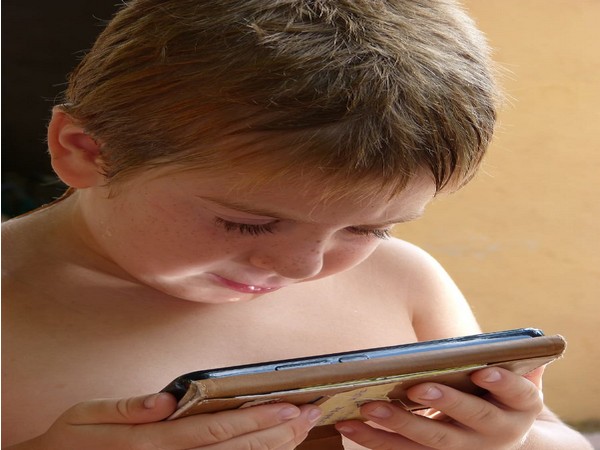
Touchscreen generation no less in reading facial cues: Study

Washington D.C. [USA], May 9 (ANI): The growing use of mobile technologies among kids, have created speculations about the children getting worse at reading emotions and picking up cues from people's faces. However, a recent study suggests that today's kids are comparatively no different from the children who did not grow up with tablets and smartphones.

ANI May 09, 2020 16:25 IST googleads

Representative Image

Washington D.C. [USA], May 9 (ANI): The growing use of mobile technologies among kids, have created speculations about the children getting worse at reading emotions and picking up cues from people's faces. However, a recent study suggests that today's kids are comparatively no different from the children who did not grow up with tablets and smartphones.
Infancy and early childhood are critical developmental phases during which children learn to interpret important non-verbal cues such as facial expressions, tone of voice, and gestures.
Traditionally, this happens through direct face-to-face communication. But with the ubiquitous use of tablets and other devices today -- among toddlers, as well as their caregivers -- the psychologists wanted to know: Have younger children missed the opportunity to understand these cues?
The study tested the ability of more than 50 sixth graders in 2017, and more than 50 sixth graders in 2012 -- both male and female, from the same Southern California public school -- to correctly identify emotions in photographs and videos.
Most children from the sixth-grade class of 2012 were born in 2001, while the first iPhone came out in 2007, for example, and the first iPad in 2010 -- a time when the sixth graders from the 2017 class were infants and toddlers.
The psychologists found that the 2017 sixth-graders scored 40 per cent higher than the 2012 class at correctly identifying emotions in photographs and made significantly fewer errors than the 2012 students.
In addition, the 2017 students were better at identifying the emotions in a series of videos, but only slightly better, a difference the researchers said is not statistically significant. The psychologists did not look at face-to-face communication.
The study has been published in the journal Cyberpsychology, Behavior, and Social Networking.
"At a time when so many people are communicating through screens, I hope our findings give parents some peace of mind that kids seem to be able to learn to read social cues in photos," said lead author Yalda T. Uhls, a UCLA adjunct assistant professor of psychology and founder and executive director of the UCLA-based Center for Scholars and Storytellers.
In today's world, young people use photos and, increasingly, video to communicate. In 2018, for instance, 69 per cent of teens reported they used Snapchat and 72 per cent used Instagram, both of which incorporate pictures and text messages, Uhls said.
A 2017 study with 500 participants found that nearly half of children between the ages of 6 and 12 regularly used a social media app or website, with 29 per cent of those aged 6 to 8 reporting they used Snapchat. Another study, from 2016, found that 50 per cent of children had a social media account before age 12, with 11 per cent getting their account before age 10.
Uhls noted that even text-based communication can convey emotion through capitalisation, emoticons, and repetition.
"Perhaps our 2017 participants had more opportunities to see, communicate and learn nonverbal emotion expressed in photographs of faces than those from 2012 because of the time spent taking and reviewing photos of themselves and others," she said.
Uhls strongly recommends that families have face-to-face conversations around the dinner table and at other times of the day. She also encourages parents to put their devices away when talking with other people, especially their children.
She noted that while the 2017 participants improved in their ability to read emotional cues in photos, she is not we certain whether this ability transfers to their ability to assess emotions in person; she thinks it may.
"With so many of our kids on screens so frequently, it is important to know those good things can come from their interactions with photos," Uhls said. "I would expect with the recent increase in video communication, they may be now learning these cues from video chat too."
She said that by evaluating the nuances of screen time, researchers can learn which practices have educational value and which do not.
"Technology is always evolving, and I expect that researchers will seek to understand how increased exposure to pictures, videos, live chats, games, virtual reality and other emerging platforms for communication impact our youth," Uhls said. (ANI)


Get the App

What to Read Next

Relationships

Conflict in marriage less harmful when dad keeps it constructive

Conflict in marriage less harmful when dad keeps it constructive

In marriages, conflict is unavoidable. When it explodes in families with children, worried or furious parents may project their anger or withdraw emotionally or physically from their children. In the worst-case situation, children's socioemotional development may suffer. According to a recent study by researchers at the University of Illinois Urbana-Champaign, how parents, particularly men, deal with marital problems can have an impact on their children.

Read More
Relationships

'Marriage tussles less harmful for kids if dad keeps it positive'

'Marriage tussles less harmful for kids if dad keeps it positive'

Some studies have shown father-child relationships may be more impacted by conflict than mother-child relationships, and can lead to negative development for kids

Read More
Others

Motor skill practice supports preschoolers' learning: Study

Motor skill practice supports preschoolers' learning: Study

A doctoral thesis demonstrated that motor skills and physical activity practice can support preschoolers' cognitive and early academic skills, especially when the activities include motor skills practice or when motor skills or physical activity practice is combined with the subject to be learned.

Read More
Fitness

Study shows kids might consider past choices when judging others

Study shows kids might consider past choices when judging others

A new study published in the journal Child Development by researchers from Boston College in Massachusetts and the University of Queensland in Australia analyses whether four- to nine-year-old children consider their own prior behaviours while making moral judgements about others.

Read More
Others

Study reveals kids may consider past choices when judging others

Study reveals kids may consider past choices when judging others

A new study published in the journal Child Development by researchers at Boston College in Massachusetts, USA, and the University of Queensland in Australia investigates whether four- to nine-year-old children evaluate their own previous actions when developing moral judgements about others.

Read More
Parenting

Better neighbourhoods can improve kids' asthma: Study

Better neighbourhoods can improve kids' asthma: Study

A new study has found that children who have shifted from distressed areas to better neighbourhoods have improved kids' asthma.

Read More
Parenting

Study defines children's shyness and its meaning

 Study defines children's shyness and its meaning

Describe shyness. According to research, shyness is characterised by dread and anxiety in the face of social novelty and/or social judgement. Although behavioural, affective, and physiological manifestations of shyness might occur, little is known about how these elements interact.

Read More
Education

Research reveals why some kids may be slower to learn words

Research reveals why some kids may be slower to learn words

A new study from the University of East Anglia explains why some youngsters learn words more slowly than others.

Read More
Culture

Elderly less capable in distinguishing between AI, human speech

Elderly less capable in distinguishing between AI, human speech

"Findings from this study on computer-generated AI speech suggest that older adults may be at a higher risk of being taken advantage of," says Dr. Bjorn Herrmann, Baycrest's Canada Research Chair in Auditory Aging, Scientist at Baycrest's Rotman Research Institute and lead author of this study.

Read More
Parenting

Adding good structure to breaks is great way to keep kids active

Adding good structure to breaks is great way to keep kids active

Reasearchers have found that when primary school children are on holidays, they're less active, more likely to be on screens, and tend to have a worse diet than during the school term.

Read More
Home About Us Our Products Advertise Contact Us Terms & Condition Privacy Policy

Copyright © aninews.in | All Rights Reserved.


