 हिंदी खबर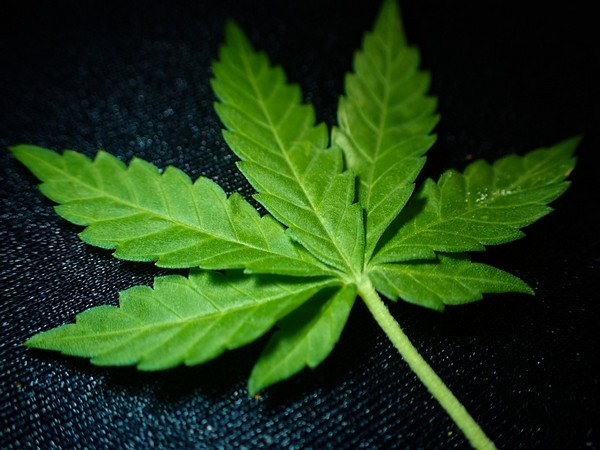

Washington [US], July 29 (ANI): Children whose parents regularly smoke or vape marijuana may experience viral respiratory infections, such as the common cold, more frequently than those whose parents do not smoke, according to a new study.
The findings of the study were published in the journal 'Pediatric Research'.
Researchers from Wake Forest School of Medicine and Children's Hospital Colorado, USA surveyed 1,491 parents and caregivers who lived in Colorado, a US state where recreational and medicinal use of marijuana is legal.
The researchers found that parents who regularly smoked or vaped marijuana reported that their children experienced more viral respiratory infections in the year prior to the survey, compared to children whose parents did not smoke tobacco or marijuana.
Parents who smoked or vaped marijuana reported that their children had not experienced other conditions often related to second-hand tobacco smoke exposure, such as ear infections and asthma attacks, more frequently nor that they had visited a hospital emergency department more often in the previous year, compared to children whose parents did not smoke.
Adam Johnson, the corresponding author said, "The negative impact that exposure to second-hand tobacco smoke can have on children's health has been extensively studied but the impact of second-hand marijuana smoke on young children is unclear. Our findings identify the potential for increased respiratory infections in children exposed to second-hand marijuana smoke. This could have significant healthcare implications as more states in the USA move towards legalising recreational marijuana use."
Of the parents and caregivers who participated in the survey, 78 (5.2 per cent) reported regularly smoking or vaping only marijuana, 214 (14.3 per cent) reported regularly smoking only tobacco and 80 (5.4 per cent) reported regularly smoking both marijuana and tobacco.
The researchers found that those who only smoked marijuana tended to be younger, educated to a higher level, less likely to identify as Hispanic, and have a higher income than those who did not smoke or who only smoked tobacco.
Parents and caregivers who smoked both marijuana and tobacco tended to be younger and were less likely to identify as Hispanic than non-smokers. They also had lower income and education levels than non-smokers, compared to those who only smoked marijuana and those who only smoked tobacco.
Adam Johnson said, "Our findings highlight the prevalence of marijuana use among parents and caregivers and indicate which children may be more likely to be exposed to second-hand marijuana smoke in a US state where recreational and medicinal marijuana use is legal. These findings could be used to help target and shape public health messaging aimed at parents and caregivers in order to raise awareness of the potential negative impacts that second-hand marijuana smoke exposure can have on children's health."
To examine the impact of second-hand marijuana smoke exposure on children, the authors surveyed parents and caregivers who all attended the pediatric emergency department at Children's Hospital Colorado with a child younger than 12 years old, between 2015 and 2017.
Parents and caregivers reported the frequency and location of their marijuana or tobacco use and how often in the past year their child had been taken to an emergency department or had been affected by asthma attacks, ear infections or viral respiratory infections, such as a common cold or bronchiolitis.
The authors caution that the observational nature of the study does not allow for conclusions about a causal relationship between second-hand marijuana smoke exposure and the frequency of viral respiratory infections.
Additionally, as the authors surveyed a small number of parents and caregivers in one US state where marijuana use is legal, their findings may not be generalizable to all children living in areas where marijuana use is legal or those living in areas where marijuana use is illegal.
Future research could assess the impact that parent and caregiver use of other types of marijuana products, such as those taken orally or applied to the skin, may have on children. (ANI)




