 हिंदी खबर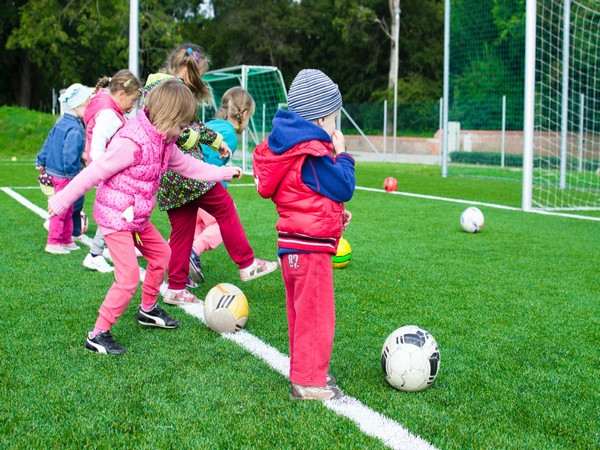

Washington [US], November 15 (ANI): A new study found that gaps don't take long between children who participate in extracurricular activities and kids who don't.
The research showed that white kindergarten children were 2.6 times more likely than children of other races/ethnicities to participate in athletics -- the most common type of extracurricular activity. Children of highly educated mothers were about twice as likely to take part in sports as those of less educated moms.
Similar results were found in other types of after-school activities.
Previous studies have shown that extracurricular activities can benefit children in many ways, so it is concerning that gaps in participation show up so early, said Elise Allen, a graduate student ineducational studies at The Ohio State University.
"If racial-ethnic minority students and those from disadvantaged backgrounds don't have access to extracurricular activities at a young age, they may miss opportunities that could help them succeed in school," Allen said.
Allen and Arianna Black, also a graduate student in educational studies at Ohio State, led the research.
The study was published recently in theJournal of Applied Developmental Psychology.
Much of the existing research on the effects of extracurricular activities have been done with adolescents.
"Given the documented benefits for adolescents, we thought it was crucial to examine who is participating at earlier ages and what benefits they might receive," Black said.
The study involved 401 kindergarten students in 31 classrooms in one large school district in Ohio. It is part of a larger project, calledEarly Learning Ohio, that examines children's learning, achievement and social development during the first five years of schooling, from pre-k through third grade.
Parents or other primary caretakers completed a questionnaire that asked about their demographics, home environment, extracurricular activities of their children, and other measures.
Parents reported if their children participated in any of five activities outside of school: lessons (such as music, dance or art), athletics, religious groups, organizations (such as Scouts) and academic help/tutoring.
Results showed that about one-quarter of the children were involved in no activities. Slightly more than one-quarter participated in one activity, and another quarter participated in two. The remainder were involved with three, four or five activities.
Overall, the average kindergarten student participated in 1.5 activities.
Sports were the most common extracurricular activity (60%), followed by religious activities (39%), lessons (31%), organizations like Scouts (15%) and tutoring or additional academic prep (8%).
The key finding was that demographic factors including race/ethnicity, family income, and mothers' education all played a role in whether kindergarten children participated in extracurricular activities.
Along with race/ethnicity, mothers' education had one of the strongest links to participation, results showed.
Fewer than half of children whose mothers had a high-school equivalent education or less participated in athletics (47%), compared to nearly all the children whose mothers held a graduate or professional degree (96%).
Similar patterns were found across all activity types, with the exception of religious activities: Kids whose mothers were at the opposite ends of the education spectrum participated in religious activities at similar rates.
The study also examined whether greater participation in extracurricular activities led to gains in a measure of vocabulary development, but the results did not find evidence of any such gains.
That might be because the sample size was not large enough, or because of the young age of participants, the researchers said.
"At kindergarten age, kids' language skills are still developing, and they are just starting these extracurricular activities," said study co-authorTzu-Jung Lin, associate professor of educational studies and a faculty associate of Ohio State'sCrane Center for Early Childhood Research and Policy.
"If we looked at these same children for a few more years, we could expect to see the impact of extracurricular activities on their language development."
And it may be that extracurricular activities show a stronger role in promoting school readiness, social-emotional development or other important factors not examined in this study, the researchers said.
There may be several reasons why children from homes with fewer resources participate less in after-school sports or other endeavors.
"With kids in kindergarten, parents have to accompany them to their activities," Lin said. "For many working-class families, even if they have the money to afford these activities, they can't take off work to be with their kids at these events."
Because kindergarten students from socioeconomically disadvantaged families already start school behind their peers academically, they could use the boost from taking part in sports, lessons or other activities, according to Black.
"More participation in extracurricular activities could help close the gap with their potentially higher-achieving peers," Black said.
The key message, Allen said, is that policymakers and other leaders need to address this participation gap.
"We need to help kids get involved in extracurricular activities at a young age, so that those from lower socioeconomic backgrounds get the same benefits and other opportunities that other kids already have," she said. (ANI)




