 हिंदी खबर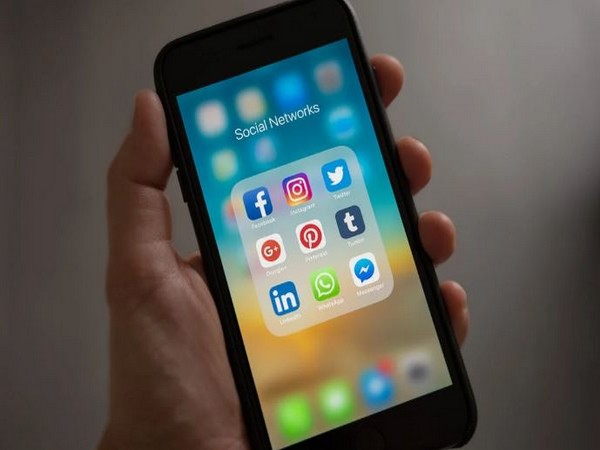

Washington [US], September 8 (ANI): According to research, adolescents from deprived backgrounds are more likely to report an addiction to Facebook, Instagram, WhatsApp and other social media.
The findings of the research were published in the peer-reviewed journal Information, Communication and Society.
In the first study of its kind, the findings show a link between economic inequality and problematic use of social network platforms and instant messaging applications. The situation is worse in schools where wealth and social differences exist between classmates.
The authors say the results - based on more than 179,000 schoolchildren in 40 countries - suggest that new strategies are needed on social media use that reduce the impact of deprivation.
Action by policymakers could help limit young people's dysfunctional or abnormal behaviour, add the authors. These negative patterns include being unable to reduce screen time or lying to friends and family about social media use.
"These findings indicate the potentially harmful influences of inequality at the individual, school and country level on adolescents' problematic social media use," says lead author Michela Lenzi from the University of Padua, Italy, an Associate Professor in psychology.
"Policymakers should develop actions to reduce inequalities to limit maladaptive patterns of social media use by adolescents."
"As the digital divide continues to close in many countries, economic inequalities persist and remain a robust social determinant of adolescent health and well-being. Schools represent an ideal setting to foster safe and prosocial online behaviours."
Many young people use social media every day and the benefits to well-being are well-documented, as are the risks.
Problematic social media use (PSMU) is not formally recognised as a behavioural addiction. However, it is regarded as a health issue affecting young people.
This study aimed to investigate the links between socio-economic inequalities, measured at individual, school and country level, and adolescent PSMU.
In addition, the authors evaluated the role of peer and family support as moderators of these associations.
The findings were based on 179,049 children aged 11, 13 and 15 from 40 countries including most of Europe and Canada. Evidence came from the Health Behaviour in School-aged Children, an international World Health Organization collaborative study carried out every four years.
The researchers asked children to complete questionnaires in order to identify addiction-like behaviour associated with social media. The forms were filled out anonymously while supervised in the classroom by a teacher or trained interviewer.
Any child who reported six or more items was identified as having PSMU. These items included feeling bad when not using social media, trying but failing to spend less time using it, and using social media to escape from negative feelings.
An index based on material assets in the home or family activities was used to calculate scales of deprivation. Items included number of bathrooms, and how many family vacations out of the country in the past year.
The authors measured country wealth, and family/peer social support e.g. degree of help provided from relatives and friends. They also took into account the proportion of the population who used the internet in each country.
Findings showed that adolescents who were relatively more deprived than their schoolmates and attended more economically unequal schools were more likely to report PSMU.
The association with a wealth divide among pupils in the same class was stronger in youths with lower peer support. But a link between country income inequality and PSMU was only found in adolescents reporting low levels of family support.
There may be many reasons for the link between economic deprivation and PSMU. One theory suggested by the authors is that sharing images or videos resonates especially with the more deprived adolescents because they associate them with power and status.
They suggest that school-based prevention efforts might target 'objective and perceived' social class differences among schoolmates.
Also key, is increasing peer support which the authors found was a protective factor in the relationship between relative deprivation and PSMU. (ANI)


