 हिंदी खबर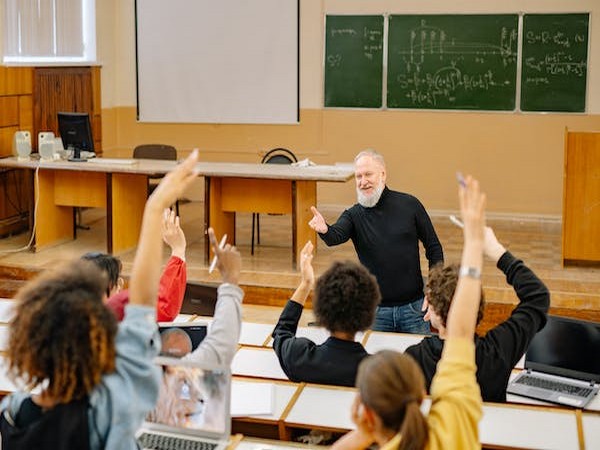

New York [US], July 4 (ANI): A new study has found that students from middle-upper class backgrounds are more likely to participate in classroom discussions than working-class backgrounds students.
The study was published in the journal, 'Journal of Experimental Psychology."
The study shed new light on the persistent and early emerging disparities in education linked to socioeconomic status (SES).
"While preschool attendance has been shown to be beneficial for low-SES students' achievement, our results suggest that early childhood education is not currently maximizing its potential as an equalizing force," says lead author Sebastien Goudeau, an assistant professor at Universite de Poitiers.
"Early schooling contexts provide unequal opportunities for engagement to children in ways linked to their socioeconomic status, which could serve to maintain or even exacerbate social class disparities in achievement," adds Andrei Cimpian, a professor in New York University's Department of Psychology and one of the paper's authors.
"These and other findings call for redesigning aspects of early childhood in ways that foster engagement among all students, regardless of their social class."
Previous research has primarily focused on deficits in low-SES parents' knowledge, practices, or resources to explain disparities found in early childhood education.
The new Journal of Experimental Psychology: General study examined how schooling itself at this age might be shortchanging children from lower-income backgrounds.
In doing so, the study's authors, which also included researchers from Northwestern University's Kellogg School of Management and Stanford University's Department of Psychology, examined students' behavioral engagement during whole-class discussions--a core part of the preschool curriculum in Europe and North America.
One study included nearly 100 preschoolers, who were anonymous to the researchers, across four classrooms of Grande Section--the last year in French preschools before first grade--in France's Nouvelle-Aquitaine region.
The classrooms selected had a high degree of SES variability among the students as determined by their parent's occupations. The researchers videotaped whole-classroom discussions--ranging from eight to 19 in each classroom--and recorded the frequency and duration of each child's participation.
The results showed that low-SES students spoke less frequently and for less time compared to high-SES students. Notably, these differences were not accounted for by SES differences in oral language proficiency, indicating that low-SES students did not talk less because they lacked the proficiency to do so.
In a second study, the authors sought to understand how preschool children perceive differences among their peers in their levels of school engagement. To do so, they drew a new group of Grande Section participants from the same region; it included nearly 100 preschool students across five classrooms.
To determine the children's perceptions of their classmates, the researchers posed scenarios involving fictional students aimed at surfacing the students' views of the types of students who are called upon and who speak longer than others.
For instance, "When the teacher asks the class a question, several children raise their hands. However, the teacher calls on [Theodore/Zelie] more often than other children." After each scenario, children were asked to explain the protagonist's behavior: for instance, "Why do you think [Theodore/Zelie] is called on more often than other children?"
The research team then coded the open-ended responses the children provided, looking in particular for whether children mentioned inherent factors having to do with the protagonist's own characteristics (e.g., "because she/he is smart," "because she/he has a lot to tell") or extrinsic factors having to do with the protagonist's background or the classroom context (e.g., "because the teacher likes her/him," "because the other children are disobedient").
For each scenario, after the open-ended explanation question, children were also asked to evaluate the fictional student along the two fundamental dimensions of social judgments: competence and warmth.
These included perceived intelligence ("Do you think [the fictional child] is more intelligent than the other children, or less intelligent than the other children?") as well as how they thought the teacher viewed the fictional student ("Do you think the teacher likes [the child] more than the other children, or less than the other children?"). These comparisons were made with the fictional student's classmates in mind.
Overall, the fictional child who made frequent and longer contributions to classroom discussions was perceived as possessing more positive characteristics than other children in their class.
"Preschoolers explained differences in engagement during whole-class discussions as a consequence of children's inherent characteristics, including their competence and warmth," explains Cimpian.
"These results suggest that the patterns of school engagement typical of middle- and high-SES students increase the extent to which they are valued by their preschool peers and--conversely--may undermine low-SES students' psychological experiences." (ANI)




