

ADD ANI AS A TRUSTED SOURCE
googleads
Menu
Parenting

Disadvantaged neighbourhood kids more likely to be obese as adults: Study

Washington D.C. [USA], Aug 28 (ANI): Children who grow up in disadvantaged neighbourhoods are nearly one-third more likely to experience obesity as adults, reveals a study.

ANI Aug 28, 2019 19:07 IST googleads

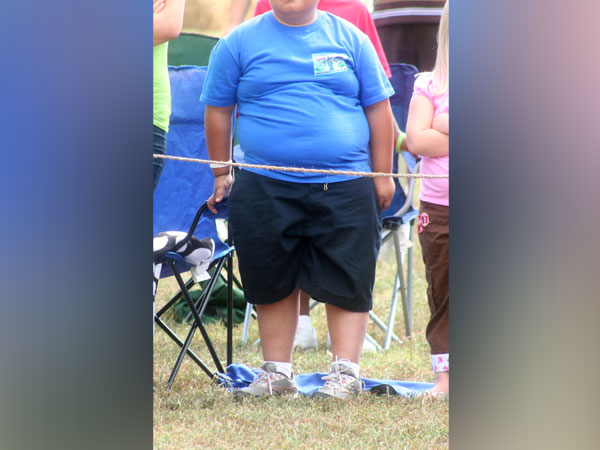
Representative Image

Washington D.C. [USA], Aug 28 (ANI): Children who grow up in disadvantaged neighbourhoods are nearly one-third more likely to experience obesity as adults, reveals a study.
The study published in the journal 'Health & Place' offered a view of the lasting influence a neighbourhood can have on unhealthy weight gain.
"Growing up in disadvantaged neighbourhood sticks with you, and can have a negative impact on one's health through increasing one's chance of obesity in adulthood," said Steven Alvarado, lead author of the study.
Among respondents followed in the data across different age ranges, the chance is 13 per cent greater among children up to age 10 who live in disadvantaged neighbourhoods, and 29 per cent higher for kids aged 11 to 18. Overall, the odds rose 31 per cent.
Alvarado defined 'disadvantaged' neighbourhoods based on seven variables, including median income and home values and the percentage of residents who were living in poverty, unemployed or had earned bachelor's degrees.
But measuring a neighbourhood's association with adult outcomes including obesity is complex. Researchers must consider "unobserved" factors not included in their data that might explain any association between childhood neighborhoods and obesity in adulthood.
Genes, for example, or high parental stress levels associated with household instability might be more responsible for children's later weight gain.
The study accounted for these factors by comparing siblings. The siblings largely shared the same genes and parenting habits but may have experienced different neighborhood circumstances growing up, because their families moved or their neighborhoods changed over time between sibling births.
Alvarado's study is the first to adjust for criteria such as grandparents' experiences in segregated schools and neighborhoods while exploring the link between growing up in tough neighborhoods and adult obesity.
"We must continue to consider the context in which individuals are making decisions, the neighborhood resources that could serve as catalysts or suppressors for any genetic predispositions toward obesity in adulthood," he said. (ANI)

Get the App

What to Read Next

Quirky

Youth with poor learning skills most vulnerable to email scams

Youth with poor learning skills most vulnerable to email scams

According to an international study published in the peer-reviewed British Journal of Educational Studies, disadvantaged youth are more vulnerable to email scams and require more protection.

Read More
Others

Obesity linked to changed connection patterns with brain regions

Obesity linked to changed connection patterns with brain regions

According to a recent study, people who are obese exhibit hypo-connectivity with the left inferior frontal gyrus (related with cognitive control) and hyper-connectivity with a portion of the ventral occipitotemporal cortex

Read More
Food

MIND diet associated with better focus in school-aged children

MIND diet associated with better focus in school-aged children

A recent study suggested that a diet created to assist prevent cognitive decline in adults may also help increase attention in preadolescents. Future nutritional programmes aiming at enhancing children's cognition may benefit from the findings.

Read More
Fitness

Study finds people's behavior who loses weight clinically

Study finds people's behavior who loses weight clinically

A recent study that looked at information on more than 20,000 American adults found that eating better and exercising more leads to weight loss that lowers the risk of heart disease, but that skipping meals and taking diet pills leads to only little weight loss, weight stabilization, or weight gain.

Read More
Others

Walkable neighbourhoods help adults socialize, increase community

Walkable neighbourhoods help adults socialize, increase community

According to researchers from the University of California San Diego's Herbert Wertheim School of Public Health and Human Longevity Science, adults who live in walkable neighbourhoods are more likely to interact with their neighbours and have a stronger sense of community than those who live in car-dependent communities.

Read More
Home About Us Our Products Advertise Contact Us Terms & Condition Privacy Policy

Copyright © aninews.in | All Rights Reserved.




