 हिंदी खबर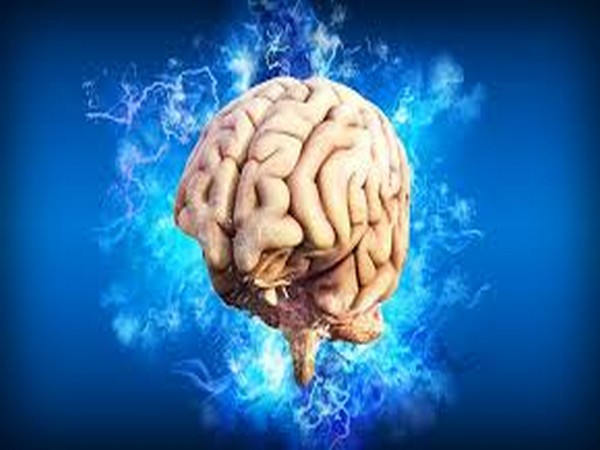

Washington [US], November 3 (ANI): We all know when our favourite song is played in a car or at a concert, it fills us with pleasurable emotion, gives us joyful memories and even send a shiver or chill down to our spine.
About half of people get chills when listening to music. Neuroscientists based in France have now used electroencephalogram (EEG) to link chills to multiple brain regions involved in activating reward and pleasure systems.
The results were published in Frontiers in Neuroscience.
Thibault Chabin and colleagues at the Universite de Bourgogne Franche-Comte in Besancon EEG-scanned the brains of 18 French participants who regularly experience chills when listening to their favourite musical pieces. In a questionnaire, they were asked to indicate when they experienced chills, and rate their degree of pleasure from them.
"Participants of our study were able to precisely indicate "chill-producing" moments in the songs, but most musical chills occurred in many parts of the extracts and not only in the predicted moments," said Chabin.
When the participants experienced a chill, Chabin saw specific electrical activity in the orbitofrontal cortex (a region involved in emotional processing), the supplementary motor area (a mid-brain region involved in movement control) and the right temporal lobe (a region on the right side of the brain involved in auditory processing and musical appreciation). These regions work together to process music, trigger the brain's reward systems, and release dopamine -- a "feel-good" hormone and neurotransmitter. Combined with the pleasurable anticipation of your favourite part of the song, this produces the tingly chill you experience -- a physiological response thought to indicate greater cortical connectivity.
"The fact that we can measure this phenomenon with EEG brings opportunities for study in other contexts, in scenarios that are more natural and within groups," Chabin commented. "This represents a good perspective for musical emotion research."
EEG is a non-invasive, highly accurate technique that scans for electrical currents caused by brain activity using sensors placed across the surface of the scalp. When experiencing musical chills, low frequency electrical signals called 'theta activity' -- a type of activity associated with successful memory performance in the context of high rewards and musical appreciation -- either increase or decrease in the brain regions that are involved in musical processing.
"Contrary to heavy neuroimaging techniques such as PET scan or fMRI, classic EEG can be transported outside of the lab into naturalistic scenarios," said Chabin. (ANI)




