Researchers find higher risk of sexual problems in women cancer survivors
Washington [US], September 30 (ANI): Researchers found that young women cancer survivors are at a much higher risk of sexual problems such as loss of libido and discomfort.
ANI
Sep 30, 2022 13:25 IST

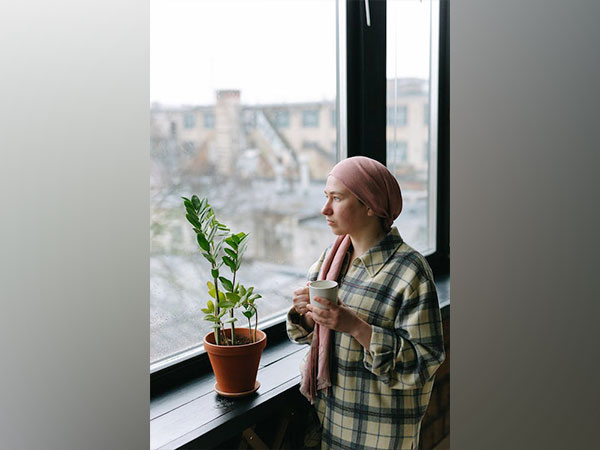
Washington [US], September 30 (ANI): Researchers found that young women cancer survivors are at a much higher risk of sexual problems such as loss of libido and discomfort.
The findings of the research were published in the journal Acta Oncologica.
The study - one of the largest of its kind to date - also suggests that cancer type and intensity of treatment influence the quality of a patient's sex life.
The findings are based on nearly 700 women diagnosed with breast and other cancers before the age of 40. They show women are equally sexually active as those without these diseases but a significantly higher proportion experience intimacy difficulties.
Lack of interest in sex (45%) was the number one issue cancer patients reported, followed by problems around achieving orgasm (34%) and satisfaction with sex life (22%).
These concerns were also common among women in the general population without a cancer diagnosis but to a lesser extent (32%, 28%, and 19% respectively).
Now, the authors - a team of researchers including from Uppsala University and the Karolinska Institutet, both in Sweden - are urging medics to provide sexual wellbeing support where appropriate. Hormone replacement therapy (HRT), vaginal moisturisers and psychosexual counselling are among strategies they suggest, including for single women.
"This is one of the largest population-based studies of sexual function ever conducted in young women following cancer," says lead author and the principle investigator Lena Wettergren, a Professor in Care Sciences at Uppsala University.
"Our results show two out of three women experienced sexual dysfunction and the problems are related to their cancer treatment and emotional distress.
"These findings underscore the need to routinely assess sexual health in clinical care and follow-up,"
"We recommend development of specific interventions directed to women in addition to offering counselling and other aids."
More than half a million women in young adulthood are diagnosed with cancer every year globally. Hormone changes and body image issues are among biological and psychological factors which can undermine their participation in or enjoyment of intimacy.
Yet the full extent of the link between cancer and sexual dysfunction is unknown. Some studies have suggested around half of young women report sexual issues in the first years after diagnosis.
But breast cancer dominates the research and few studies have compared patients with the general population.
The authors of this study wanted to determine the extent and cause of the problems young female cancer patients face.
Data was based on 694 women aged 18 to 39, diagnosed between January 2016 to August 2017, and identified through official national health registries.
Half had breast cancer and the rest gynaecological cancer, brain tumors or lymphoma. A total of 53% had undergone treatment rated 'very' or 'most' in terms of its intensity, or how extensive it was.
All were surveyed one-and-a-half years after diagnosis about their sex lives over the last month. Questions were based on eight topics relating to sexual activity such as satisfaction with sex life, interest in sexual activity, discomfort and pain when engaging in sexual activity, and ability to orgasm.
In addition, patients were asked to give reasons for not having sex with a partner, and questioned about body image such as whether they found it hard to look at themselves naked. They also rated their own emotional distress.
Results were compared with a random sample of 493 women aged 19 to 40 without a cancer diagnosis.
Findings showed that the majority of women with cancer and those without (83% vs 87% respectively) had sex in the last 30 days, either with a partner or through masturbation.
However, two in three (63%) cancer patients complained of at least one sexual issue such as vulvar discomfort. Survey participants were also more likely, overall, to report issues relating to any type of sexual activity.
Older women and those with breast or gynaecological cancer were at higher risk of sex-related problems. This was also the case with patients undergoing more intense treatment such as high-dose radiotherapy and chemotherapy.
Emotional distress and a distorted perception of their bodies following cancer treatment were associated with greater sexual dysfunction.
Vaginal dryness or pain, and feeling unattractive were the key factors linked to lack of sexual activity with a partner. This was among cancer patients and the authors highlight that these are all potentially related to cancer treatment.
Limitations of the study include that the participants who did agree to take part may have been more sexually active and had fewer sex problems, or vice versa. It therefore could create results which over or underestimate the findings; but most people (72%) asked to complete the survey did so. (ANI)
Get the App