

ADD ANI AS A TRUSTED SOURCE
googleads
Menu
Others

Coronavirus bug can cover longer distances than previously thought: Study

Beijing [China], Mar 10 (ANI): A Chinese study has made the shocking revelation that the coronavirus can remain suspended in the air for a minimum of 30 minutes and can survive for days on various types of surfaces. Additionally, it can cover distances of up to 15 feet.

ANI Mar 10, 2020 19:36 IST googleads

Beijing [China], Mar 10 (ANI): A Chinese study has made the shocking revelation that the coronavirus can remain suspended in the air for a minimum of 30 minutes and can survive for days on various types of surfaces. Additionally, it can cover distances of up to 15 feet.
New York Post cited the South China Morning Post, according to which, the findings put forth by epidemiologists from the Chinese government, contradict the directives of various health agencies that suggest maintaining a "safe distance" of 3 to 6 feet in public places.
The researchers stated in their paper which got published in Practical Preventive Medicine that "it can be confirmed that in a closed environment with air-conditioning, the transmission distance of the new coronavirus will exceed the commonly recognized safe distance," reported South China Morning Post.
The experts also found that at 98 degrees Fahrenheit, the microbe can stay alive on surfaces such as glass, metal, fabric, plastics, and paper for two to three days. Also, human feces and bodily fluids can harbor the virus for more than five days, the scientists added.
According to the South China Morning Post, the research is based on the case study of a COVID-19 stricken person who infected 13 others while traveling on a 48 seater bus for a long-distance journey.
Surveillance footage showed that the patient didn't interact with any of the fellow passengers, however, a couple of people who caught the disease were sitting at a distance of nearly 15 feet.
Another person who contracted the virus, boarded the bus 30 minutes after the infected people had left the spot.
The person being studied later boarded another bus and ended up infecting two more people who were again sitting 15 feet away.
"The possible reason is that in a completely enclosed space, the airflow is mainly driven by the hot air generated by the air conditioning. The rise of the hot air can transport the virus-laden droplets to a greater distance," SCMP said.
The study calls for even more stringent precautionary measures to be put in place for curbing the proliferation of the deadly disease.
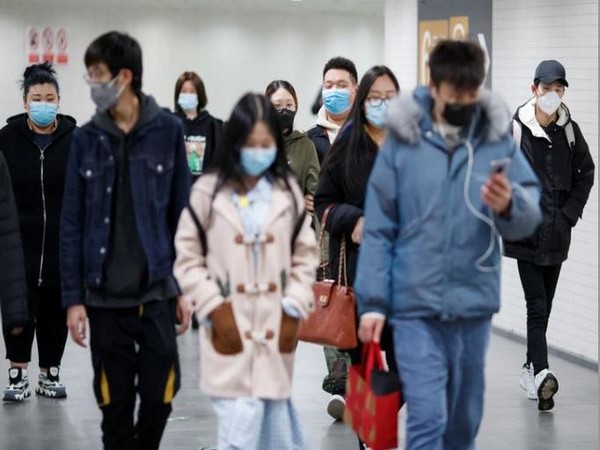
While advising SCMP, the scientists told: "When riding on more closed public transportation such as subways, cars, planes, etc, you should wear a mask all the time, and at the same time, minimize the contact between your hands and public areas, and avoid touching your face before cleaning."
They further stated that public transport should be kept as neat and clean as possible. (ANI)


Get the App

What to Read Next

Quirky

Youth with poor learning skills most vulnerable to email scams

Youth with poor learning skills most vulnerable to email scams

According to an international study published in the peer-reviewed British Journal of Educational Studies, disadvantaged youth are more vulnerable to email scams and require more protection.

Read More
Others

Individual bad decisions cannot explain economic inequalities

Individual bad decisions cannot explain economic inequalities

Study discovers that economic inequality on a social level cannot be explained by poor people making bad decisions or rich people making good decisions. Poor decisions were made across all income levels, including those who had risen out of poverty.

Read More
Others

Walkable neighbourhoods help adults socialize, increase community

Walkable neighbourhoods help adults socialize, increase community

According to researchers from the University of California San Diego's Herbert Wertheim School of Public Health and Human Longevity Science, adults who live in walkable neighbourhoods are more likely to interact with their neighbours and have a stronger sense of community than those who live in car-dependent communities.

Read More
Others

Study shows why sexually harassed people may not come forward

Study shows why sexually harassed people may not come forward

According to a new study, there is a gap between how individuals anticipate they would react if sexually harassed and how those who have experienced it respond.

Read More
Others

Employers should exercise caution when introducing peer recognition initiatives: Study

Employers should exercise caution when introducing peer recognition initiatives: Study

Employers are constantly looking for better and more innovative ways to acknowledge people in the workplace, especially in circumstances where change is frequent and fast-paced. According to recent research from the University of Waterloo, however, employee comparisons made possible by public peer recognition may lead to some workers feeling mistreated.

Read More
Home About Us Our Products Advertise Contact Us Terms & Condition Privacy Policy

Copyright © aninews.in | All Rights Reserved.


