 हिंदी खबर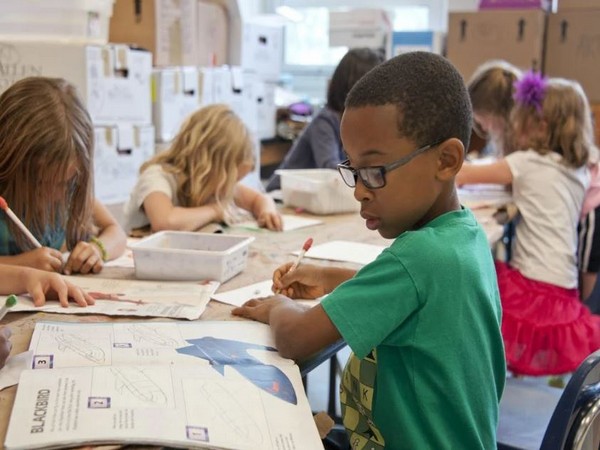

Washington [US], July 2 (ANI): A new study shows that classroom seat assignments have important implications for children's friendships and that teachers wield enormous influence over the interpersonal lives of children. Friendships reflect classroom seat assignments, according to the study.
Students sitting next to or nearby one another were more likely to be friends with one another than students seated elsewhere in the classroom. Moreover, longitudinal analyses showed that classroom seating proximity was associated with the formation of new friendships. After seat assignments changed, students were more likely to become friends with newly near-seated classmates than with those who remained or became seated farther away.
Results of the study, published in the journal Frontiers in Psychology, revealed that friendships reflect classroom seat assignments. Students sitting next to or nearby one another were more likely to be friends with one another than students seated elsewhere in the classroom. Moreover, longitudinal analyses showed that classroom seating proximity was associated with the formation of new friendships. After seat assignments changed, students were more likely to become friends with newly near-seated classmates than with those who remained or became seated farther away.
"The students in our study spent most of every day with the same 15 or so classmates. By the middle of the school year, there were no unfamiliar peers," said Brett Laursen, Ph.D., senior author and a professor of psychology in FAU's Charles E. Schmidt College of Science. "Yet when seat assignments changed, new seatmates were apt to become new friends, consistent with claims that exposure alone is not a sufficient condition for friendship. Apparently, proximity transcends familiarity by providing new opportunities for the kind of exchanges that form the basis of a friendship."
Participants in the study included 235 students (129 boys, 106 girls) in grades 3 -- 5 (ages 8-11) who nominated friends at two time points (13 -14 weeks apart). Children attended a public primary school in South Florida that reflected public school students in the state in terms of ethnicity and family income.
For the study, teacher seating charts were used to calculate three forms of proximity for each pair of students in a classroom. Neighbor proximity described classmates seated directly beside one another in a row or at a table, and those seated directly across from one another at a table. Group proximity included classmates identified as neighbors as well as those who were near neighbors; the latter were either one seat away in the same row or diagonal to one another at the same table. Findings for group proximity were the most robust, suggesting that children are willing (and able) to overlook their nearest neighbors in favor of those seated close enough for sustained communication.
"Of course, students were not glued to their seats; interactions with far-seated peers undoubtedly occurred during lunch, recess and (in some classes) free time activities," said Laursen. "The fact that new friends tended to emerge among the newly near-seated -- despite opportunities for engagement with other classmates -- underscores the power of proximity in friendship formation."
Classroom proximity assumes outsized importance during the elementary school years because children this age have few other sustained opportunities to meet (and engage with) friends and because companionship is central to the definition of friendship. It has long been known that most children report that most of their friends are in the same classroom. We now know that they are probably seated nearby.
Elementary school children spend most of their days in assigned seats, in the company of classmates. In most elementary school classrooms, teachers decide who sits next to whom and, by extension, who interacts with whom.
"Taken together, our findings highlight the enormous influence that teachers wield over the interpersonal lives of children. With great power comes great responsibility," said Laursen. "We urge teachers to exercise their power judiciously. Unintended social consequences have been known to arise when adults meddle in the social lives of children."
The study co-author is Sharon Faur, a developmental psychology doctoral student in FAU's Charles E. Schmidt College of Science. (ANI)


