

ADD ANI AS A TRUSTED SOURCE
googleads
ANI Logo
Menu
Food

Study suggests adding colour to your plate may lower cognitive decline risk

Washington [US], August 7 (ANI): A new study found that people who eat a diet that includes at least half a serving per day of foods high in flavonoids like strawberries, oranges, peppers and apples may have a 20 per cent lower risk of cognitive decline.

ANI Aug 07, 2021 16:11 IST googleads

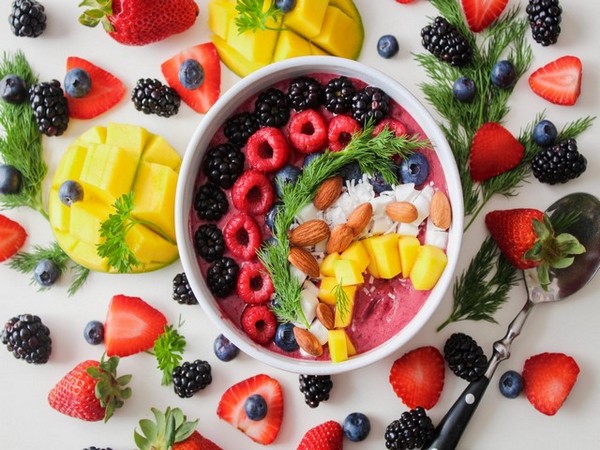
Representative image

Washington [US], August 7 (ANI): A new study found that people who eat a diet that includes at least half a serving per day of foods high in flavonoids like strawberries, oranges, peppers and apples may have a 20 per cent lower risk of cognitive decline.
The findings of the study were published in the online issue of 'Neurology', the medical journal of the American Academy of Neurology.
The study looked at several types of flavonoids and found that flavones and anthocyanins may have the most protective effect.
Flavonoids are naturally occurring compounds found in plants and are considered powerful antioxidants. It is thought that having too few antioxidants may play a role in cognitive decline as you age.
"There is mounting evidence suggesting flavonoids are powerhouses when it comes to preventing your thinking skills from declining as you get older," said study author Walter Willett, MD, DrPH, of Harvard University in Boston, Mass.
"Our results are exciting because they show that making simple changes to your diet could help prevent cognitive decline," added Willett.
The study looked at 49,493 women with an average age of 48 and 27,842 men with an average age of 51 at the start of the study. Over 20 years of follow up, people completed several questionnaires about how often they ate various foods. Their intake of different types of flavonoids was calculated by multiplying the flavonoid content of each food by its frequency.
Study participants evaluated their own cognitive abilities twice during the study, using questions like, "Do you have more trouble than usual remembering recent events?" and "Do you have more trouble than usual remembering a short list of items?"
This assessment captured early memory problems when people's memory has worsened enough for them to notice, but not necessarily enough to be detected on a screening test.
The people in the group that represented the highest 20 per cent of flavonoid consumers, on average, had about 600 milligrams (mg) in their diets each day, compared to the people in the lowest 20 per cent of flavonoid consumers, who had about 150 mg in their diets each day. Strawberries, for example, have about 180 mg of flavonoids per 100 gram serving, while apples have about 113.
After adjusting for factors like age and total caloric intake, people who consumed more flavonoids in their diets reported a lower risk of cognitive decline. The group of highest flavonoid consumers had 20 per cent less risk of self-reported cognitive decline than the people in the lowest group.
Researchers also looked at individual flavonoids. Flavones, found in some spices and yellow or orange fruits and vegetables, had the strongest protective qualities and were associated with a 38 per cent reduction in risk of cognitive decline, which is the equivalent of being three to four years younger in age.
Peppers have about 5 mg of flavones per 100 gram serving. Anthocyanins, found in blueberries, blackberries and cherries, were associated with a 24 per cent reduced risk of cognitive decline. Blueberries have about 164 mg of anthocyanins per 100 gram serving.
"The people in our study who did the best over time ate an average of at least half a serving per day of foods like orange juice, oranges, peppers, celery, grapefruits, grapefruit juice, apples and pears," said Willett.
"While it is possible other phytochemicals are at work here, a colourful diet rich in flavonoids--and specifically flavones and anthocyanins--seems to be a good bet for promoting long-term brain health. And it's never too late to start because we saw those protective relationships whether people were consuming the flavonoids in their diet 20 years ago, or if they started incorporating them more recently," concluded Willett. (ANI)


Get the App

What to Read Next

Food

Study finds how diet has major impact on risk of Alzheimer's

Study finds how diet has major impact on risk of Alzheimer's

In a detailed study, researchers identify which diets are effective in lowering the risk of developing Alzheimer's disease.

Read More
Parenting

Kindergarten misbehaviour may cost society in the long run: Study

Kindergarten misbehaviour may cost society in the long run: Study

For the first time, a new economic analysis has linked kindergarten pupils' misbehaviour to significant societal costs in terms of criminality, associated medical expenses, and lost productivity as they grow up.

Read More
Quirky

Air pollution makes it difficult for bees to find flowers: Study

Air pollution makes it difficult for bees to find flowers: Study

According to a new study, air pollution prevents bees from finding flowers because it degrades the scent.

Read More
Quirky

Sense of order distinguishes humans from other animals: Study

Sense of order distinguishes humans from other animals: Study

Already earlier research at Stockholm University has suggested that only humans have the ability to recognize and remember so-called sequential information and that this ability is a fundamental building block underlying unique human cultural abilities.

Read More
Quirky

Exciting the brain might be key to boosting maths learning: Study

Exciting the brain might be key to boosting maths learning: Study

According to a new study from the Universities of Surrey and Oxford, Loughborough University, and Radboud University in the Netherlands, activating a brain region with electrical noise stimulation may improve mathematical learning in those who struggle with the subject.

Read More
Quirky

Youth with poor learning skills most vulnerable to email scams

Youth with poor learning skills most vulnerable to email scams

According to an international study published in the peer-reviewed British Journal of Educational Studies, disadvantaged youth are more vulnerable to email scams and require more protection.

Read More
Food

Replacing saturated fat, salt...is tasty, healthy: Study

Replacing saturated fat, salt...is tasty, healthy: Study

A team of Penn State researchers has figured the how to reduce some saturated fat, sugar, and salt from popular American dishes while keeping them tasty.

Read More
Food

Sanitized ready-to-eat salad may contain disease-causing bacteria

Sanitized ready-to-eat salad may contain disease-causing bacteria

A review paper published in the journal Foods describes a study that provides an overview of studies on minimally processed vegetables (MPVs), with a particular focus on the Brazilian market.

Read More
Quirky

Extreme weather events linked to higher child marriage: Study

Extreme weather events linked to higher child marriage: Study

One of the negative consequences of catastrophic weather incidents around the world that most people might overlook is an increase in underage marriages.

Read More
Parenting

Study reveals more sleep reduce impulsive behavior in children

Study reveals more sleep reduce impulsive behavior in children

Sleep is a vital aspect of a child's general health, but it can also influence their behaviour.

Read More
Home About Us Our Products Advertise Contact Us Terms & Condition Privacy Policy

Copyright © aninews.in | All Rights Reserved.


