
Study finds COVID-19 related parenting stress impacts eating habits of children
Houston (Texas) [US], October 16 (ANI): According to a new study, stress that parents have experienced during the COVID-19 pandemic has a negative effect on the eating habits of their children.
ANI
Oct 16, 2021 17:36 IST

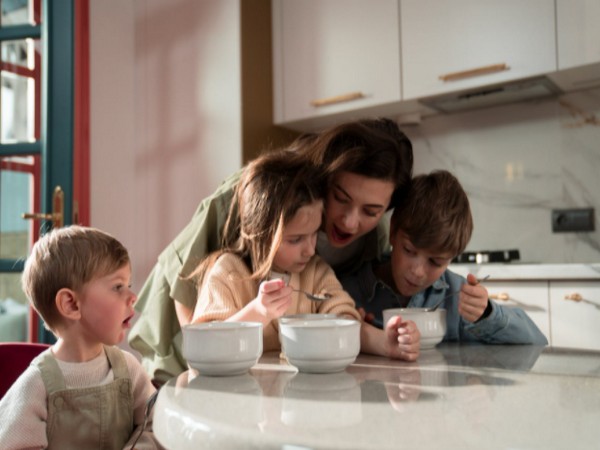
Houston (Texas) [US], October 16 (ANI): According to a new study, stress that parents have experienced during the COVID-19 pandemic has a negative effect on the eating habits of their children.
The findings were published in the journal Current Psychology.
When stay-at-home mandates were ordered and the school went virtual at the onset of the pandemic, many parents suddenly had to juggle multiple roles such as caregiver, employee and educator. Leslie Frankel, associate professor of human development and family studies, said all those responsibilities took a toll on parents' mental health, and in turn, what and how much their children were consuming.
Previous research has shown that stress, in general, is known to have a negative impact on parent-child feeding interactions, but new findings reveal COVID-19 only magnified the problem.
"These parents do not have the time, energy or emotional capacity to engage in optimal feeding behaviours, so they resort to maladaptive feeding behaviours such as using food as a reward or pressuring their kids to eat," said Frankel, the study's lead author and expert in parent-child relationships. "As a result, their children are not able to self-regulate what or how much food they are putting into their bodies, which could have harmful consequences in the long run."
Frankel and study co-authors Caroline Bena Kuno, a doctoral student in the UH College of Education and UH Honors College student Ritu Sampige, surveyed 119 mothers and fathers of children ages two to seven between April and June 2020.
They analyzed two different types of COVID-related parenting stress and found that stress resulting from uncertainty about the job and financial security was associated with psychological distress, while concerns over family safety and stability led to anxiety. The mothers surveyed reported experiencing higher levels of stress and anxiety compared to fathers who participated in the study.
"The stress doesn't just go away. Many parents are still feeling uneasy and a parent who is overwhelmed and experiencing symptoms of depression and anxiety may not pay attention to or acknowledge their children's cues of hunger and fullness," Frankel explained.
To ensure children are optimizing their eating habits in the event of another public health emergency or natural disaster, the research team says policymakers or nonprofit organizations interested in improving outcomes for children and parents should provide support systems to help parents manage their daily stressors. (ANI)
Get the App


