 हिंदी खबर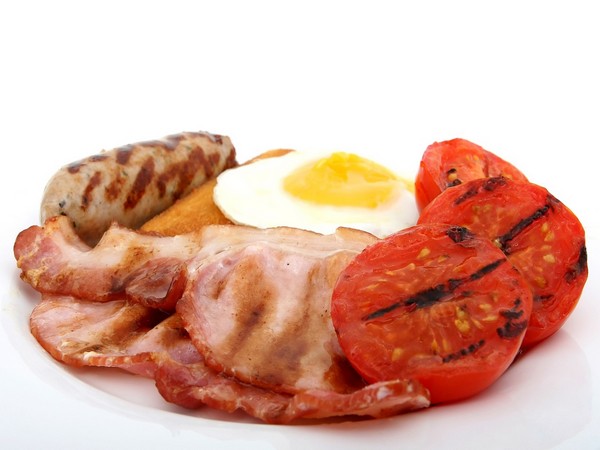

Washington [US], March 27 (ANI): The findings of a new study suggests that the intake of processed meat, such as bacon may dramatically increase the risk of getting dementia.
It found that eating just one rasher of bacon a day could increase your chances of developing the disease by 44 per cent.
The findings of the study, titled 'Meat consumption and risk of incident dementia: cohort study of 493888 UK Biobank participants', were published in the American Journal of Clinical Nutrition.
Scientists from the University of Leeds's Nutritional Epidemiology Group used data from 500,000 people, discovering that consuming a 25g serving of processed meat a day, the equivalent to one rasher of bacon, is associated with a 44 per cent increased risk of developing the disease.
However, meat-lovers need not despair, as their findings also showed that eating some unprocessed red meat, such as beef, pork, or veal, could be protective, as people who consumed 50g a day were 19 per cent less likely to develop dementia.
The researchers were exploring a potential link between consumption of meat and the development of dementia, a health condition that affects 5 per cent to 8 per cent of over 60s worldwide.
Lead researcher Huifeng Zhang, a PhD student from the University of Leeds' School of Food Science and Nutrition, said, "Worldwide, the prevalence of dementia is increasing and diet as a modifiable factor could play a role. Our research adds to the growing body of evidence linking processed meat consumption, to increased risk of a range of non-transmissible diseases."
The research was supervised by Professor Janet Cade and Professor Laura Hardie, both at Leeds.
The team studied data provided by UK Biobank, a database containing in-depth genetic and health information from half a million UK participants aged 40 to 69, to investigate associations between consuming different types of meat and the risk of developing dementia.
The data included how often participants consumed different kinds of meat, with six options from never to once or more daily, collected in 2006-2010 by the UK Biobank. The study did not specifically assess the impact of a vegetarian or vegan diet on dementia risk, but it included data from people who said they did not eat red meat.
Among the participants, 2,896 cases of dementia emerged over an average of eight years of follow-up. These people were generally older, more economically deprived, less educated, more likely to smoke, less physically active, more likely to have stroke history and family dementia history, and more likely to be carriers of a gene that is highly associated with dementia. More men than women were diagnosed with dementia in the study population.
Some people were three to six times more likely to develop dementia due to well-established genetic factors, but the findings suggest the risks from eating processed meat were the same whether or not a person was genetically predisposed to developing the disease.
Those who consumed higher amounts of processed meat were more likely to be male, less educated, smokers, overweight or obese, had lower intakes of vegetables and fruits and had higher intakes of energy, protein, and fat (including saturated fat).
Meat consumption has previously been associated with dementia risk, but this is believed to be the first large-scale study of participants over time to examine a link between specific meat types and amounts, and the risk of developing the disease.
There are around 50 million dementia cases globally, with around 10 million new cases diagnosed every year. Alzheimer's Disease makes up 50 per cent to 70 per cent of cases, and vascular dementia around 25 per cent. Its development and progression are associated with both genetic and environmental factors, including diet and lifestyle.
Zhang said, "Further confirmation is needed, but the direction of effect is linked to current healthy eating guidelines suggesting lower intakes of unprocessed red meat could be beneficial for health."
Professor Cade said, "Anything we can do to explore potential risk factors for dementia may help us to reduce rates of this debilitating condition. This analysis is a first step towards understanding whether what we eat could influence that risk." (ANI)




