

ADD ANI AS A TRUSTED SOURCE
googleads
ANI Logo
Menu
Food

Brains process taste information before factoring in health information: Study

Washington [US], July 10 (ANI): Our brains process taste information first, before factoring in health information, according to a new research from Duke University.

ANI Jul 10, 2021 22:05 IST googleads

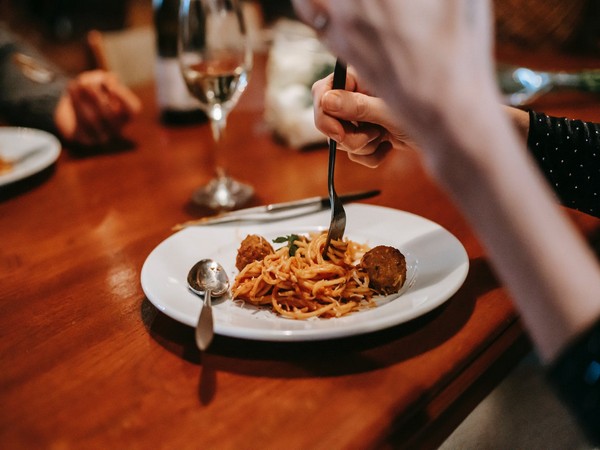
Representative image

Washington [US], July 10 (ANI): Our brains process taste information first, before factoring in health information, according to a new research from Duke University.
The findings of the study were published in the journal 'Nature Human Behaviour'.
"We spend billions of dollars every year on diet products, yet most people fail when they attempt to diet," said study co-author Scott Huettel, a professor of psychology and neuroscience at Duke.
Huettel added, "Taste seems to have an advantage that sets us up for failure. For many individuals, health information enters the decision process too late (relative to taste information) to drive choices toward the healthier option."
The new paper described the advantage taste has over healthfulness in the decision-making process.
"We've always assumed people make unhealthy choices because that's their preference or because they aren't good at self-control," said study co-author Nicolette Sullivan.
"It turns out it's not just a matter of self-control. Health is slower for your brain to estimate - it takes longer for you to include that information into the process of choosing between options," added Sullivan.
The research was undertaken when Sullivan was a postdoctoral associate at Duke. She is now an assistant professor of marketing at the London School of Economics and Political Science.
For the study, Sullivan and Huettel recruited 79 young adults of a median age of 24.4 years. Study participants were asked to fast for four hours before the experiment to ensure they arrived hungry.
Participants were asked to rate snack foods on their tastiness, healthfulness and desirability. They were then presented with pairs of foods and asked to choose between them - and the researchers timed their choices.
At the end of the experiment, participants were offered one of the foods they had chosen.
Study participants registered taste information early in their decision process - taking about 400 milliseconds on average to incorporate taste information. Participants took twice as long to incorporate information about a snack's healthfulness into their decisions.
That may not sound like much time. In many cases though, it's enough to alter the choice we make.
"Not every decision is made quickly - house purchases, going to college - people take time to make those choices," Huettel said.
"But many decisions we make in the world are fast - people reach for something in the grocery store or click on something online," Huettel added.
The authors said their findings could apply to other choices, and not just food. For instance, some financial decisions, such as saving and spending choices, may also be affected by how - and when - the brain processes different types of information.
Meanwhile, all is not lost in the war against junk food cravings.
Half of the study participants received a blurb before the experiment, stressing the importance of eating healthy. Those participants were less likely to choose an unhealthy snack.
The authors also identified something simple that can help people with their food choices: slowing down the decision-making process. When study participants took longer to consider their options, they tended to pick healthier ones.
"There may be ways to set up environments so people have an easier time making healthy choices," Huettel said.
"You want to make it easy for people to think about the healthfulness of foods, which would help nudge people toward better decisions," Huettel concluded. (ANI)


Get the App

What to Read Next

Food

Study finds how diet has major impact on risk of Alzheimer's

Study finds how diet has major impact on risk of Alzheimer's

In a detailed study, researchers identify which diets are effective in lowering the risk of developing Alzheimer's disease.

Read More
Parenting

Kindergarten misbehaviour may cost society in the long run: Study

Kindergarten misbehaviour may cost society in the long run: Study

For the first time, a new economic analysis has linked kindergarten pupils' misbehaviour to significant societal costs in terms of criminality, associated medical expenses, and lost productivity as they grow up.

Read More
Quirky

Air pollution makes it difficult for bees to find flowers: Study

Air pollution makes it difficult for bees to find flowers: Study

According to a new study, air pollution prevents bees from finding flowers because it degrades the scent.

Read More
Quirky

Sense of order distinguishes humans from other animals: Study

Sense of order distinguishes humans from other animals: Study

Already earlier research at Stockholm University has suggested that only humans have the ability to recognize and remember so-called sequential information and that this ability is a fundamental building block underlying unique human cultural abilities.

Read More
Quirky

Exciting the brain might be key to boosting maths learning: Study

Exciting the brain might be key to boosting maths learning: Study

According to a new study from the Universities of Surrey and Oxford, Loughborough University, and Radboud University in the Netherlands, activating a brain region with electrical noise stimulation may improve mathematical learning in those who struggle with the subject.

Read More
Quirky

Youth with poor learning skills most vulnerable to email scams

Youth with poor learning skills most vulnerable to email scams

According to an international study published in the peer-reviewed British Journal of Educational Studies, disadvantaged youth are more vulnerable to email scams and require more protection.

Read More
Food

Replacing saturated fat, salt...is tasty, healthy: Study

Replacing saturated fat, salt...is tasty, healthy: Study

A team of Penn State researchers has figured the how to reduce some saturated fat, sugar, and salt from popular American dishes while keeping them tasty.

Read More
Food

Sanitized ready-to-eat salad may contain disease-causing bacteria

Sanitized ready-to-eat salad may contain disease-causing bacteria

A review paper published in the journal Foods describes a study that provides an overview of studies on minimally processed vegetables (MPVs), with a particular focus on the Brazilian market.

Read More
Quirky

Extreme weather events linked to higher child marriage: Study

Extreme weather events linked to higher child marriage: Study

One of the negative consequences of catastrophic weather incidents around the world that most people might overlook is an increase in underage marriages.

Read More
Parenting

Study reveals more sleep reduce impulsive behavior in children

Study reveals more sleep reduce impulsive behavior in children

Sleep is a vital aspect of a child's general health, but it can also influence their behaviour.

Read More
Home About Us Our Products Advertise Contact Us Terms & Condition Privacy Policy

Copyright © aninews.in | All Rights Reserved.
