 हिंदी खबर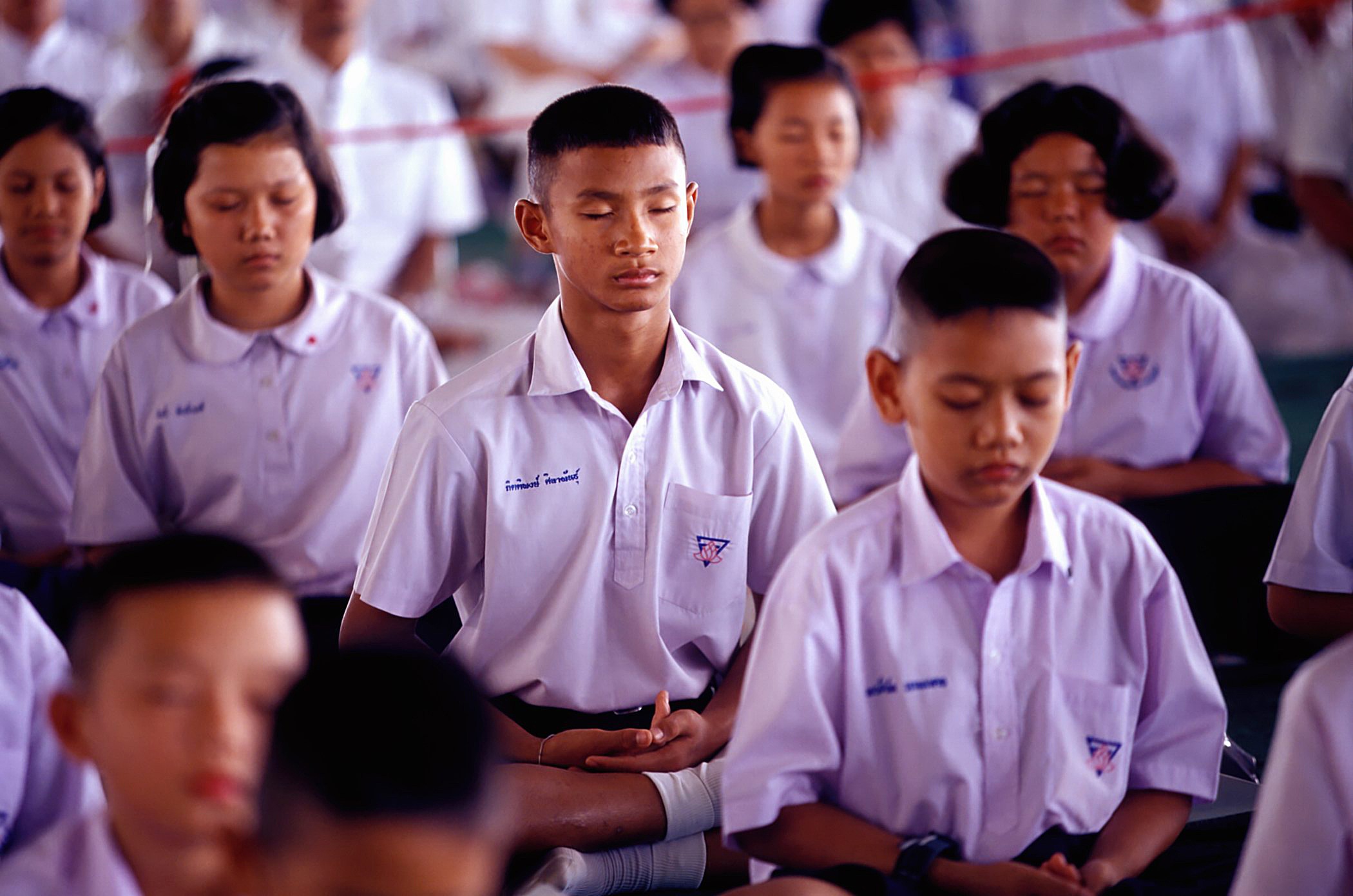

Washington D.C. [USA], Mar 19 (ANI): A new study has revealed that social-emotional competencies can be developed in middle school students through practicing meditation as part of a school Quiet Time.
The new study was published in Education Journal. "There's a strong body of research supporting the clear value of developing social-emotional competency for students. Middle school is an especially formative time and poses a major opportunity to provide students with the tools to develop positive social relationships, responsible decision-making and healthy behaviors," commented Laurent Valosek, the study's lead author and Executive Director of the Center for Wellness and Achievement in Education.
"We're encouraged by the results demonstrating the value of a Quiet Time program to enhance social-emotional learning and mental health in middle school students."
Effect of Meditation on Social-Emotional Learning of Public Middle School Students
Social-emotional learning (SEL) is gaining increased recognition as an important goal of education. Competencies include self-awareness, self-management, social awareness, relationship skills, and goal-directed behaviour. Developing these skills may help students perform better academically and enjoy enhanced emotional and social well being.
The study compared over a four-month period 51 sixth-grade students who took part in a Quiet Time program with twice-daily practice of Transcendental Meditation to 50 students from a matched control school within the same West Coast urban public school district. The study found a significant increase in overall social-emotional competency in the Quiet Time group compared to controls. The effects were particularly pronounced with high-risk subgroups, which experienced a significant increase on social-emotional competency and a significant decrease on negative emotional symptoms compared to controls.
Results on the individual items indicate improvement in the Quiet Time group compared to controls in the areas of decision-making, goal-directed behaviour, personal responsibility, relationship skills, and optimistic thinking.
The study used the Devereux Student Strengths Assessment (DESSA) Mini teacher-rating scale for assessing social-emotional competence. It also used the Strengths and Difficulties Questionnaire (SDQ) Emotional Symptoms scale. The strength of the study is its use of the DESSA to obtain a teacher rating of student social-emotional competencies, rather than relying solely on student self-report.
These results have implications for schools looking to implement evidence-based programs for student social-emotional learning and mental health. (ANI)
Social-emotional learning can be developed via meditation in middle school students
ANI | Updated: Mar 19, 2019 18:31 IST


