Smartphone fitness apps, wearable activity trackers boost physical activity levels
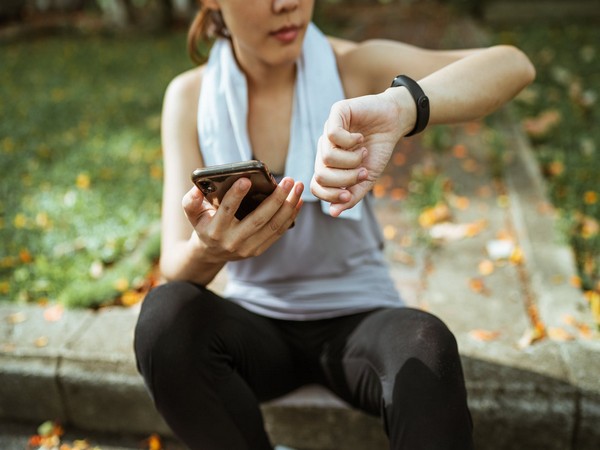
Washington [US], December 22 (ANI): Smartphone fitness apps and wearable activity trackers do help boost physical activity levels, finds a review and pooled data analysis of the available evidence.
ANI
Dec 22, 2020 15:34 IST

Washington [US], December 22 (ANI): Smartphone fitness apps and wearable activity trackers do help boost physical activity levels, finds a review and pooled data analysis of the available evidence.
The review published online in the British Journal of Sports Medicine.
The size of the effect is small to moderate, but it may be worth offering them on prescription to motivated patients, given the importance for the health of increasing daily physical activity by any amount, say the researchers.
Globally, more than a quarter of adults don't meet recommended physical activity levels. Physical inactivity represents a leading cause of death worldwide and is thought to cost billions of dollars every year.
Some of the most effective strategies to increase physical activity include behaviour change techniques, such as self-monitoring and feedback, which smartphone apps and wearable activity trackers can provide.
Smartphone ownership is widespread, with activity trackers and fitness apps used by around a third of US and UK adults. But the reviews to date of theses apps and trackers haven't produced consistent findings. Nor have they focused on healthy adults and on state-of-the-art technology.
To plug these knowledge gaps, the researchers trawled research databases looking for relevant studies published between January 2007 and January 2020, involving healthy 18 to 65 year olds with no long term conditions.
They found 35 suitable comparative studies, involving a total of 7454 people, 2107 (28%) of whom were women. The intervention period lasted between 2 and 40 weeks, averaging 13 weeks.
Pooling the data from 28 of these studies showed that compared with other approaches, smartphone apps or activity trackers increased physical activity by an average of 1850 steps a day. Seven further additional analyses of the data also showed that smartphone apps and activity trackers significantly increased physical activity levels.
The apps and tracker programmes that also included text-messaging involving prompts and cues, and tailored features, were more effective. And certain components, such as goal setting, planning, and tasks graded by degree of difficulty, were significantly associated with greater levels of effectiveness.
The researchers acknowledge that the included studies varied in design and methods, while the quality ranged from low to moderate. And given the relatively small number of women involved, the results may not be widely applicable to both sexes.
Nevertheless, "Interventions using smartphone apps or activity trackers seem promising from a clinical and public health perspective, promoting a significant step count increase of 1850 steps/day," they write.
"These results are of public health importance according to recent evidence showing that any physical activity, regardless of intensity, is associated with lower mortality risk in a dose-response manner and that an increase of 1700 steps/day is significantly associated with lower mortality rates."
Enabling users to move beyond the initial 'novelty phase' will depend on the quality of the experience, overall utility, and the ability to integrate with other devices and services, they add.
But they emphasise: "Given the wide and increasing reach of smartphones, even modest improvements in physical activity can produce large effects at the population level."
And they conclude that their findings are likely to be helpful to clinicians, "who may prescribe apps and trackers as part of a shared decision-making process to individuals who seem ready to make behavioural changes." (ANI)
Get the App