

ADD ANI AS A TRUSTED SOURCE
googleads
ANI Logo
Menu
Fitness

Older adults' medication intake can be improved by smart packaging: Study

Waterloo [Canada], February 25 (ANI): A new study has found that older adults are open to using smart packaging to improve their medication-taking experience.

ANI Feb 25, 2022 19:40 IST googleads

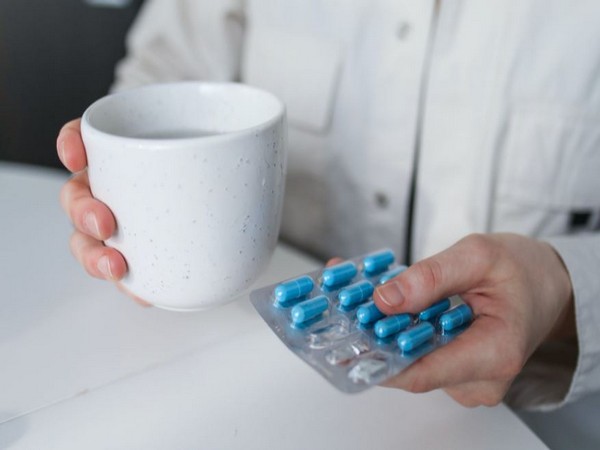
Representative image

Waterloo [Canada], February 25 (ANI): A new study has found that older adults are open to using smart packaging to improve their medication-taking experience.
The findings of the study were recently published in the journal 'PLOS One'.
Smart packages are used to electronically monitor when patients take their medication. When the prescription is not followed as advised by their physician the smart system can notify patients and their caregivers.
Approximately half of the patients with chronic diseases in developed nations do not take their medication properly. With an ageing population where taking multiple medications is common, incorrect medication-taking - called medication non-adherence - is a problem impacting the health of patients and costs the healthcare system billions of dollars.
There has been a surge of telehealth technology to address this issue in the last two decades, from complex at-home medication dispensing devices to reminder apps.
"Many of these products are advertised as user-friendly and efficient, but not all are tested with seniors in mind. So how would we know if older adults are able to use them for their day-to-day medication intake and are there any factors that can impact their in-home utilization?" said Sadaf Faisal, a PhD candidate at the University of Waterloo School of Pharmacy and lead author of the study.
The researchers visited and studied 10 participants in their homes with a mean age of 76. On average, each took 11 medications for at least five chronic diseases. The participants were provided with a smart blister pack that synchronized with a web portal and recorded each time a participant opened a blister to take medications.
The researchers then interviewed the participants to assess their experience with the smart blister package. They were also asked to rank the usability of the technology against standardized scales used in product assessment.
"Across participants, we found fairly consistent pros and cons to the technology," said Tejal Patel, a pharmacy professor and co-author of the study.
Patel added, "The ability to learn the product easily was important for the participants to use it consistently. Feedback from their social circles, such as supportive children, partners or health-care providers, also helped reinforce using the technology."
In general, participants who were more comfortable with technology were more open to using and liking the smart blister pack. However, device size and lack of portability were a significant downside, and if the product behaved inconsistently - sending reminders one day but not another, for example - participants became frustrated.
Participants also said cost was a barrier to use and that they would be less likely to consider smart technology if it was not covered by a drug plan or funded by the government.
"For technology to be effective, it has to be accepted by the end-users," Faisal said and added, "Smart, technology-based adherence products have the potential to support patients, but health-care providers should assess older adults' medication intake behaviours and barriers and facilitators to using a product before recommending them." (ANI)


Get the App

What to Read Next

Food

Study finds how diet has major impact on risk of Alzheimer's

Study finds how diet has major impact on risk of Alzheimer's

In a detailed study, researchers identify which diets are effective in lowering the risk of developing Alzheimer's disease.

Read More
Parenting

Kindergarten misbehaviour may cost society in the long run: Study

Kindergarten misbehaviour may cost society in the long run: Study

For the first time, a new economic analysis has linked kindergarten pupils' misbehaviour to significant societal costs in terms of criminality, associated medical expenses, and lost productivity as they grow up.

Read More
Quirky

Air pollution makes it difficult for bees to find flowers: Study

Air pollution makes it difficult for bees to find flowers: Study

According to a new study, air pollution prevents bees from finding flowers because it degrades the scent.

Read More
Quirky

Sense of order distinguishes humans from other animals: Study

Sense of order distinguishes humans from other animals: Study

Already earlier research at Stockholm University has suggested that only humans have the ability to recognize and remember so-called sequential information and that this ability is a fundamental building block underlying unique human cultural abilities.

Read More
Quirky

Exciting the brain might be key to boosting maths learning: Study

Exciting the brain might be key to boosting maths learning: Study

According to a new study from the Universities of Surrey and Oxford, Loughborough University, and Radboud University in the Netherlands, activating a brain region with electrical noise stimulation may improve mathematical learning in those who struggle with the subject.

Read More
Quirky

Youth with poor learning skills most vulnerable to email scams

Youth with poor learning skills most vulnerable to email scams

According to an international study published in the peer-reviewed British Journal of Educational Studies, disadvantaged youth are more vulnerable to email scams and require more protection.

Read More
Food

Replacing saturated fat, salt...is tasty, healthy: Study

Replacing saturated fat, salt...is tasty, healthy: Study

A team of Penn State researchers has figured the how to reduce some saturated fat, sugar, and salt from popular American dishes while keeping them tasty.

Read More
Food

Sanitized ready-to-eat salad may contain disease-causing bacteria

Sanitized ready-to-eat salad may contain disease-causing bacteria

A review paper published in the journal Foods describes a study that provides an overview of studies on minimally processed vegetables (MPVs), with a particular focus on the Brazilian market.

Read More
Quirky

Extreme weather events linked to higher child marriage: Study

Extreme weather events linked to higher child marriage: Study

One of the negative consequences of catastrophic weather incidents around the world that most people might overlook is an increase in underage marriages.

Read More
Parenting

Study reveals more sleep reduce impulsive behavior in children

Study reveals more sleep reduce impulsive behavior in children

Sleep is a vital aspect of a child's general health, but it can also influence their behaviour.

Read More
Home About Us Our Products Advertise Contact Us Terms & Condition Privacy Policy

Copyright © aninews.in | All Rights Reserved.
