 हिंदी खबर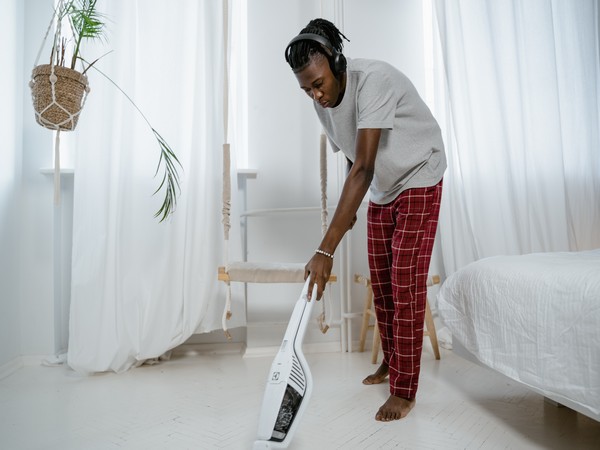

London [UK], November 28 (ANI): According to a new study, older adults who do housework may have a sharper memory, attention span, better leg strength and greater protection against falls.
The findings of the study were published in the open-access journal 'BMJ Open'.
The findings were independent of other regular recreational and workplace physical activities, and active commuting.
Regular physical activity is good for maintaining optimal physical and mental health. And among older adults, it curbs the risks of long term conditions, falls, immobility, dependency and death.
Yet global monitoring data indicate that in 2016, physical activity was well below recommended weekly levels and had budged little in a decade, with people in high-income countries more than twice as likely to be couch potatoes as those in low-income countries.
Given that housework involves physical activity and is an indicator of the ability to live independently, the researchers wanted to explore whether doing the household chores might contribute to healthy ageing and boost physical and mental capacity among older adults in a wealthy country.
They included 489 randomly selected adults, aged between 21 and 90, with fewer than 5 underlying conditions and no cognitive issues. All were living independently in one large residential town in Singapore, and able to carry out routine daily tasks.
Participants were divided into two age bands: 21-64-year-olds (249; average age 44), classified as 'younger'; and 65-90-year-olds (240; average age 75), classified as 'older.'
Walking (gait) speed and sit-to-stand speed from a chair (indicative of leg strength and falls risk) were used to assess physical ability. Validated tests were used to assess mental agility (short and delayed memory, visuospatial ability, language and attention span) and physiological factors linked to falls.
Participants were quizzed about the intensity and frequency of household chores they regularly did, as well as how many other types of physical activity they engaged in.
Light housework included washing up, dusting, making the bed, hanging out the washing, ironing, tidying up, and cooking. Heavy housework was defined as window cleaning, changing the bed, vacuuming, washing the floor, and activities such as painting/decorating.
Housework intensity was measured in metabolic equivalent of task (METs). These are roughly equivalent to the amount of energy (calories) expended per minute of physical activity. Light housework was assigned a MET of 2.5; heavy housework was assigned a MET of 4.
Only around a third (36 per cent; 90) of those in the younger group and only around half (48 per cent;116) of those in the older age group, met the recommended physical activity quota from recreational physical activity alone.
But nearly two thirds (61 per cent, 152 younger; and 66 per cent, 159 older) met this target exclusively through housework.
After adjusting for other types of regular physical activity, the results showed that housework was associated with sharper mental abilities and better physical capacity. But only among the older age group.
Cognitive scores were 8 per cent and 5 per cent higher, respectively, in those doing high volumes of light or heavy housework compared with those in the low volume groups.
And the intensity of housework was associated with specific cognitive domains. Specifically, heavy housework was associated with a 14 per cent higher attention score while light housework was associated with 12 per cent and 8 per cent higher short and delayed memory scores, respectively.
Similarly, sit-to-stand time and balance/coordination scores were 8 per cent and 23 per cent faster, respectively, in the high volume group than they were in the low volume group.
Those in the younger age group had five more years of education on average than their older counterparts. And since education level is positively associated with baseline mental agility and slower cognitive decline, this might explain the observed differences in the impact of housework between the two age groups, explained the researchers.
This is an observational study, and as such, can't establish cause, they caution, adding that the study relied on subjective reporting of physical activity levels and the volume and intensity of household chores.
But they point to previous research indicating a link between aerobic exercise and improved cognitive function, so the sharper mental agility associated with housework might occur through similar mechanisms, they suggested.
They added: "These results collectively suggest that the higher cognitive, physical and sensorimotor functions related to heavy housework activities might plausibly be associated with lower physiological fall risk among community-dwelling older adults."
They concluded: "Incorporating (physical activity) into the daily lifestyle through domestic duties (ie, housework) has the potential to achieve higher (physical activity), which is positively associated with functional health, especially among older community-dwelling adults." (ANI)


