 हिंदी खबर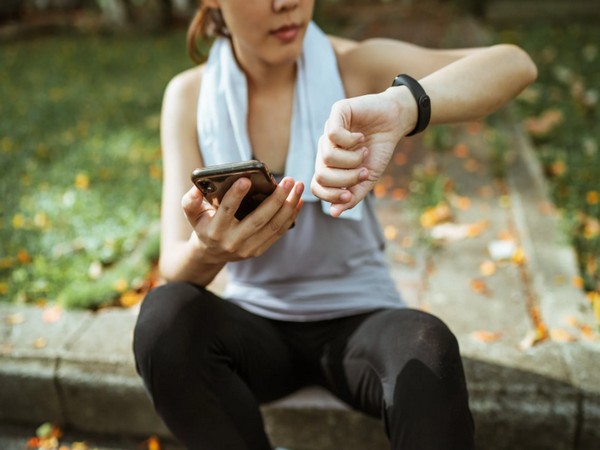

Michigan [US], February 10 (ANI): Mobile apps have now made it possible to track everything from exercise, number of steps walked in a day, to calories to blood pressure and even blood sugar, and use the information to stay on target with health goals or managing a chronic condition. But a new poll showed that most people over age 50 haven't been using such apps and that those who might get the most help out of them are less likely to actually use them.
The poll was based at the University of Michigan Institute for Healthcare Policy and Innovation and supported by AARP and Michigan Medicine, U-M's academic medical center.
Less than half (44 per cent) of people age 50 to 80 have ever used a health-related app on their smartphone, wearable device or tablet, according to the new findings from the National Poll on Healthy Aging.
Those who say they are in poor health, and those with lower incomes or levels of education, were far less likely to have ever used such apps. Half of those who haven't ever used a health app, or have stopped using them, said they are not interested in using them.
The percentage of older adults who currently used at least one app was even smaller, at 28 per cent. One-third of this group used an app to track exercise, while smaller percentages used apps to track sleep, weight, nutrition, blood pressure, to guide meditation, or to manage mental health and stress. One-quarter of current users shared information from their apps with their health care providers.
And among older adults who have diabetes, just 28 per cent used an app on their device to log their blood sugar levels and 14 per cent used an app to log their medications. But nearly half of older people with diabetes said, they would be interested in using an app in both of these ways.
"Now that most older adults have at least one mobile device, health-related apps can provide an opportunity to support their health-related behaviours, manage their conditions and improve health outcomes," said Pearl Lee, M.D., M.S., a geriatrician at Michigan Medicine who worked on the poll report.
Lee and co-authors James Aikens, PhD, and Caroline Richardson, M.D., both of the U-M Department of Family Medicine said, the potential was especially important for older adults with diabetes.
The poll also included questions about continuous glucose monitors, which people with diabetes can wear on their skin to monitor their blood sugar over the long term. Such monitors can connect with mobile devices to feed readings into an app.
Only 11 per cent of the poll respondents who have Type 2 diabetes said they currently used a CGM, though another 68 per cent had heard of such devices and over half of them said they would potentially be interested in using one.
"AARP's research has found a sharp increase in older adults purchasing and using technology during the pandemic, and many are interested in using technology to track health measures," said Indira Venkat, Vice President, Consumer Insights at AARP. "With more people 50+ owning and using technology, we may start to see an increase in older adults using apps to monitor their health."
Recent data show that 83 per cent of people age 50 to 64, and 61 per cent of people over age 65, own a smartphone, and just under half of people in each age group own a tablet device. That's up from 34 per cent of 50-64-year-olds and 13 per cent of those over 65 having a smartphone a decade ago, and even lower percentages having tablets at that time.
Despite this rise, the poll highlighted disparities in the use of mobile health apps by income and education level, as well as age. It also shows that lack of awareness, or mistrust of the security of health apps may be holding many older adults back.
Poll director Preeti Malani, M.D., an infectious disease physician with training in geriatrics at Michigan Medicine, noted that older adults with incomes over $100,000 were nearly three times more likely than those with incomes under $30,000 to use health apps, at 43 per cent vs. 15 per cent. Those with college degrees were more than twice as likely to use health apps as those who had not completed high school.
"People who describe their health as fair or poor - the people who might be most in need of the kind of tracking, support and information a good health app can give - were significantly less likely to use such apps than those who say they're in excellent, very good or good health," Malani noted. "Health providers should consider discussing the use of health apps with their patients, because one-third said they had never thought about using one." (ANI)


