 हिंदी खबर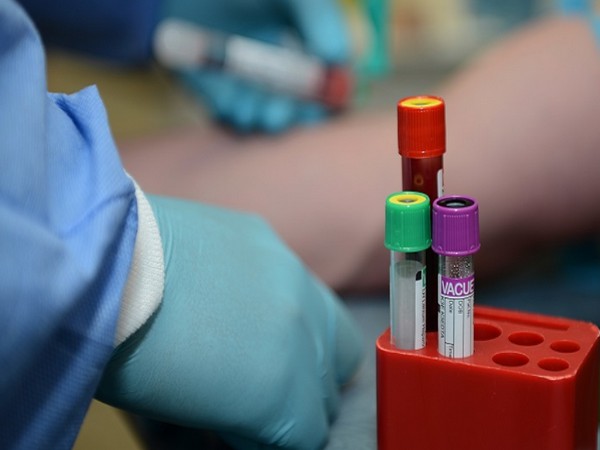

Washington DC [USA], April 19 (ANI): Researchers in a recent study has found that a blood test may be able to detect the most common form of pancreatic cancer when it is still in its early stages, while also helping doctors accurately stage a patient's disease and guide them to the appropriate treatment.
A study from the University of Pennsylvania found the test -- known as a liquid biopsy -- was more accurate at detecting the disease in a blinded study than any other known biomarker alone.
The team, which includes researchers from the Perelman School of Medicine, the Abramson Cancer Center, and the School of Engineering and Applied Science, published their findings today in Clinical Cancer Research, a journal of the American Association for Cancer Research.
Pancreatic ductal adenocarcinoma (PDAC), the most common form of pancreatic cancer, is the third-leading cause of cancer deaths. The overall five-year survival rate is just nine per cent and most patients live less than one year following their diagnosis.
One of the biggest challenges is catching the disease before it has progressed or spread.
If the disease is caught early, patients may be candidates for surgery to remove cancer, which can be curative. For locally advanced patients -- meaning patients whose cancer has not spread beyond the pancreas, but who are not candidates for surgery based on the size or location of the tumour -- treatment involves three months of systemic therapy like chemo or radiation, and then reassessing to see if surgery is an option.
For patients whose disease has spread, there are currently no curative treatment options.
"Right now, the majority of patients who are diagnosed already have metastatic disease. So, there is a critical need for a test that can not only detect the disease earlier but also accurately tell us who might be at a point where we can direct them to potentially curative treatment," said the study's co-senior author Erica L. Carpenter, MBA, PhD, director of the Liquid Biopsy Laboratory and a research assistant professor of Medicine.
The study's other co-senior author is David Issadore, PhD, an associate professor of Bioengineering and Electrical and Systems Engineering.
Researchers in this study developed a blood test to screen for a panel of biomarkers instead of just one biomarker on its own. These markers include carbohydrate antigen 19-9 (CA19-9) and KRAS mutational burden, which are known to be associated with PDAC.
In a blinded test group of 47 patients (20 with PDAC, 27 who were cancer-free), the test was 92 per cent accurate in its ability to detect disease, which outperforms the best-known biomarker, CA19-9 (89 per cent), alone.
The researchers then used samples from the 25 patients whose imaging showed did not have metastatic disease. The Penn test was 84 per cent accurate in determining disease staging, which is significantly higher than imaging alone (64 per cent).
While the test still needs to be validated in a larger cohort, researchers say they are excited by the promise of what it could potentially mean for a patient population in need of this kind of advancement.
"If validated, this test could not only provide a key tool for at-risk patients, but also a monitoring tool for patients with certain known risk factors like BRCA mutations," Carpenter said. (ANI)


