 हिंदी खबर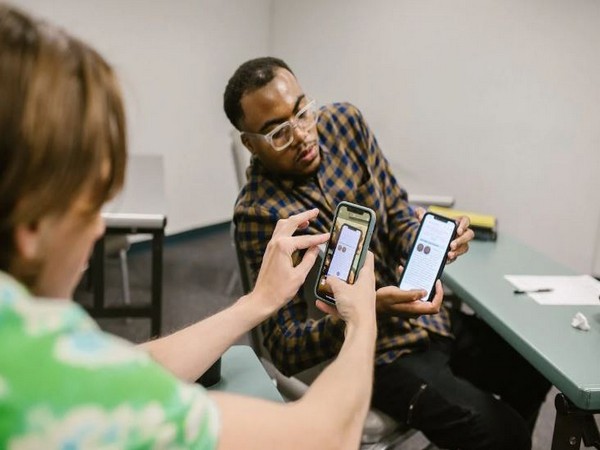

Washington [US], October 18 (ANI): During an instructor's presentation, students often prefer to take camera-phone photos of slides but it raises the question that whether this practice helps students remember the information.
A first-of-its-kind study answers the question, finding that taking pictures of PowerPoint slides during an online presentation helped students remember the slide content better than for slides they did not photograph. The study was recently published in the Journal of Applied Research in Memory and Cognition by UC Riverside psychology professor and researcher Annie Ditta.
In both experiments of the two-part study, students were asked not to study the photographs before testing. Does the act of taking a picture itself help students better remember the content?
Other experiments have considered whether people retain information better when they photograph information. In those studies, many of them conducted in museum galleries to mimic photo-taking outside of a classroom, photograph-taking hindered peoples' ability to remember the photographed content when they were later tested.
But Ditta's is the first study that specifically considered the lecture slides students photograph as part of their academic studies. Not only did students remember content better when they photographed it, but students also better remembered complementary spoken-word-only content.
"Given that the floodgates have already opened regarding the use of technology in the classroom - particularly with the proliferation of online courses offered due to COVID-19 - it is wise to study how best to support learners' use of technology in the classroom so we can understand how best to support their learning with these devices," Ditta and her fellow researchers concluded.
In the first experiment, 132 university students were asked to take photographs of alternate PowerPoint slides on their computer screens. Half took photos of the even-numbered slides; half took photos of the odd-numbered slides. The presentations they were shown involved subjects with which it was assumed the mostly psychology students would have little familiarity - printmaking, fencing, and cheese-making.
For the 60-question fill-in-the-blank test that followed, students were asked to recall information from both the slides and the spoken-word-only portion of the teacher's presentation.
The first experiment found participants remembered the slide information significantly better when they took a photo than when they did not. However, there was no difference in memory for the spoken-word-only information.
In the second experiment, half of the 108 study participants could photograph their choice of slides, as long as they photographed about half. The other half of the participants were "yoked" to the first set of students, instructed to photograph only the slides the others chose to photograph.
Whether the students chose the slides they photographed or were instructed to mimic others' photo-taking, both sets of students remembered slide-photographed content better than non-photographed content. This time, however, they also experienced the benefit of remembering spoken-word-only content.
"Overall, we found evidence for a photo-taking benefit in an online lecture," Ditta and her colleagues wrote. "The results were surprising, given that most prior research has found a photo-taking impairment effect."
Additionally, the researchers wrote: "Students who take photos in lectures could enjoy the benefits of taking photos for on-slide information without much cost to information that is only said."
Before both experiments, students expressed a belief that photo-taking would help them remember slide information - but they felt it would not help them remember spoken-word-only content. "They were wrong about that," Ditta said regarding the spoken content findings of the second experiment.
The study did not determine why the photo-taking helps; Ditta said that will be addressed in a planned follow-up study. But Ditta and her colleagues surmised regarding the first experiment's findings: "It's possible that the predictability of taking a photo every other slide enabled participants to pay more attention to the upcoming to-be-photographed slides in experiment 1."
Previous experiments found note-taking was superior to photo-taking in terms of remembering content. Ditta's study did not compare note-taking with photo-taking; she said the interaction of note-taking and photo-taking will also be the subject of a future study.
In addition to Ditta, who is an assistant professor of psychology, study authors for the article, "What happens to memory for lecture content when students take photos of the lecture slides?" included Julia Soares, a faculty member at Mississippi State University and Benjamin Storm, a faculty member at UC Santa Cruz. (ANI)


