 हिंदी खबर

By Samar Kaur
New Delhi [India] August 31 (ANI): Lord Ganesha, the Hindu God of success, knowledge, and wealth, is the foremost among all the gods and goddesses worshipped in the Hindu culture.
As the name suggests, 'Gan + esh' is the first of all Gods to be worshipped and is believed to remove the obstacles in one's life, hence, people offer prayers to the elephant-headed god before beginning all important tasks.
Ganesha holds dominion over all 'Ganas', a general term assigned to all the classes of beings, ranging from insects, animals, and humans, to all the subtle and the celestial beings.
Lord Ganesha has 108 names, mentioned in Ganesha Ashtothram, which are collectively known as Ashtottara Shatanamavali. Gajanana, Mahaganapati, Vighnaharta, Shivapriya, Purana Purusha,Vishnupriyaya, Samasta Devata Murtaye are few of them.
Since Lord Ganesha loves modak, he is also called Modakapriyaya, one of his 108 names.
There are many tales about Ganesha's childhood which are not only exciting but also depict him as a naughty kid.
A lesser known story from the Brahma Vaivarta Purana also narrates a version of Ganesha's birth.
History about Ganesha's birth and his childhood are found in the later Puranas. The Vayu and Brahmanda Purnasa are also considered for references of facts and information.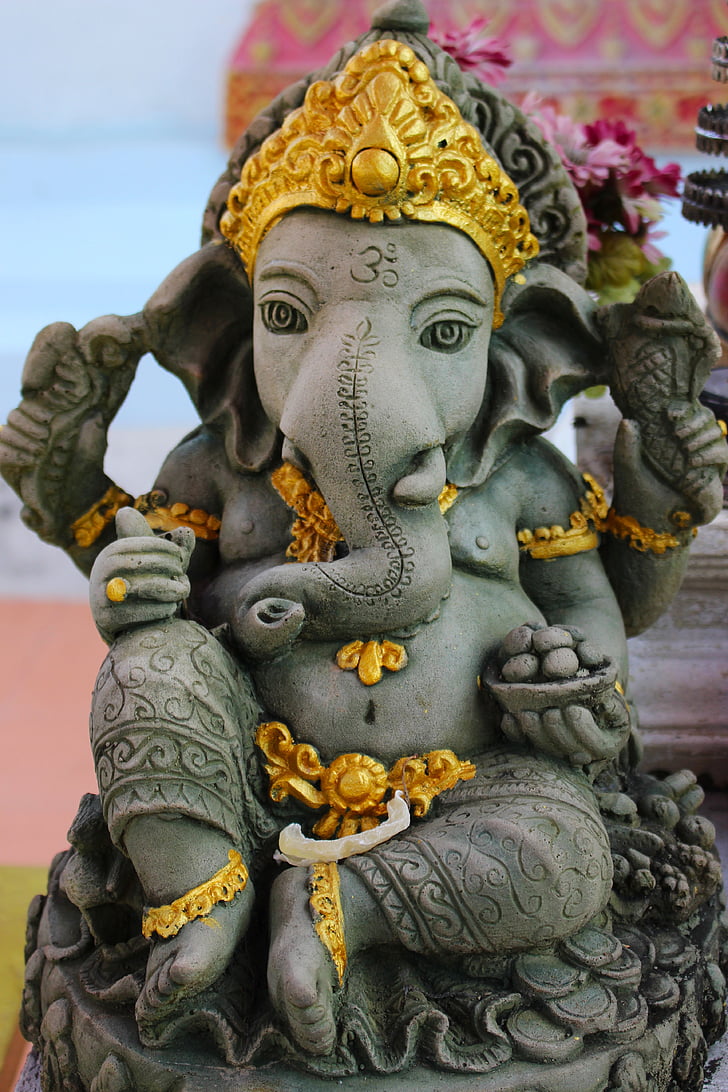
Here are few tales that describe how modaks, offered as main 'prasad', became his favourite sweet.
A folklore describes how he liked to have 'ladoos' prepared by his grandmother, Meenavati, the wife of King Himavan and the mother of Goddess Parvati. Ganesha's birth kindled a fire of joy, love and motherhood, both in Goddess Parvati and her mother Meenavati. The latter began to seek opportunities to foster and pamper her grandchild.
As an overwhelming gesture of her love, Meenavati prepared 'ladoos' exclusively meant for Ganpati and sent it to Mount Kailash. He would not only relish the sweet himself but also shared it with his 'mooshak sena' who were his only aides there.
As Ganesha grew up, he became so obsessed with the 'ladoos' that his hunger became uncontrollable and insatiable without them. Ladoos are dear to Ganpati. He is seen holding a bowl full of ladoos in his hand, which holds symbolic significance and sends a spiritual message that every being must discover the sweetness of their soul.
One day, Parvati found that Kailash was running out of laddoos and soon there would be nothing left for Ganesha to consume. A panicked Parvati started looking for ways to cope with the situation but could find no way to bring more ladoos in a short time, from Meenavati's palace to Kailash.
Ultimately, the mother came up with a solution of preparing something new for Ganesha, who was busy playing with Lord Shiva. After some time, she showed up with a sweet-dish that was white in colour and looked like ladoos but was different. Goddess Parvati had prepared Modaks for her son, which he relished with great joy and pronounced, thereafter, that modaks would be the dish that should be offered to him to please him.
Another tale narrates that the Devas once visited Shiv-Parvati and presented a modak. The one to eat this modak would become knowledgeable in all scriptures, science, art, and writing. The mother wanted both her sons, Ganesha and Kartikeya, to have it, but they were not ready to share. Parvati decided to take a test that whoever among them proved the true meaning of sincerity and devotion would get the sweet.
Lord Kartikeya, with lightning speed, visited all spiritual places in all lokas, while Lord Ganesha walked around his parents, and showed his unconditional love towards his parents. Impressed by her younger son's idea of true devotion, Goddess Parvati gave him the modak and this is how he became fond of it.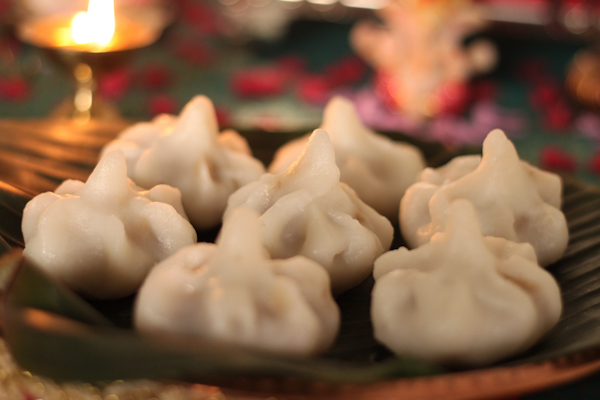
Since then, Modaks are offered to Lord Ganesha on Ganesh Chaturthi, and the number of modaks offered cannot be than 21, as per traditionally followed rituals.
By receiving Ganesha's grace, we tend to receive the grace of all Gods. His blessings are said to be most powerful and this is one reason the devotion towards this marvelous deity keeps increasing every year with people celebrating his homecoming with zeal and grandeur. (ANI)
How 'modak' became Ganesha's favourite!
Samar Kaur | Updated: Aug 31, 2019 15:33 IST




