Yoga, breathing exercises help children with ADHD to focus
Yekaterinburg [Russia], May 16 (ANI): During a recent study, psychologists at Ural Federal University reached the conclusion that yoga and breathing exercises have a positive effect on children with attention deficit hyperactivity disorder (ADHD). After special classes, children improve their attention, decrease hyperactivity, they do not get tired longer, they can engage in complex activities longer.
ANI
May 16, 2021 09:15 IST

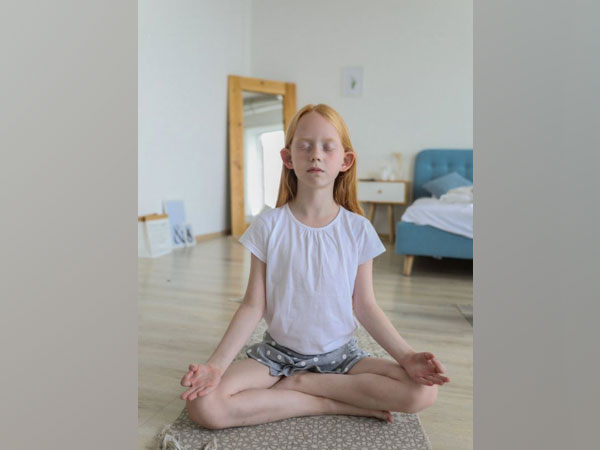
Yekaterinburg [Russia], May 16 (ANI): During a recent study, psychologists at Ural Federal University reached the conclusion that yoga and breathing exercises have a positive effect on children with attention deficit hyperactivity disorder (ADHD). After special classes, children improve their attention, decrease hyperactivity, they do not get tired longer, they can engage in complex activities longer.
The psychologists studied the effect of exercise on functions associated with voluntary regulation and control in 16 children with ADHD aged six to seven years. The results of the study were published in the journal Biological Psychiatry.
"For children with ADHD, as a rule, the part of the brain that is responsible for the regulation of brain activity - the reticular formation - is deficient," said Sergey Kiselev, head of the Laboratory of Brain and Neurocognitive Development at UrFU, head of the study.
He added, "This leads to the fact that they often experience states of inadequate hyperactivity, increased distraction and exhaustion, and their functions of regulation and control suffer a second time. We used a special breathing exercise based on the development of diaphragmatic rhythmic deep breathing - belly breathing. Such breathing helps to better supply the brain with oxygen and helps the reticular formation to better cope with its role. When the reticular formation receives enough oxygen, it begins to better regulate the child's state of activity".
In addition to breathing exercises, psychologists used body-oriented techniques, in particular, exercises with polar states "tension-relaxation". The training took place three times a week for two to three months (depending on the program).
"Exercise has an immediate effect that appears immediately, but there is also a delayed effect. We found that exercise has a positive effect on regulation and control functions in children with ADHD and one year after the end of the exercise. This happens because the child's correct breathing is automated, it becomes a kind of assistant that allows a better supply of oxygen to the brain, which, in turn, has a beneficial effect on the behavior and psyche of a child with ADHD," says Sergey Kiselev.
This technique was developed by the Russian neuropsychologist Anna Semenovich as part of a neuropsychological correction technique. UrFU psychologists tested how well this approach helps children with ADHD.
But the study is pilot, says Kiselev. It showed that these exercises have a positive effect. However, more work needs to be done, involving more children with ADHD. This will also take into account factors such as gender, age, the severity of the disease, concomitant problems in children (speech, regulatory, etc.).
Attention deficit hyperactivity disorder is a disorder associated with impaired development of the child's nervous system. Most often it manifests itself at the age of seven or at the beginning of regular education. ADHD is characterized by inattention, excessive activity, and impulsive behavior.
Since 2013, the Laboratory of the Brain and Neurocognitive Development of UrFU has been conducting research on the maturation of the brain and mental processes in typically developing children, as well as in children with deviant development, in particular, those at risk of developing autism and ADHD, children with moderate traumatic brain injury severity. The laboratory is one of the leading Russian centers for the study of brain development and neurocognitive processes in children. (ANI)
Get the App